



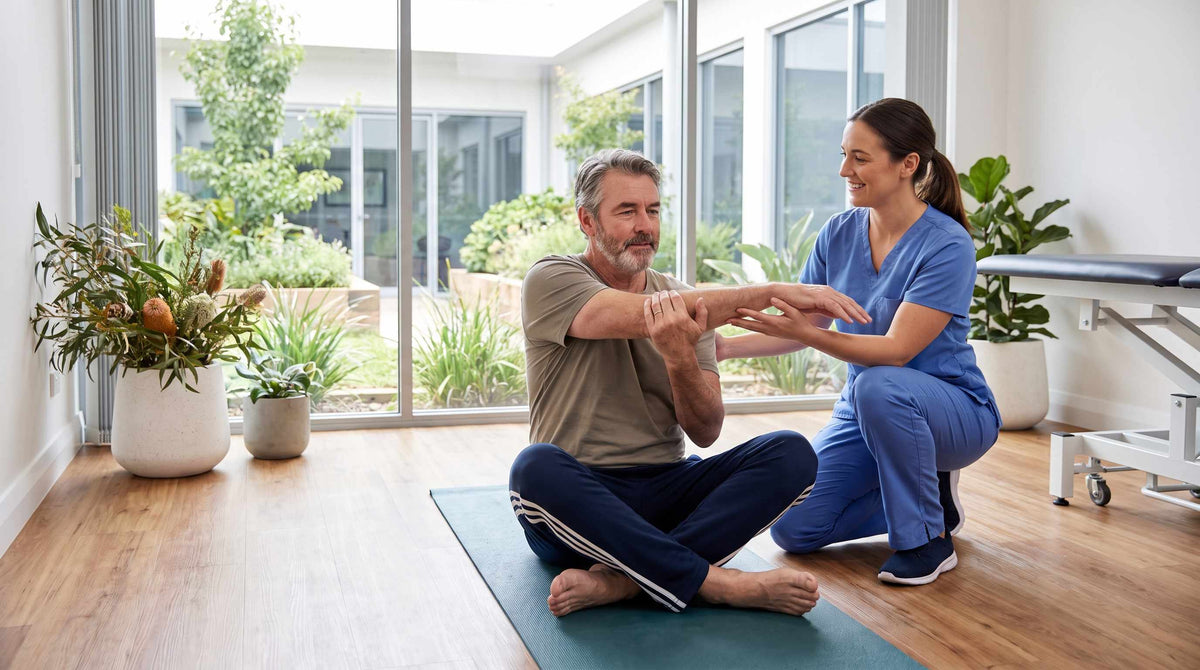
Staying active is one of the best things you can do for your body and mind — but for many Australian men, the fear of an unexpected leak can turn a gym session, weekend cricket match or morning jog into a source of anxiety rather than enjoyment. If you've been looking for practical ways to improve bladder control during exercise, you're far from alone. Bladder leaks during physical activity are more common than most blokes realise, and the good news is there are proven strategies, supportive products and Australian-funded care pathways that can help you get back to the sports and activities you love with confidence.
Understanding bladder control challenges during exercise for Australian men
Stress urinary incontinence (SUI) is the type of leakage most closely linked to physical activity. It occurs when pressure on the bladder — from jumping, lifting, running or even laughing — exceeds the ability of the pelvic floor muscles and urethral sphincter to keep urine in. While it's often discussed in the context of women's health, a significant number of Australian men experience SUI, particularly after prostate surgery, as they age, or when carrying excess weight.
Exercise-related bladder leaks in men can also stem from an overactive bladder (OAB), where the detrusor muscle contracts involuntarily, creating a sudden, hard-to-ignore urge. High-impact movements, cold-water swimming and even the sound of running water near a gym fountain can trigger urgency episodes. For some men, a combination of stress and urge incontinence — known as mixed incontinence — is at play.
Common signs that exercise is affecting your bladder control include damp underwear after a weights session, a few drops when you change direction on the footy field, or needing to map every toilet before a park run. Here's the thing: these experiences aren't something you simply have to put up with.
Who it affects and why it matters in Australia
The Continence Foundation of Australia estimates that over five million Australians are affected by bladder or bowel control problems, and men make up a substantial portion of that figure. Post-prostatectomy incontinence is one of the most well-documented causes: many men who undergo radical prostatectomy for prostate cancer report some degree of leakage during physical exertion in the months — and sometimes years — following surgery.
Beyond surgery, risk factors include chronic cough (common in men with a history of smoking), obesity, heavy manual labour, high-impact sport participation, diabetes and neurological conditions. Men in regional Australia may face additional barriers to seeking help, including limited access to specialist pelvic-floor physiotherapists and longer wait times through the public system.
The impact goes well beyond wet clothing. Research consistently shows that incontinence during exercise leads many men to withdraw from sport and social activity altogether, contributing to isolation, weight gain and poorer mental health outcomes. That's why helping men manage bladder control during exercise isn't just a comfort issue — it's a genuine public-health priority.
Safe exercises and sports for men managing bladder leaks
Not all exercise places the same demand on your pelvic floor. Understanding which activities are lower-risk and which require extra preparation can help you stay active without constant worry. The Australian Physiotherapy Association recommends a graded approach: start with low-impact options and progress as your pelvic floor strength improves.
Lower-impact activities to consider
- Swimming and water-based exercise — buoyancy reduces downward pressure on the pelvic floor, making pool sessions an excellent starting point.
- Cycling (stationary or road) — the seated position means less impact, though saddle pressure should be monitored for comfort.
- Walking and bushwalking — a staple for men across Sydney, Melbourne, Brisbane and beyond; easy to build into daily routines.
- Pilates and yoga — both strengthen the deep core and pelvic floor when taught with correct technique.
- Resistance training with lighter loads — focus on controlled breathing and avoid bearing down (the Valsalva manoeuvre) during lifts.
Higher-impact sports such as running, basketball, CrossFit and martial arts aren't off-limits, but they benefit from targeted pelvic-floor preparation and, for many men, the reassurance of purpose-built absorbent underwear. Wearing the Absorbent Boxer for Light Leaks during training, for example, can provide a discreet safety net that lets you focus on performance rather than leaks.
If you play team sport — weekend cricket, touch footy, tennis or golf — planning your fluid intake before and during the game, emptying your bladder beforehand, and having a reliable continence product in place are simple steps that make a real difference to on-field confidence.
Pelvic floor exercises: your first line of defence
Pelvic floor muscle training (PFMT) is the single most evidence-based intervention for improving bladder control during exercise — for men in Australia and internationally. The Continence Foundation of Australia and the Australian Physiotherapy Association both position PFMT as the recommended first-line treatment before medication or surgery is considered.
To locate your pelvic floor muscles, imagine you're trying to stop the flow of urine midstream or prevent passing wind. The muscles you feel tightening are the ones you need to train. A basic programme involves:
- Squeeze and lift the pelvic floor muscles, holding for up to ten seconds.
- Rest for the same duration as the hold.
- Repeat eight to twelve times, aiming for three sets per day.
- Add quick "flick" contractions — short, sharp squeezes — to build fast-twitch fibre strength for coughing and jumping.
- Practise "the knack": consciously contracting your pelvic floor just before a cough, sneeze, lift or jump to pre-brace against pressure.
Consistency is key. Most men notice meaningful improvement within eight to twelve weeks of daily practice. A pelvic-floor physiotherapist — many of whom are accessible through Medicare Australia with a GP referral and a chronic-disease management plan — can use real-time ultrasound to confirm you're activating the correct muscles and tailor a programme to your sport or activity level.
For men recovering from prostate surgery, pre-operative ("prehab") pelvic floor training is now considered best practice by many Australian urologists. Starting PFMT before the operation gives you a head start on regaining control post-surgery.
Evidence-based care pathways Australians can access
Australia has a well-structured continence care system, and knowing how to navigate it can save you time, money and frustration. Your first step should be a conversation with your GP — bulk-billing clinics across Perth, Adelaide, Brisbane and regional centres can initiate the assessment. Under RACGP guidelines, GPs are encouraged to screen for incontinence and refer to appropriate specialists.
A GP referral can lead to a Medicare-rebated consultation with a pelvic-floor physiotherapist, a continence nurse adviser, or a urologist if further investigation is needed. Many allied-health appointments attract a Medicare rebate under a GP Management Plan (formerly Enhanced Primary Care plan), reducing out-of-pocket costs considerably.
If you're unsure where to start, the National Continence Helpline — 1800 33 00 66 — is a free, confidential service staffed by continence nurse advisers who can point you toward local services, self-management strategies and funding support. It's available to anyone in Australia, whether you're in metro Melbourne or outback Queensland.
Medication may also be appropriate in some cases. Drugs for overactive bladder, such as mirabegron or antimuscarinics, are available through the PBS, making them more affordable for eligible patients. Your GP or specialist can discuss whether pharmacotherapy is a suitable complement to your exercise and pelvic-floor programme.
How Orykas washable men's incontinence underwear supports confidence
Even with a solid pelvic-floor routine and professional support, many men appreciate a practical backup — especially during the weeks or months it takes for muscle retraining to take full effect. Disposable pads can feel bulky, noisy and conspicuous under gym shorts or sport uniforms. That's where washable incontinence underwear designed specifically for men can be a game-changer.
Orykas offers a range of men's options that look and feel like regular underwear while providing reliable, discreet absorbency. The 3 Pack Men's Light Leak Boxer Briefs are a practical choice for blokes who want rotation-ready underwear for everyday training and weekend sport. For men dealing with moderate leaks during higher-impact exercise, the Men's Washable Incontinence Boxer Briefs deliver stronger absorbency without the bulk of a disposable product.
Because they're washable and reusable, Orykas products also reduce the ongoing cost and environmental waste associated with single-use pads and pull-ups — a consideration that resonates with many Australian men looking for a sustainable, long-term solution to managing bladder control during exercise.
NDIS, CAPS and funding options for Australians
The financial side of managing incontinence is an important consideration. Several Australian Government schemes can help offset costs:
- Continence Aids Payment Scheme (CAPS) — administered by Services Australia, CAPS provides an annual payment to eligible individuals to help cover the cost of continence products. You'll need a completed assessment form from a health professional to apply.
- NDIS plans — participants in the National Disability Insurance Scheme may have continence supports included in their plan under consumables or assistive technology categories. Speak with your support coordinator or plan manager.
- Department of Veterans' Affairs (DVA) — eligible veterans can access continence products through DVA-funded schemes.
- Private health insurance — some extras policies offer a small annual benefit for continence aids. Check with your fund.
Washable products like those from Orykas can be a cost-effective complement to funded disposable supplies, stretching your CAPS or NDIS budget further while providing a comfortable, discreet option for active days.
Frequently asked questions
Can exercise actually improve bladder control in men?
Yes. Pelvic floor muscle training is the most strongly supported non-surgical intervention for improving bladder control in men. When performed consistently, it strengthens the muscles that support the bladder and urethra, reducing leaks during physical activity. The Continence Foundation of Australia recommends daily pelvic floor exercises as a first-line approach for men experiencing stress or urge incontinence.
Which sports are worst for bladder leaks?
High-impact activities that involve jumping, sprinting or sudden direction changes — such as basketball, running, CrossFit and some martial arts — tend to place the greatest demand on the pelvic floor. That said, these sports aren't off-limits; targeted pelvic-floor training and wearing appropriate absorbent underwear can allow men to participate with greater confidence.
How do I find a pelvic-floor physiotherapist near me in Australia?
The Australian Physiotherapy Association maintains a "Find a Physio" directory on its website where you can search by location and specialty. A GP referral under a chronic-disease management plan may entitle you to Medicare-rebated sessions. You can also call the National Continence Helpline on 1800 33 00 66 for guidance on local services.
Are washable incontinence underwear effective enough for sport?
Modern washable incontinence underwear has come a long way. Products designed for active use feature built-in absorbent layers, odour-control technology and moisture-wicking fabrics that keep you dry and comfortable during exercise. Many Australian men find that washable options provide reliable protection for light to moderate leaks while feeling far more natural than disposable alternatives.
Taking the next step
With the right combination of pelvic-floor training, professional support and practical products, managing bladder control during exercise is entirely achievable. Start the conversation with your GP, call the National Continence Helpline if you need direction, and explore purpose-built washable underwear so that incontinence never has to stand between you and an active life.
This article is informational and does not replace advice from your GP, a qualified continence nurse or a specialist.
Share:
Urinary incontinence in men after 70: Australian clinical guidelines
Alcohol, coffee and Aussie pubs: bladder-friendly tips for men