



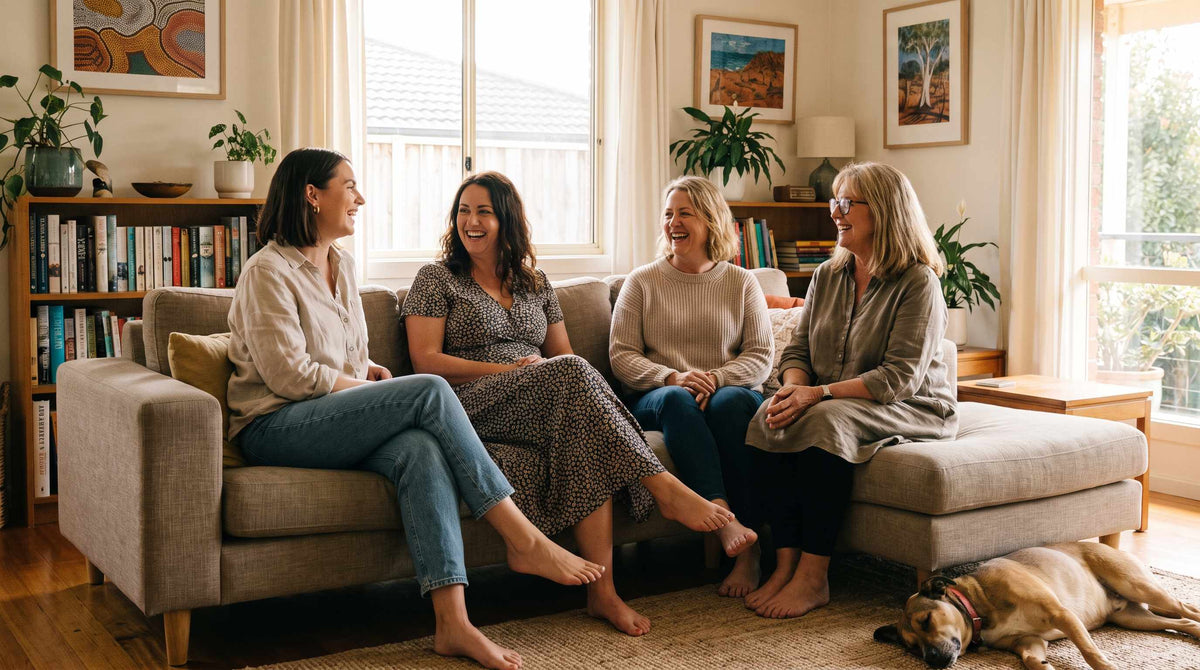

If you have been searching for an honest washable incontinence pants review Australia-wide, finding one that goes beyond a two-week trial feels almost impossible. Incontinence affects a significant share of Australian women across every life stage — the Continence Foundation of Australia notes it is far more common than many people realise, yet the conversation remains largely whispered. We asked four real Australian women to test Orykas washable incontinence underwear for six full months and share everything: fit, absorbency, laundry performance, and how their day-to-day confidence shifted along the way.
Why these four women decided to make the switch
Each of the four women came to washable incontinence pants from a different starting point, but their frustrations with disposable products were remarkably consistent. Sandra, a retired schoolteacher from Perth, described spending a small fortune every fortnight on single-use pads and briefs. Mei, a Melbourne-based accountant in her mid-forties, had only recently connected her leaks to perimenopause after a conversation with her GP. Robyn, who runs a small cattle property in regional Queensland, needed something that could last through unpredictable twelve-hour days. And Theresa, a Sydney nurse working rotating shifts, simply wanted to stop thinking about it.
For all four, the turning point came when they read through first-hand experiences from other Australian women who had already made the switch. Seeing accounts from women in similar life stages — postmenopausal, perimenopausal, or simply managing a lifelong pelvic floor weakness — gave them confidence that reusable options had moved well beyond the bulky, uncomfortable designs of the past. That sense of community validation is something disposable-product advertising rarely provides.
None of the four received free products or payment for participating in this review. All four purchased their own pairs independently and wore them through winter and into spring across Australia's varied climates, from Perth's dry warmth to Queensland's subtropical humidity. Their feedback below is their own.
1. Sandra, 58, Perth — managing stress incontinence after prolapse repair

Sandra had a pelvic organ prolapse repair two years before this trial and had been relying on disposable pads ever since. "I just assumed washables wouldn't hold enough," she said. "My surgeon never mentioned them as an option, and my continence nurse only briefly touched on reusables." For Sandra, a light-absorbency pair simply wouldn't cut it, so she trialled the heavy-leakage washable incontinence pants, designed to manage more significant bladder leaks throughout the day. Within the first fortnight, her main observation was about fit. "They feel like proper underwear," she said. "Not a medical device."
Over six months, Sandra washed her pairs hundreds of times — mostly on a 40-degree cycle — and reported no significant deterioration in absorbency or elasticity. She was glad to be producing far less landfill waste than she had with disposables, and her monthly spend on continence products dropped noticeably once she'd built up enough pairs to rotate comfortably.
Sandra also explored the Continence Aids Payment Scheme (CAPS) through Services Australia, which provides a government contribution towards the cost of continence aids for eligible Australians with permanent and severe incontinence. Her continence nurse helped her navigate the eligibility process. For anyone unsure of their options, the National Continence Helpline — available on 1800 33 00 66 — can provide information about products, funding pathways such as CAPS, and referrals to local continence health professionals, including telehealth options for those who can't easily access a specialist in person.

2. Mei, 44, Melbourne — navigating leaks through perimenopause
Mei's leaks had crept up on her gradually over about eighteen months. She initially attributed them to stress — she works long hours across the tax season — before a bulk-billing GP referral to a women's health physiotherapist confirmed she was experiencing stress incontinence exacerbated by declining oestrogen levels during perimenopause. "The physio was brilliant," Mei said. "She gave me a structured pelvic floor programme and mentioned that good-quality washable pants could support me while I worked on the exercises." It was the first time anyone had framed the two approaches as complementary rather than separate.
Mei chose the lace-waistband washable incontinence pants because she wanted something that felt more like her usual everyday underwear. "I work in an office and I care about what I'm wearing under my clothes. These don't look clinical at all." The lace waistband stayed comfortable even through long desk-bound days, and she had no issues with leakage on her lunch-hour walks around Melbourne's CBD.
After six months, Mei's pelvic floor programme had improved her symptoms noticeably, but she said she intended to continue wearing washable incontinence underwear as her everyday baseline regardless. "They've become part of my routine now — just like any other underwear. I don't think about them, which is exactly what I wanted." The RACGP (Royal Australian College of General Practitioners) encourages women to raise incontinence openly with their GP — effective, non-surgical treatments are available for most types of bladder leakage, and that's true at any age.
3. Robyn, 67, regional Queensland — long days outdoors on the land
Robyn's situation is one that many women in regional Australia will recognise: nearest public toilet forty minutes away, nearest specialist two hours by road. "City reviews don't always apply to us out here," she laughed. "When you're mustering cattle, you need something that actually works — not something you have to change every two hours." Robyn's priority was all-day reliability, so she tested two different styles to cover different activities.
For high-activity days she chose the high-waisted washable incontinence pants, which she found gave extra confidence during physical work. "The waistband doesn't roll when I'm bending or lifting, which was my biggest concern." For lighter days around the homestead she rotated a second style from the broader women's washable incontinence underwear range. At the six-month mark, Robyn's verdict was emphatic: "I've saved a considerable amount compared to disposables, and I'm not having to plan supply runs to town the same way."
What Robyn recommends for women in regional or rural areas
- Order enough pairs upfront to cover a full week's rotation — this avoids the anxiety of waiting on delivery when your current supply runs low.
- Check online shipping lead times well before you need to restock, particularly if you are more than an hour from a major town.
- Speak with your local GP or Aboriginal and Torres Strait Islander health service about whether continence products may be covered under an NDIS plan if you have one.
- Contact the National Continence Helpline on 1800 33 00 66 for a referral to a telehealth continence nurse if in-person appointments are difficult to access where you live.
- Wash on a warm cycle (around 40°C) and line-dry — Queensland's climate makes this effortless almost year-round.
4. Theresa, 52, Sydney — shift work, three kids, and no patience for single-use products
Theresa has been a registered nurse for nearly thirty years and is the first to acknowledge the irony of working in healthcare while feeling reluctant to raise her own continence concerns with a colleague. "I knew intellectually there was nothing to be ashamed of, but it still took me a while to say anything out loud," she admitted. Her turning point came through a conversation with a continence nurse specialist at her hospital, who walked her through the reusable options available and explained how significantly the products had improved over the past decade.
Rotating twelve-hour shifts meant Theresa needed pants that could go the full distance without feeling damp or uncomfortable halfway through a night shift. "I've stood in a hospital ward for twelve hours straight — comfort and reliability are non-negotiable." By the three-month mark, washable pants had become her default for both work shifts and days off. "I stopped using disposables entirely by month two. I haven't missed them once."
Theresa was also motivated by environmental impact. A back-of-the-envelope calculation suggested that switching to washables substantially reduced the number of single-use items going into landfill from her household. "With three kids and a partner, we're already trying to reduce waste. This felt like an obvious next step, and the fact that it also saved money was a bonus I hadn't fully anticipated when I started."
Six months on: what the four women agreed on
When we brought the four women together for a final debrief, several themes emerged consistently regardless of age, location, or leakage severity. The most striking was confidence: all four reported feeling markedly less anxious in social situations than they had when relying on disposables. They attributed this partly to the security of the products themselves and partly to simply feeling more like themselves — wearing underwear that looked and felt normal rather than medical.
The group also agreed that there is a learning curve in the first two to four weeks, particularly around sizing and finding the right absorbency level for different activities. All four recommended trying more than one style before committing to a full set, and all four said the effort of finding the right fit was entirely worthwhile. Their collective experience is a useful reminder that any honest Australian review of washable incontinence pants needs to account for the real diversity of women's lives in this country — from city offices to outback properties.
Key takeaways from six months of real-world testing:
- Absorbency held up reliably through hundreds of wash cycles without noticeable decline in performance.
- All four women found the garments remained comfortable across a full day of varied activity.
- Cost savings compared to disposable products were meaningful and accumulated steadily over the six months.
- None of the four experienced skin irritation — a concern several had raised before starting the trial.
- All four said they would recommend reusable incontinence underwear to a friend or family member dealing with similar issues.
- Finding the right fit required a little trial and error but was unanimously considered well worth the effort.
Frequently asked questions
Are washable incontinence pants suitable for heavy leakage, or only for light leaks?
These days, you'll find washable incontinence pants in a wide range of absorbency levels, from light everyday protection through to options designed for more significant leakage. Women managing heavier bladder leakage may benefit from styles specifically engineered for that purpose. Speaking with a continence nurse or your GP is the best way to determine which absorbency level suits your individual needs before you purchase.
Can I claim washable incontinence pants through the Continence Aids Payment Scheme (CAPS)?
The Continence Aids Payment Scheme, administered through Services Australia, provides a financial contribution towards continence aids for eligible Australians with a diagnosis of permanent and severe incontinence. Specific eligibility requirements apply, and not all products or situations will qualify. Contact Services Australia directly or call the National Continence Helpline on 1800 33 00 66 for guidance on whether you may be eligible and how to navigate the application process.
How many pairs do I need to get started with washable incontinence underwear?
Most women find that six to eight pairs is a practical starting point, giving you enough in the rotation to wash and dry between wears without running short. Women with heavier leakage, or those who prefer to change during the day, may prefer to begin with a slightly larger set. A sensible approach is to try two or three pairs in different absorbency levels first, then build out your collection once you know which styles work best for your body and routine.
How do I choose between the different styles available?
The right style depends on your absorbency requirements, body shape, preferred waistband height, and personal aesthetic. Some women prefer a higher waistband for greater security during physical activity; others prioritise a more everyday look and feel. Reading verified reviews from Australian women who have worn the products in real-life conditions — not just controlled testing — is one of the most useful steps you can take before committing to a purchase.
This article is informational and does not replace advice from your GP, a qualified continence nurse or a specialist.
Share:
Menopause and bladder control: what Australian women over 50 need to know
NDIS and CAPS funding for incontinence products: Australian women's guide