


For many Australian women, the transition through menopause brings more than hot flushes and mood changes — it can also trigger bladder leaks and nocturia that disrupt sleep, erode confidence and make everyday life harder than it needs to be. If you find yourself waking two, three or even four times a night to use the bathroom, or noticing damp underwear when you cough, sneeze or simply stand up, you're far from alone. A significant share of women aged over 50 in Australia experience some form of urinary incontinence, yet the topic remains under-discussed in consulting rooms from Sydney to Perth and across regional Australia.
What is menopause nocturia? Causes and signs Australian women should know
Nocturia is the medical term for waking during the night to urinate. During perimenopause and menopause, falling oestrogen levels weaken the pelvic floor muscles and thin the tissues lining the urethra and bladder. These hormonal shifts can reduce the bladder's capacity to hold urine overnight, leading to frequent night-time trips to the bathroom and, in many cases, involuntary leakage before you reach the toilet.
Bladder leaks linked to menopause can show up in several ways. Stress incontinence — leaking when you laugh, lift or exercise — is common, as is urge incontinence, where a sudden, intense need to urinate arrives with little warning. Many women experience a combination of both, sometimes called mixed incontinence. Here's the thing: night sweats compound the problem. Waking drenched in perspiration can mask the fact that urine leakage has also occurred.
Key signs to watch for include:
- Waking more than once per night with a strong urge to urinate
- Dampness on sheets or sleepwear that isn't solely from perspiration
- A frequent need to locate the nearest bathroom when out in public
- Leaking small amounts of urine during physical activity or when coughing
- Avoiding social events, exercise or travel because of worry about accidents
The Continence Foundation of Australia notes that incontinence isn't a normal or inevitable part of ageing — it's a health condition that can almost always be improved with the right support. Recognising these signs early is the first step toward regaining control.
Who it affects and why it matters across Australia
Menopause-related bladder leaks affect women right across the country, from capital cities like Melbourne, Brisbane and Adelaide to remote communities. The Australasian Menopause Society highlights that urogenital symptoms, including nocturia, are among the most common and most undertreated complaints during the menopausal transition. Many women wait years before raising the issue with their GP, often because they assume leakage is simply something they must accept.
The consequences go well beyond wet underwear. Disrupted sleep from nocturia during menopause contributes to daytime fatigue, reduced concentration and a higher risk of falls — particularly for older women navigating darkened hallways at night. The emotional toll is equally significant: research consistently links urinary incontinence with anxiety, depression and social withdrawal.
For women in regional Australia, access to specialist continence services can be limited, making it even more important to know what help is available and where to find it. The National Continence Helpline — 1800 33 00 66 — offers free, confidential advice from continence nurse advisors and is a valuable first point of contact for women anywhere in the country.

Evidence-based care pathways Australians can access
The good news is that effective, evidence-based treatments exist for menopause-related bladder leaks and nocturia. A logical starting point is your local GP. Under Medicare Australia, consultations with a bulk-billing GP are free or low-cost, and your doctor can assess the type and severity of your incontinence, rule out other causes such as urinary tract infections, and develop a management plan.
Your GP may refer you to a pelvic floor physiotherapist. Pelvic floor muscle training is considered first-line treatment for stress and mixed incontinence by the RACGP and has strong evidence behind it. Medicare rebates may apply when sessions are part of a chronic disease management plan or a referral from your GP under an Enhanced Primary Care plan.
Bladder retraining and lifestyle adjustments
Alongside physiotherapy, bladder retraining — gradually increasing the time between bathroom visits — can help improve bladder capacity and reduce urgency. Your continence health professional may also recommend lifestyle modifications such as:
- Reducing caffeine and alcohol intake, particularly in the evening
- Maintaining a healthy weight to lessen pressure on the pelvic floor
- Timing fluid intake so you stay hydrated during the day but reduce consumption before bed
- Practising good sleep hygiene to manage hot flushes and night sweats alongside nocturia
- Keeping a bladder diary to identify patterns and triggers
In some cases, your GP may discuss pharmaceutical options listed on the PBS to manage overactive bladder symptoms, or refer you to a urogynaecologist for further assessment. Topical vaginal oestrogen, for example, can help restore tissue health and reduce urinary urgency in many menopausal women. The Australasian Menopause Society provides helpful clinical guidance on hormonal and non-hormonal options that your doctor can review with you.
How Orykas washable incontinence underwear supports confidence
While you're working through clinical treatments, reliable protection can make an enormous difference to day-to-day confidence. Disposable pads and liners create ongoing expense and environmental waste — a concern many Australian women are increasingly vocal about. Washable incontinence underwear offers a reusable, discreet alternative that looks and feels like regular underwear.
Orykas designs its range specifically for women managing bladder leaks at different levels of severity. The Women's High-Waisted Washable Incontinence Pants provide comfortable, everyday coverage for light to moderate leakage, with a high-waisted design that many women find supportive and flattering under clothing. For those dealing with heavier overnight leaks tied to menopause nocturia, the Women's Washable Incontinence Pants for Heavy Leakage offer a higher absorbency level without added bulk.
Night-time protection extends to your bedding as well. Pairing washable underwear with the Ultra-Absorbent Washable Bed Pad provides an extra layer of security against overnight leaks and night sweats, helping protect your mattress and giving you one less thing to worry about when you turn out the light.
Because these products are machine-washable, they reduce both landfill waste and the ongoing cost of disposables — a practical consideration for women on fixed incomes or those funding their own continence supplies.
NDIS, CAPS and funding options for continence products in Australia
Managing incontinence can carry a financial burden, but several Australian Government programmes exist to help offset costs. It's worth understanding your eligibility, especially if your menopause-related bladder leaks are ongoing.
The Continence Aids Payment Scheme (CAPS), administered by Services Australia, provides an annual payment to eligible Australians to help cover the cost of continence products. To access CAPS, you'll generally need a letter from your GP or continence nurse confirming your condition and the products you require. The payment is made directly to you, giving you the freedom to choose the products that best suit your needs — including washable options like those offered by Orykas.
If you have a disability that contributes to incontinence, your NDIS plan may include funding for continence supports under the consumables or assistive technology categories. Your NDIS planner or support coordinator can help you explore whether continence products and specialist assessments fall within your plan.
Beyond government programmes, it's worth asking your GP or continence nurse about local hospital continence clinics, many of which offer free assessments and can supply initial product samples. The Continence Foundation of Australia maintains a directory of services across all states and territories, and their helpline — 1800 33 00 66 — can point you toward resources in your area.
Practical tips for managing menopause nocturia at home
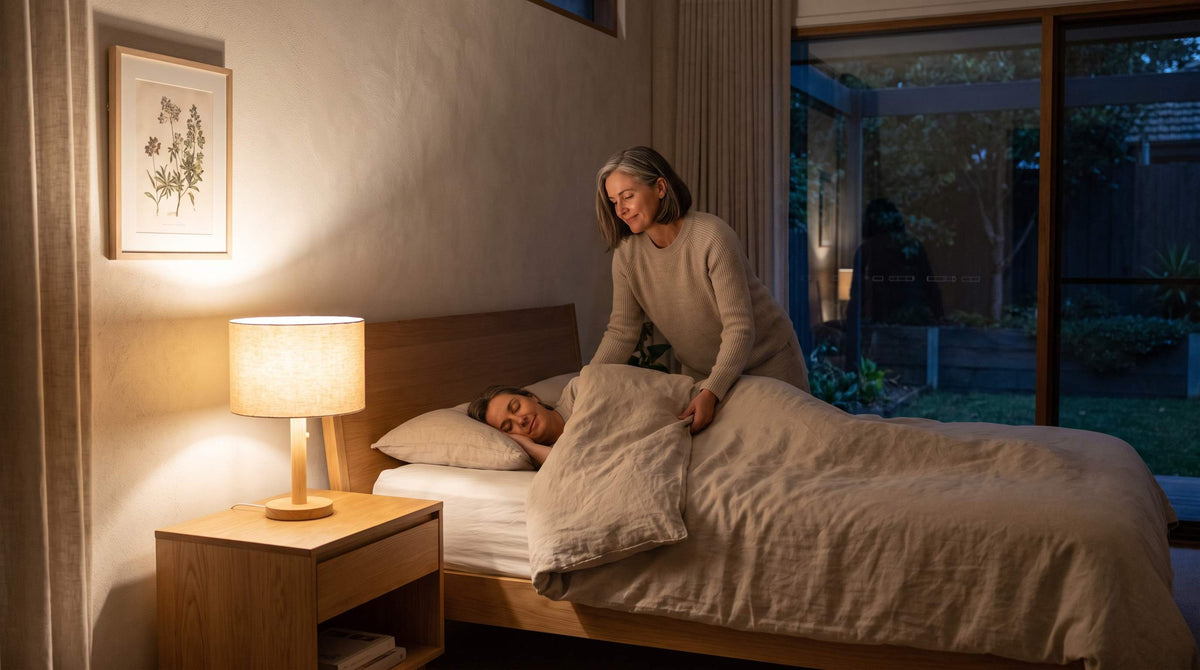
Small changes to your home environment and nightly routine can meaningfully reduce the impact of nocturia and bladder leaks on your sleep quality. Consider keeping a low night-light along the path from your bedroom to the bathroom to reduce the risk of falls. Wearing washable incontinence underwear to bed removes the anxiety of potential leakage and means you may be able to resettle more quickly if you do wake.
Many women find that layering protection — absorbent underwear combined with a washable bed pad — provides peace of mind without the rustling or discomfort associated with disposable bed mats. Establishing a calm pre-sleep routine that includes a final bathroom visit, limited screen time and relaxation techniques can also help manage the interplay between hot flushes, night sweats and nocturia.
Keeping a bladder diary for a week or two before your next GP appointment can give your doctor valuable data about your patterns, making it easier to tailor treatment. Note the times you wake, the volume of urine passed and whether urgency or leakage occurred.
Frequently asked questions
Is nocturia during menopause something I should see a doctor about?
Yes. While nocturia is common during menopause, it isn't something you need to simply put up with. Your GP can assess whether hormonal changes, an overactive bladder or another underlying condition is contributing, and recommend a treatment plan. If you're unsure where to start, call the National Continence Helpline on 1800 33 00 66 for confidential guidance.
Can pelvic floor exercises really help with menopause bladder leaks?
Pelvic floor muscle training is one of the most effective non-surgical treatments for stress and mixed urinary incontinence. The RACGP recommends it as a first-line approach, and many women see meaningful improvement within eight to twelve weeks of consistent, correctly performed exercises. A pelvic floor physiotherapist can ensure you're engaging the right muscles and progressing appropriately.
Are washable incontinence pants as effective as disposable pads?
Modern washable incontinence underwear is designed with multi-layer absorbent technology that can rival or exceed the performance of many disposable pads, while offering a more comfortable, discreet fit. Products like the Orykas range are engineered for different absorbency levels, so you can match the product to your needs — lighter protection during the day and heavier protection for overnight bladder leaks linked to menopause nocturia.
How do I apply for the Continence Aids Payment Scheme (CAPS)?
To apply for CAPS, you'll need a completed assessment form from your GP, continence nurse or relevant specialist, confirming your incontinence and the types of products you require. The form is then submitted to Services Australia. If approved, you receive an annual payment that you can spend on the continence products of your choice, including washable underwear and bed pads. Your GP or the Continence Foundation of Australia can help you navigate the application process.
This article is informational and does not replace advice from your GP, a qualified continence nurse or a specialist.
Share:
Vaginal oestrogen, HRT and continence: an Australian overview
Stress incontinence in women: the most common leaks Aussies don't talk about