



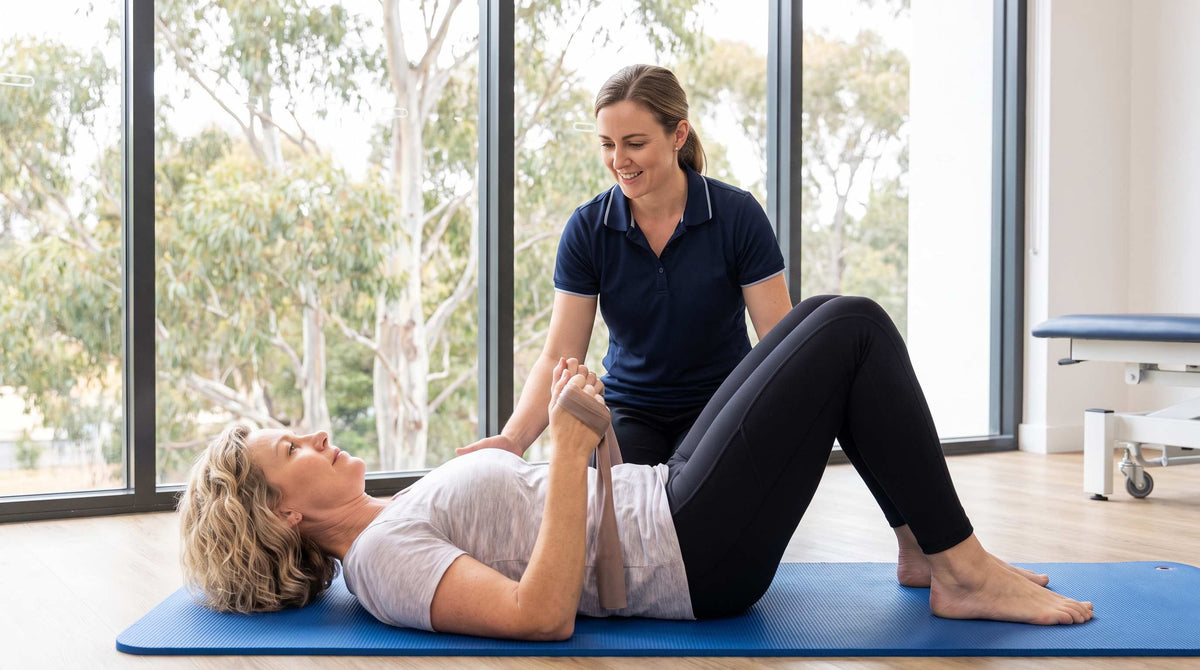
If you've recently had a baby and are experiencing bladder leaks, you're far from alone — and help is available through Australia's public health system. Knowing how pelvic floor physio is covered by Medicare Australia can save you hundreds of dollars and connect you with the specialist support you need to recover after birth. Whether you're in Sydney, regional Queensland or anywhere in between, postnatal pelvic floor rehabilitation is recognised as an essential part of recovery, and Medicare rebates make it more accessible than many new mums realise.
What is pelvic floor physiotherapy and why do postnatal women need it?
Pelvic floor physiotherapy is a specialised branch of physiotherapy focused on the muscles, ligaments and connective tissue that support your bladder, uterus and bowel. During pregnancy and vaginal birth, these structures undergo enormous strain. Hormonal changes — particularly shifts in oestrogen and relaxin — soften the pelvic floor muscles, while the weight of a growing baby and the process of delivery can stretch or injure them further.
A qualified pelvic floor physiotherapist assesses muscle strength, coordination and any tissue damage, then designs a tailored exercise and rehabilitation programme. This might include real-time ultrasound biofeedback, manual therapy, graduated strengthening exercises and lifestyle advice around lifting, toileting posture and return to sport.
Common signs that you'd benefit from postnatal pelvic floor physio include:
- Leaking urine when you cough, sneeze, laugh or lift your baby
- A sudden, urgent need to reach the toilet that's hard to hold off
- A feeling of heaviness or dragging in the vaginal area (possible prolapse)
- Difficulty emptying your bladder or bowel completely
- Pain during intercourse after your six-week postnatal check
These symptoms are common, but they're not something you simply have to live with. The Australian Physiotherapy Association and its Women's Health special interest group recommend that every woman have at least one pelvic floor assessment in the postnatal period, ideally around six to eight weeks after birth.
Who is affected and why it matters across Australia
Urinary incontinence after childbirth affects a significant share of Australian women. Research suggests that up to one in three women who've given birth experience some degree of stress urinary incontinence in the first year postpartum. For many, symptoms persist well beyond that first year if left untreated.
The impact goes beyond the physical. Many new mums report avoiding exercise, social outings and even picking up their baby for fear of leaking. Sleep deprivation is already a challenge in the postnatal period without adding anxiety about bladder control. In regional Australia, where specialist services can be harder to access, women may wait months before seeking help — or assume that leaking is just a normal part of motherhood.
Addressing pelvic floor dysfunction early isn't only better for long-term health outcomes — it's also more cost-effective for the healthcare system. The RACGP's guidelines for postnatal care encourage GPs to screen for incontinence at routine postnatal visits and refer promptly to pelvic floor physiotherapy where indicated.
The emotional toll on new mothers
It's worth acknowledging the emotional weight of incontinence after birth. Many women feel embarrassed or isolated, particularly if friends and family dismiss leaking as "just what happens." You're not alone in this. The National Continence Helpline (1800 33 00 66) offers free, confidential advice from continence nurse advisors and can help you find local services — a valuable resource whether you live in Melbourne, Perth, Adelaide or a small rural town.

How Medicare covers pelvic floor physio after birth
Medicare Australia provides rebates for pelvic floor physiotherapy through several pathways. The most common route for postnatal women is a GP Management Plan, sometimes called a Chronic Disease Management (CDM) plan or, informally, an Enhanced Primary Care (EPC) referral. Here's how the process typically works:
- Visit your GP and discuss your symptoms. Your doctor assesses whether you meet the criteria for a CDM plan — ongoing or complex conditions, including postnatal pelvic floor dysfunction, generally qualify.
- Your GP prepares a GP Management Plan (MBS item 721) and Team Care Arrangement (MBS item 723), which allows referral to allied health professionals including physiotherapists.
- You receive up to five individual allied health sessions per calendar year with a Medicare rebate. Your GP can refer you specifically to a pelvic floor physiotherapist.
- At each appointment, Medicare rebates a set amount. If the physiotherapist bulk-bills, you pay nothing out of pocket. If they charge above the schedule fee, you pay the gap.
- Your GP reviews the plan at least annually and can renew it for ongoing care.
Worth knowing: the five Medicare-subsidised sessions are shared across all allied health disciplines — so if you're also seeing a dietitian or psychologist under the same plan, the total remains five. Some women choose to use all five sessions for pelvic floor physio under their Medicare plan and fund other allied health privately.
Not every physiotherapist specialises in pelvic floor rehabilitation. The APA Women's Health group maintains a directory of physiotherapists with postgraduate training in this area. When booking, confirm that the practitioner has specific pelvic floor expertise and ask whether they bulk-bill or charge a gap fee.
In some cases, your GP may also refer you under a standard Medicare physiotherapy referral (without a CDM plan), though rebates may differ. If you hold a Health Care Card or are seen at a bulk-billing practice, out-of-pocket costs may be minimal or zero.
Evidence-based care pathways Australians can access
Beyond Medicare-rebated physiotherapy, Australian women have several evidence-based options for managing postnatal incontinence. Your GP is the best starting point, as they can coordinate referrals and make sure you're accessing the right level of care.
Key care pathways include:
- Pelvic floor muscle training programmes prescribed by a specialist physiotherapist — the first-line treatment recommended by international guidelines
- Continence nurse advisors available through public hospitals and community health centres across most states
- Urogynaecologist or gynaecologist referral for more complex cases, such as significant prolapse or symptoms that don't respond to conservative treatment
- Telehealth pelvic floor physio sessions, which expanded significantly during and after the pandemic, making specialist care accessible to women in regional and remote Australia
- Group postnatal exercise programmes run by qualified physiotherapists, often available through local councils or community health services in cities like Brisbane, Sydney and Adelaide
The evidence is clear: supervised pelvic floor muscle training works for most women with stress urinary incontinence. A Cochrane review found that women who completed a structured programme were significantly more likely to report improvement or cure compared to those who received no treatment. Starting early — ideally within the first few months after birth — tends to produce better outcomes.
If you're waiting for your physiotherapy appointment or between sessions, reliable daily protection can make a meaningful difference to your confidence. Many women find that Women's Washable Incontinence Underwear from Orykas provides discreet, comfortable coverage while they work through their rehabilitation programme.
How Orykas washable incontinence underwear supports confidence during recovery
Pelvic floor rehabilitation isn't an overnight fix. Most physiotherapists recommend a programme of at least twelve weeks, and many women continue exercises for months. During that time, leaks can still happen — and having reliable, comfortable protection removes one source of stress from an already demanding period of life.
Orykas washable incontinence underwear is designed to look and feel like regular underwear while offering built-in absorbent protection. The Women's High-Waisted Washable Incontinence Pants offer a secure, supportive fit that many postnatal women find particularly comfortable, especially in the early months when abdominal support is welcome.
For women who prefer a lighter, more feminine style, the Women's Lace-Waistband Washable Incontinence Pants combine discreet absorbency with an everyday look that fits under any outfit. Because they're washable and reusable, they're also a more sustainable and cost-effective alternative to disposable pads over the course of a recovery programme.
Having dependable protection means you can attend your physio sessions, go for walks, pick up your baby and return to social activities without constant worry. Think of it as a practical complement to clinical treatment — not a replacement, but a support that helps you stay active and engaged while your pelvic floor strengthens.
NDIS, CAPS and other funding options for Australians
While Medicare covers the core pathway for pelvic floor physio in Australia, additional funding may be available depending on your circumstances. It's worth exploring every option, as costs can add up if you need more than five allied health sessions in a year.
The Continence Aids Payment Scheme (CAPS), administered by Services Australia, provides an annual payment to help eligible Australians purchase continence products. To access CAPS, you need to have a condition causing permanent and severe incontinence and be assessed by a continence professional. The scheme can help offset the cost of products you rely on during and after rehabilitation.
If you have an NDIS plan that includes capacity-building supports, physiotherapy — including pelvic floor physiotherapy — may be funded under your plan. This is particularly relevant for women whose incontinence is related to a disability or chronic condition. Your NDIS planner or support coordinator can advise on whether pelvic floor physio falls within your funded supports.
Private health insurance is another avenue. Many extras or general treatment policies cover physiotherapy, and some insurers specifically recognise pelvic floor physio as a claimable service. Check with your fund about annual limits, waiting periods and whether you need a GP referral to claim.
Frequently asked questions
How many pelvic floor physio sessions does Medicare cover after birth?
Under a GP Management Plan and Team Care Arrangement, Medicare provides rebates for up to five individual allied health sessions per calendar year. These are shared across all allied health services, so if you only use them for physiotherapy, you can access five rebated pelvic floor physio sessions. Your GP can renew the plan each year if ongoing care is needed.
Do I need a referral from my GP to see a pelvic floor physiotherapist?
You don't technically need a referral to see a physiotherapist privately in Australia — you can self-refer. However, to receive a Medicare rebate for pelvic floor physio, you'll need your GP to set up a CDM plan and provide a referral. A GP referral also helps ensure your care is coordinated and that any underlying conditions are identified.
Can I access pelvic floor physiotherapy via telehealth?
Yes. Many pelvic floor physiotherapists across Australia now offer telehealth consultations, and Medicare rebates apply to eligible telehealth sessions. While an initial in-person assessment is often preferred so the physiotherapist can perform a physical examination, follow-up sessions and exercise prescription can work well via video. This is especially valuable for women in regional Australia who may be far from a specialist practitioner.
When should I start pelvic floor physio after giving birth?
Most physiotherapists and the Australian Physiotherapy Association recommend an initial pelvic floor assessment around six to eight weeks postpartum, or once you've had your postnatal GP check. Gentle pelvic floor exercises can often begin within days of a straightforward vaginal birth, but a formal assessment ensures the programme is safe and tailored to your recovery. If you're experiencing significant symptoms earlier, speak to your GP or midwife — earlier intervention is generally better than waiting.
This article is informational and does not replace advice from your GP, a qualified continence nurse or a specialist.
Share:
Caesarean, episiotomy and bladder leaks: an Aussie new-mum guide
When to worry about postpartum bladder leaks: a continence nurse's view