



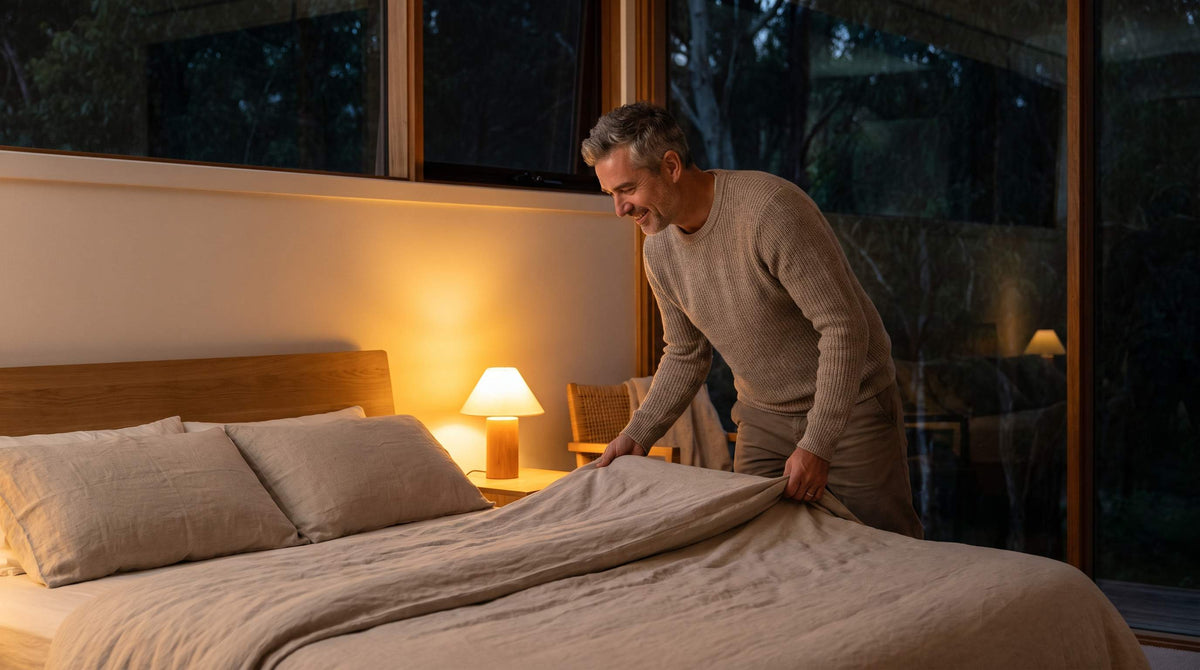
If you find yourself dragging out of bed multiple times a night to use the toilet, you're far from alone. It's remarkably common for men across Australia to deal with nocturia, yet it remains one of the most under-discussed urinary conditions in the country. Whether you live in suburban Melbourne, regional Queensland or inner-city Sydney, waking twice or more each night to urinate can erode your sleep, your mood and your overall health. The good news is that effective treatments, supportive products and Australian-funded care pathways exist — and understanding the condition is the first step toward reclaiming a decent night's rest.
What is nocturia? Causes and signs in Australian men
Nocturia is the clinical term for waking from sleep one or more times during the night to pass urine. While a single trip to the bathroom may be considered normal, two or more voids per night is the threshold most Australian urologists use when assessing the condition. The Sleep Health Foundation notes that nocturia is one of the leading causes of disrupted sleep in adults, and its prevalence increases sharply after the age of 50.
In men, the causes tend to cluster around a few key areas. An enlarged prostate — known medically as benign prostatic hyperplasia (BPH) — is the most frequent contributor. As the prostate grows, it can partially obstruct the urethra, making it harder to fully empty the bladder. Other common causes include overactive bladder syndrome, poorly controlled type 2 diabetes, cardiovascular conditions that cause fluid redistribution at night, and the use of certain medications such as diuretics.
Signs that nocturia may be affecting your quality of life include:
- Waking two or more times per night with a strong urge to urinate
- Difficulty falling back to sleep after each bathroom visit
- Daytime fatigue, irritability or poor concentration
- Anxiety about sleep or reluctance to share a bed with a partner
- Occasional leaks on the way to the toilet (urgency incontinence)
Here's the thing: nocturia isn't simply "part of getting older." While age is a risk factor, there's often a treatable underlying cause that a GP can investigate.
Who it affects and why it matters in Australia
According to the Continence Foundation of Australia, over five million Australians experience some form of bladder or bowel control problem. Nocturia affects a significant share of men aged over 50, though younger men dealing with prostate inflammation, sleep apnoea or metabolic conditions can also be affected. The impact stretches well beyond the bathroom — fragmented sleep is linked to higher rates of falls (particularly in older Australians), depression, reduced workplace productivity and strained relationships.
In regional Australia, where access to specialist urologists may involve long travel times, many men delay seeking help. Cultural attitudes around masculinity can also play a role; blokes in Perth or Brisbane may dismiss their symptoms as trivial rather than booking in with a bulk-billing GP. Yet early assessment can prevent the condition from worsening and significantly improve day-to-day wellbeing.
For partners and families, nocturia's ripple effects are real. Damp sheets from urgency leaks can cause embarrassment and disrupt a partner's sleep too. Using a product like the Ultra-Absorbent Washable Bed Pad can protect the mattress and reduce the stress of nighttime accidents for both parties.
Evidence-based care pathways Australians can access
The Australian healthcare system offers several well-supported avenues for diagnosing and managing nocturia. Your first port of call should be your local GP, who can conduct an initial assessment, arrange blood tests and referrals, and review your current medications. Under Medicare Australia, GP consultations and many diagnostic tests are covered or heavily subsidised, particularly if you hold a concession card.
What to expect at your GP appointment
Your doctor will likely ask you to keep a bladder diary for two to three days, recording fluid intake, voiding times and volumes. This simple tool helps distinguish between conditions such as nocturnal polyuria (producing too much urine at night), reduced bladder capacity and sleep-related disorders. The RACGP clinical guidelines recommend a stepwise approach: lifestyle modifications first, then medication if needed, and surgical options only when conservative measures haven't helped.
Lifestyle changes that Australian men find helpful include:
- Reducing caffeine and alcohol intake after midday
- Elevating the legs for an hour before bed to reduce peripheral oedema
- Timing fluid intake so the bulk is consumed earlier in the day
- Reviewing medications with your GP — some blood-pressure drugs can be shifted to a morning dose
- Treating underlying conditions such as sleep apnoea, which is itself a common cause of nocturia in Australian men
If your GP suspects BPH, you may be referred to a urologist. Medications such as alpha-blockers or 5-alpha-reductase inhibitors are available on the PBS and can significantly reduce nighttime urinary frequency. For men interested in prostate-supportive supplements, Orykas Prostate Health is formulated to complement — not replace — medical treatment and may be worth discussing with your healthcare provider.
How Orykas washable incontinence underwear supports confidence
While you're working through diagnosis and treatment, managing leaks practically is just as important as addressing the root cause. Many Australian men with nocturia experience small to moderate urgency leaks, especially on the walk from bed to the bathroom. Disposable pads can feel bulky, wasteful and uncomfortable — and the ongoing cost adds up quickly.
The Men's Washable Incontinence Briefs from Orykas offer a reusable, discreet alternative that looks and feels like regular underwear. Designed for overnight and daytime use, these briefs feature built-in absorbent layers that wick moisture away from the skin, helping to prevent irritation and odour. Because they're machine-washable, they reduce landfill waste and save money compared with single-use products over time.
Choosing reusable incontinence wear can also have a positive psychological effect. Men who feel confident in their protection are more likely to socialise, travel and sleep without the constant worry of an accident. For blokes across Adelaide, Darwin or anywhere in between, that sense of normality matters.
NDIS, CAPS and funding options for Australians
Australians living with ongoing incontinence may be eligible for financial assistance to cover the cost of continence aids. Two key schemes are worth investigating:
The Continence Aids Payment Scheme (CAPS), administered by Services Australia, provides an annual payment to help eligible individuals purchase continence products. To qualify, you'll generally need a referral from a continence nurse or GP confirming that your condition is permanent or long-term. The payment can be used towards washable or disposable products, giving you the freedom to choose what works best for your lifestyle.
If you're an NDIS participant with incontinence identified as a functional impact of your disability, continence supports — including washable underwear and bed protection — may be funded within your plan. Speak with your support coordinator or local area coordinator (LAC) about including these items at your next plan review.
For free, confidential advice on managing nocturia or accessing funding, contact the National Continence Helpline on 1800 33 00 66. Staffed by continence nurse advisors, the helpline can guide you through product selection, referral pathways and subsidy applications. The Continence Foundation of Australia also maintains an online directory of continence professionals searchable by state and postcode.
Frequently asked questions
How many times is it normal to urinate during the night?
Most health professionals consider waking zero to one time per night as within the normal range. If you're consistently waking twice or more, it's worth raising with your GP. For Australian men, nocturia is frequently linked to treatable conditions such as BPH or nocturnal polyuria, so early investigation can lead to meaningful improvement.
Can nocturia in men be cured?
In many cases, yes — or at least significantly improved. The outcome depends on the underlying cause. Lifestyle adjustments alone resolve symptoms for some men, while others benefit from medication available on the PBS. Surgical intervention for an enlarged prostate has high success rates when conservative options aren't sufficient. Your GP or urologist can outline a treatment plan tailored to your situation.
Are washable incontinence briefs effective for overnight use?
Modern washable incontinence underwear has come a long way. Products such as the Orykas men's briefs are engineered with multiple absorbent layers that handle light to moderate leaks comfortably throughout the night. They're a practical complement to medical treatment, giving you reliable protection while you work towards reducing your symptoms.
Where can I find a continence specialist near me in Australia?
The Continence Foundation of Australia offers an online service-finder tool that lets you search for continence nurses, physiotherapists and specialist clinics by location. Your GP can also provide a referral to a urologist or pelvic floor physiotherapist, with many consultations attracting a Medicare rebate. In regional areas, telehealth appointments are increasingly available and may be bulk-billed.
Taking the next step
Nocturia is common among Australian men, it's manageable, and there's nothing to be embarrassed about. Whether you start with a bladder diary, a conversation with your GP or simply switching to more reliable overnight protection, every step forward brings you closer to better sleep and better days. Don't let nighttime trips to the toilet define your quality of life — support, treatment and practical solutions are all within reach.
This article is informational and does not replace advice from your GP, a qualified continence nurse or a specialist.
Share:
Natural prostate support for Australian men: saw palmetto, pygeum and beta-sitosterol
Best urinary protection for nighttime leaks in men