



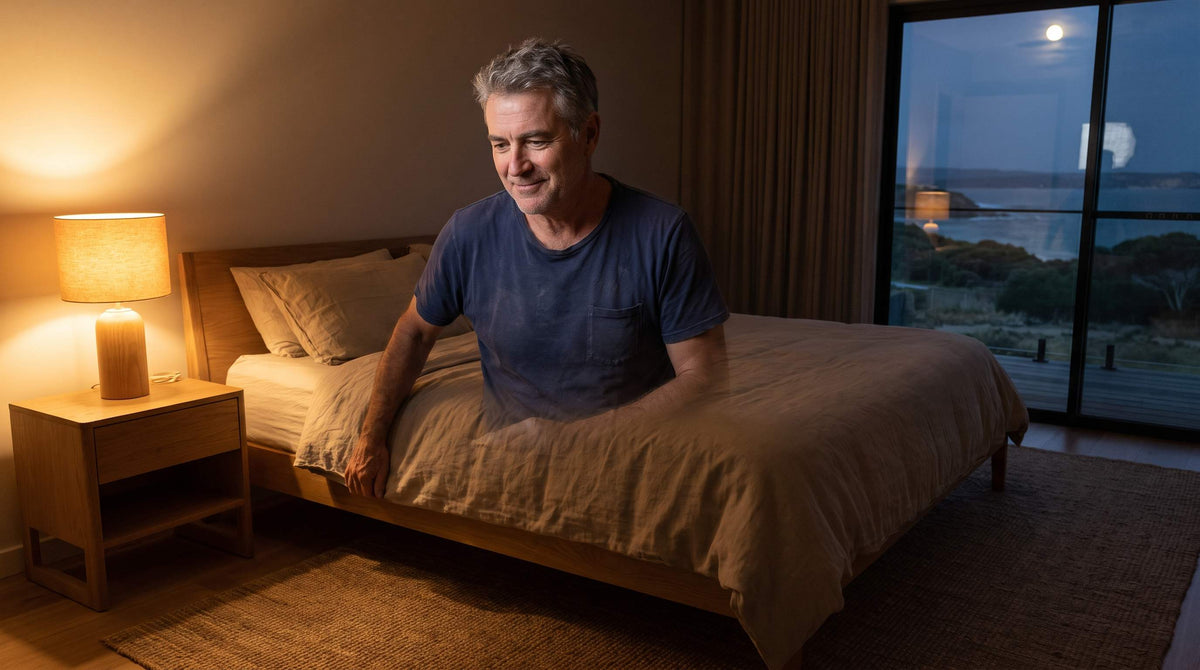
Waking up to damp sheets is more common than most blokes think — and it's nothing to be ashamed of. Across Australia, from suburban Sydney to regional Queensland, thousands of men quietly manage bladder leaks that strike overnight. Finding reliable nighttime incontinence protection men can trust is the first step toward reclaiming restful sleep and peace of mind. Whether you're dealing with an enlarged prostate, recovering from surgery, or navigating age-related changes, understanding your options — and the support available through Australia's healthcare system — can make an enormous difference.
What is nighttime incontinence in men? Causes and signs
Nighttime incontinence, clinically known as nocturnal enuresis or nocturia-related leakage, refers to the involuntary loss of urine during sleep. While many people associate bedwetting with childhood, adult-onset nocturnal incontinence affects a significant number of Australian men, particularly those over the age of 50. It can range from a few drops to a full void, and the causes are varied.
The most common contributors include benign prostatic hyperplasia (BPH), where an enlarged prostate presses against the urethra and disrupts normal bladder emptying. Post-prostatectomy incontinence is another frequent trigger — many men experience temporary or lasting leakage after prostate cancer surgery. Neurological conditions such as Parkinson's disease, multiple sclerosis, or spinal cord injuries can also impair the signals between the brain and bladder.
Other factors include overactive bladder syndrome, type 2 diabetes (which can increase urine production), obstructive sleep apnoea, and certain medications such as diuretics. Lifestyle factors like high caffeine or alcohol intake — particularly common in Australian social culture — can worsen symptoms. Recognising these signs early is key to finding effective nighttime incontinence protection for men.
Warning signs you shouldn't ignore
If you're experiencing any of the following, it's worth speaking with your GP sooner rather than later:
- Waking two or more times per night to urinate (nocturia)
- Finding damp or wet patches on your sheets in the morning
- A frequent urgent need to urinate that you can't always control
- Difficulty fully emptying your bladder before bed
- Noticing increased leakage after starting a new medication
Who it affects and why it matters in Australia
According to the Continence Foundation of Australia, over 5 million Australians experience some form of incontinence, and the condition is far more prevalent among men than public conversation would suggest. Many men delay seeking help due to embarrassment or the mistaken belief that leakage is simply an inevitable part of ageing. In reality, most forms of incontinence can be significantly improved or managed with the right approach.
The impact extends well beyond wet sheets. Poor sleep caused by nighttime leaks can lead to daytime fatigue, reduced concentration, irritability, and even depression. For men who share a bed with a partner, the anxiety around leakage can strain relationships and erode intimacy. Blokes in physically demanding jobs — tradies, shift workers, fly-in-fly-out workers in Western Australia and Queensland — may find that disrupted sleep compounds workplace safety risks.
The financial burden is real too. Constantly purchasing disposable pads and absorbent products adds up over months and years. This is one reason many Australian men are turning to reusable, washable solutions like Men's Washable Incontinence Briefs from Orykas — they look and feel like regular underwear while providing dependable overnight protection.
Evidence-based care pathways Australians can access
The good news is that Australia has a well-established healthcare framework for managing incontinence. Your first port of call should be your GP. Many bulk-billing GPs can conduct an initial assessment, which typically includes a physical examination, a review of your medications, and possibly a referral to a urologist or continence physiotherapist. Under Medicare Australia, specialist consultations and many diagnostic tests are covered or heavily subsidised.
The Royal Australian College of General Practitioners (RACGP) guidelines recommend a stepped approach to managing male incontinence. Conservative treatments — including pelvic floor muscle training, bladder retraining, and lifestyle modifications — are usually tried first. Many men are surprised to learn that pelvic floor exercises aren't just for women; strengthening these muscles can meaningfully reduce both daytime and nighttime leakage.
For more complex cases, your GP may refer you to a continence nurse specialist or a urologist. Treatments can include medication (such as anticholinergics or desmopressin for nocturnal polyuria), minimally invasive procedures, or surgery. The Continence Foundation of Australia operates the National Continence Helpline on 1800 33 00 66, a free service staffed by continence nurse advisors who can provide confidential advice and help you navigate the system.
Continence physiotherapists, many of whom operate in major cities like Melbourne, Brisbane, Perth, and Adelaide, can design tailored exercise programmes. Some offer telehealth consultations, making specialist support accessible to men in regional Australia as well.
Practical strategies for managing nighttime leaks
While medical treatment addresses the underlying cause, practical nighttime strategies can dramatically improve your quality of life in the meantime. Effective nighttime incontinence protection for men combines behavioural adjustments with the right absorbent products.
Consider these evidence-informed tips for reducing overnight leakage:
- Limit fluid intake in the two to three hours before bed, particularly caffeine and alcohol.
- Double-void before sleep — urinate, wait a few minutes, then try again to fully empty the bladder.
- Elevate your legs for 30 minutes in the evening to help your body process excess fluid before bedtime.
- Review your medications with your GP — some can be taken earlier in the day to reduce overnight urine production.
- Use purpose-designed absorbent protection to safeguard your mattress and maintain dignity.
Layering your protection is a smart approach. Wearing absorbent incontinence underwear to bed, combined with a waterproof mattress protector, provides a reliable two-barrier system. The Ultra-Absorbent Washable Bed Pad from Orykas is designed to sit on top of your sheet, catching any leakage that escapes your underwear and keeping your mattress dry. Because it's machine washable, it's both cost-effective and environmentally friendlier than disposable alternatives.
For men who want a comprehensive starter kit, The Essential Orykas Set bundles key products together, making it easy to establish a reliable nighttime routine without the guesswork.
How Orykas washable incontinence underwear supports confidence
One of the biggest barriers to seeking nighttime incontinence protection men face is the perception that absorbent products are bulky, uncomfortable, or undignified. Many disposable options rustle, shift during sleep, or feel clinical. This is precisely where washable incontinence underwear offers a genuine advantage.
Orykas designs its men's range to look and feel like everyday briefs. The built-in absorbent layers are discreet, sitting flush against the body without adding bulk. The fabric wicks moisture away from the skin, helping to reduce irritation and the risk of dermatitis — a common concern for men who experience regular overnight leakage. Because they're reusable, they also eliminate the ongoing cost and waste associated with disposables.
For Australian men, the practicality matters. You can toss them in the washing machine with your regular load, hang them on the Hills Hoist, and they're ready to go again. Over a year, the savings compared to buying disposable pads or pull-ups can be substantial — money that can go toward a weekend away, not the supermarket aisle you'd rather avoid.
Choosing the right level of absorbency depends on the severity of your leakage. Light leakers may only need a single pair of absorbent briefs, while heavier overnight loss may call for combining underwear with a bed pad. The key is finding a combination that lets you sleep through the night without anxiety.
NDIS, CAPS and funding options for Australians
Managing incontinence shouldn't break the bank, and several Australian government programmes exist to help cover the cost of continence products. Understanding your eligibility can significantly reduce out-of-pocket expenses.
The Continence Aids Payment Scheme (CAPS), administered by Services Australia, provides an annual payment to eligible individuals to help cover the cost of continence products. To qualify, you generally need a referral from a continence nurse or medical professional confirming your condition. The payment can be used toward a range of products, including washable underwear and bed pads, giving you the flexibility to choose what works best for your situation.
If you're living with a disability and have an approved NDIS plan, continence supports may be included under your consumables or assistive technology budget. Your NDIS planner or support coordinator can help determine whether nighttime protection products fall within your funded supports. Many participants find that investing in durable, washable products like those from Orykas stretches their funding further than relying solely on disposables.
Veterans may also be eligible for support through the Department of Veterans' Affairs (DVA), which can cover continence products as part of a broader healthcare plan. Your GP or treating specialist can assist with the necessary paperwork for any of these schemes.
Frequently asked questions
Is nighttime incontinence in men common?
Yes, it's far more common than most people realise. The Continence Foundation of Australia notes that incontinence affects Australians of all ages and backgrounds. In men, prevalence increases notably after the age of 50, often in connection with prostate conditions. Many men experience nighttime leaks but don't seek help, which means the true numbers are likely higher than reported. If you're dealing with overnight leakage, you're certainly not alone — and effective nighttime incontinence protection for men is readily available.
Can nighttime incontinence in men be cured?
In many cases, yes — or at least significantly improved. The outcome depends on the underlying cause. Post-surgical incontinence often resolves within months with pelvic floor rehabilitation. BPH-related leakage can be managed with medication or minimally invasive procedures. Even when a complete cure isn't possible, the right combination of treatment, behavioural strategies, and quality protection products can reduce leakage to a manageable level. Speak to your GP about a personalised management plan.
Are washable incontinence products hygienic?
Absolutely. Modern washable incontinence underwear and bed pads are designed with antimicrobial fabrics and moisture-wicking layers that help prevent bacterial growth and odour. Machine washing at the recommended temperature effectively sanitises them for reuse. Many men find that washable products actually feel fresher against the skin than disposables, which can trap heat and moisture. Proper care — washing promptly after use and drying thoroughly — ensures they remain hygienic over their lifespan.
How do I access the Continence Aids Payment Scheme (CAPS)?
To access CAPS, you'll need an assessment from a qualified continence professional — typically a continence nurse or your GP — who can confirm your condition and complete the required paperwork. Once approved, Services Australia provides an annual payment that you can use to purchase eligible continence products. You can call the National Continence Helpline on 1800 33 00 66 for guidance on starting the application process. The helpline staff can also help you find a continence professional in your area, whether you're in a capital city or regional Australia.
This article is informational and does not replace advice from your GP, a qualified continence nurse or a specialist.
Share:
Nocturia in Australian men: why you wake up to wee
Sleep and the bladder: how Australian shift workers manage continence