

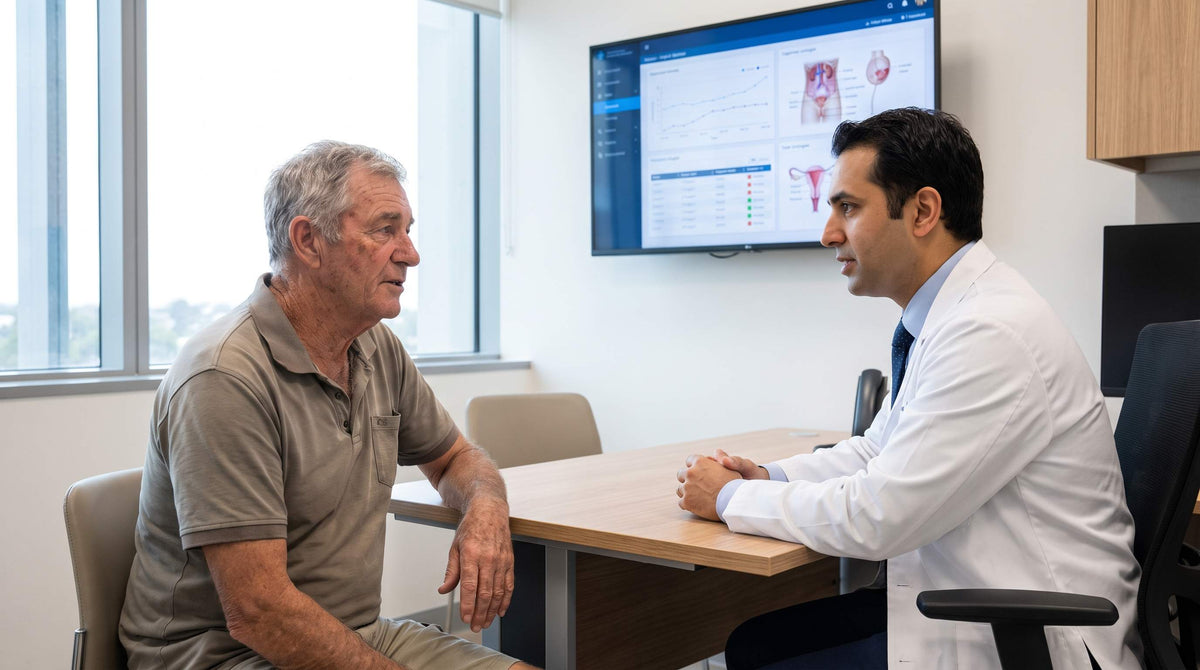

For many Australian men, overflow incontinence is a condition that goes unspoken for years — dismissed as "just getting older" or too embarrassing to raise with a GP. Yet overflow incontinence, a type of urinary leakage caused by the bladder failing to empty fully, is far more common in men than most people realise, and it's both diagnosable and treatable. Understanding what's happening inside the body is the first step towards regaining control, comfort, and confidence in everyday life.
What is overflow incontinence? Causes and signs in Australian men
Overflow incontinence occurs when the bladder never fully empties, causing urine to accumulate until it eventually leaks — often in small amounts, frequently, and without the usual warning urge. Unlike urgency incontinence (where a sudden, intense urge to reach the toilet strikes with little warning) or stress incontinence (triggered by coughing or sneezing), overflow incontinence tends to produce a steady dribble or a persistent sense that the bladder never quite drains, no matter how long you stand at the urinal.
The most common underlying cause in Australian men is obstruction of the urinary outlet. Benign prostatic hyperplasia (BPH) — an enlarged prostate — is the leading culprit. Because the prostate naturally grows with age, BPH becomes increasingly prevalent in men over 50, compressing the urethra and making it progressively harder for the bladder to push urine out completely. Other causes include urethral stricture (a narrowing of the urethra from infection or injury), bladder stones, and nerve damage resulting from diabetes, multiple sclerosis, spinal injury, or surgery to the pelvis or rectum.
Some medications can also impair the bladder's ability to contract effectively, including certain antihistamines, antidepressants, and drugs used to manage blood pressure. If you've recently started a new prescription and noticed changes in your urinary pattern, discuss this with your GP or pharmacist before stopping any medication yourself.
Recognising the warning signs
Because overflow incontinence often develops gradually, many men adapt their habits around it — visiting the bathroom more frequently, avoiding long car trips, or quietly choosing seats near exits — without ever identifying it as a medical condition. Key signs to watch for include:
- A weak or intermittent urine stream that takes time to start
- The sensation that the bladder has not emptied fully after voiding
- Frequent, small leaks throughout the day without a strong urge to urinate
- Needing to urinate again shortly after leaving the bathroom
- Dribbling at the end of urination that lingers longer than usual
- Waking multiple times during the night to pass urine (nocturia)
If any of these sound familiar, it's important not to normalise them. The Continence Foundation of Australia emphasises that continence problems aren't a natural or inevitable part of ageing, and that effective treatment exists for the vast majority of people who seek help.
Who overflow incontinence in men affects — and why it matters

Overflow incontinence in men is closely tied to prostate health, which means its prevalence rises significantly with age. Research supported by the Continence Foundation of Australia indicates that urinary problems affect a substantial proportion of Australian men over 50, with rates climbing higher still in men over 70. Yet despite this, many men wait years before seeking help — citing embarrassment, a belief that nothing can be done, or simply not knowing where to turn.
The condition carries a real burden beyond the physical inconvenience. Men managing urinary leakage often find themselves pulling back from social activities, avoiding travel, and withdrawing from intimate relationships. In the workplace, the anxiety of unpredictable leaks can make it difficult to concentrate, particularly in roles that limit bathroom access — something especially relevant for tradespeople, long-haul drivers, and those working in regional Australia where facilities may be scarce or few and far between.
From a public health perspective, untreated overflow incontinence can lead to serious complications, including recurrent urinary tract infections, bladder damage from chronic overdistension, and — in severe cases — kidney damage caused by back-pressure of retained urine. This makes early intervention not merely a quality-of-life issue, but a genuine clinical priority that the RACGP encourages GPs to actively screen for in older male patients presenting with lower urinary tract symptoms.

Evidence-based care pathways Australians can access
The good news is that a range of evidence-based treatment options are available through the Australian healthcare system, many of which are accessible with a standard bulk-billing GP appointment. The RACGP (Royal Australian College of General Practitioners) recommends that men presenting with lower urinary tract symptoms receive a thorough clinical assessment before any treatment begins, to identify the underlying cause and rule out more serious conditions, including prostate cancer.
Your GP is typically the first port of call. A consultation will usually involve a medical history review, a physical examination (including a digital rectal examination to assess prostate size), a urine dipstick test, and a discussion about your voiding patterns. Your GP may then refer you to a urologist for specialist assessment, which may include uroflowmetry (measuring urine flow rate) or a bladder ultrasound to measure post-void residual volume — that is, how much urine remains in the bladder after you urinate.
Treatment depends on the underlying cause. For men with BPH, alpha-blocker medications (many of which are available on the PBS) can relax the smooth muscle of the prostate and bladder neck, improving urine flow relatively quickly. Five-alpha reductase inhibitors may also be prescribed to reduce prostate volume over time. Where medication proves insufficient, minimally invasive procedures such as transurethral resection of the prostate (TURP) or newer options like UroLift may be discussed with your urologist. For men whose overflow incontinence is neurogenic in origin, intermittent self-catheterisation or an indwelling catheter may be recommended to prevent bladder overdistension and protect kidney function.
Pelvic floor physiotherapy, while more commonly associated with women, is also beneficial for certain men with bladder dysfunction. A continence physiotherapist can assess your pelvic floor muscle function and design a personalised programme. The National Continence Helpline (1800 33 00 66) can connect you with continence nurses and local continence services across Australia — whether you're in Sydney, Melbourne, Perth, or a remote community — at no cost to you.
How Orykas washable men's incontinence underwear supports confidence
While medical treatment works to address the root cause of overflow incontinence, many men find it helpful — and often essential — to have reliable protection during the treatment journey and beyond. Disposable pads and pull-up products are widely used, but they can feel bulky, generate considerable waste, and prove costly when used daily over months or years. Washable, reusable incontinence underwear offers a practical and sustainable alternative that more and more Australian men are choosing.
Orykas has designed a range of men's incontinence underwear built to look and feel like everyday underwear while providing meaningful absorbency for light to moderate leakage. The ultra-absorbent men's incontinence briefs offer a close, supportive fit and are crafted from soft, breathable fabric that manages moisture discreetly throughout the day. For those who prefer a roomier, more relaxed cut, the washable men's boxer brief style delivers the same level of absorbency in a silhouette that feels just like regular underwear — ideal for men who find traditional briefs uncomfortable.
Both styles are designed to be machine-washed and reused many times over, making them a cost-effective and environmentally conscious choice. Men managing overflow incontinence alongside a treatment plan often share that having dependable, discreet underwear has allowed them to return to activities they'd quietly stopped — whether that's visiting grandchildren in Brisbane, attending a footy match in Adelaide, or simply getting through a full workday without anxiety about leaks.
For men who want to take a broader approach to prostate wellness alongside their continence management, it may be worth taking a look at the Orykas Prostate Health supplement, formulated with ingredients traditionally associated with prostate wellbeing. As always, speak with your GP before adding any supplement to your routine, particularly if you're already taking prescribed medications. To compare styles and absorbency levels in one place, you can browse the full range of Orykas men's incontinence underwear and find the fit that suits your daily needs.

NDIS, CAPS and funding options for Australian men
The ongoing cost of managing incontinence can add up quickly, and the Australian Government has established several programmes designed to ease that financial pressure. Understanding which options you may be eligible for is well worth the effort, and your GP or continence nurse can help guide you through the process.
The Continence Aids Payment Scheme (CAPS), administered by Services Australia, provides an annual payment to eligible Australians to help offset the cost of continence aids such as absorbent underwear and pads. To qualify, you generally need a permanent bladder or bowel condition requiring the ongoing use of continence aids, and you must be enrolled with Medicare Australia. The application is straightforward and can be completed with support from your GP or a continence nurse.
For Australians living with a disability — including those whose overflow incontinence stems from neurological conditions such as multiple sclerosis or spinal cord injury — the NDIS (National Disability Insurance Scheme) may fund continence-related supports as part of a participant's plan. This can include continence assessments, physiotherapy, and consumable continence products. If you're an NDIS participant who hasn't yet discussed bladder management with your support coordinator or planner, it's worth raising at your next plan review.
Medicare Australia also covers a range of specialist consultations and diagnostic procedures relevant to overflow incontinence in men, including urologist appointments under a GP referral, ultrasound studies, and urodynamic testing. Eligibility criteria and Medicare item numbers apply, so your GP can advise on what is covered in your situation. The following points summarise the key funding avenues worth exploring:
- CAPS (Services Australia) — annual payment for eligible Medicare card holders with a permanent continence condition
- NDIS — funding for continence aids and assessments for eligible participants; raise it at your next plan review
- Medicare Australia — rebates on specialist urology referrals, ultrasounds, and urodynamic assessments under a GP referral
- PBS — subsidised medications for BPH and related lower urinary tract conditions
- Private health insurance extras — some policies cover continence physiotherapy; check your fund's schedule of benefits
Frequently asked questions
Is overflow incontinence the same as an overactive bladder?
No — these are distinct conditions with different causes and treatment approaches. An overactive bladder typically produces a sudden, intense urge to urinate and may result in urgency incontinence if you can't reach the toilet in time. Overflow incontinence, by contrast, is caused by the bladder failing to empty fully, resulting in small, frequent leaks that often occur without a strong urge. Because the treatments differ considerably, an accurate diagnosis from your GP or a urologist is essential before committing to any management plan.
Can overflow incontinence in men be cured?
In many cases, yes — particularly when an identifiable, treatable obstruction such as BPH is the cause. With appropriate medical or surgical management, many men experience a substantial reduction in symptoms or full resolution. Where the cause is neurological and not reversible, highly effective long-term management strategies — including catheterisation programmes and continence aids — are available to maintain a good quality of life. As a general rule, earlier diagnosis tends to lead to better outcomes, which is why raising your concerns with a GP sooner rather than later is so worthwhile.
How do I talk to my GP about bladder problems?
Many men find this conversation uncomfortable, but GPs deal with urinary concerns regularly — it's a routine part of their clinical workload. A simple opening such as "I've been having some trouble with my waterworks" or "I've noticed I'm not emptying properly" is enough to start the discussion. If you'd prefer to speak with someone before your appointment, you can call the National Continence Helpline on 1800 33 00 66 for a confidential conversation with a continence nurse, who can help you prepare questions and explain what to expect from a GP assessment.
Are washable incontinence briefs suitable for overflow incontinence?
Washable incontinence underwear is particularly well-matched to the leakage pattern associated with overflow incontinence — small, frequent amounts rather than large sudden voids. Products like those in the Orykas range are designed with this kind of day-to-day management in mind, offering genuine absorbency in a discreet, everyday style. They work best as a complementary measure alongside medical treatment, giving you the confidence and hygiene support you need while pursuing a longer-term solution with your healthcare team. Many men find that making this switch also removes the ongoing expense and waste of disposable products.
This article is informational and does not replace advice from your GP, a qualified continence nurse or a specialist.
Share:
6 travel tips for Australian men with bladder leaks
Introducing the Orykas 150ml Sport Boxer: light leak protection for active Australian men