



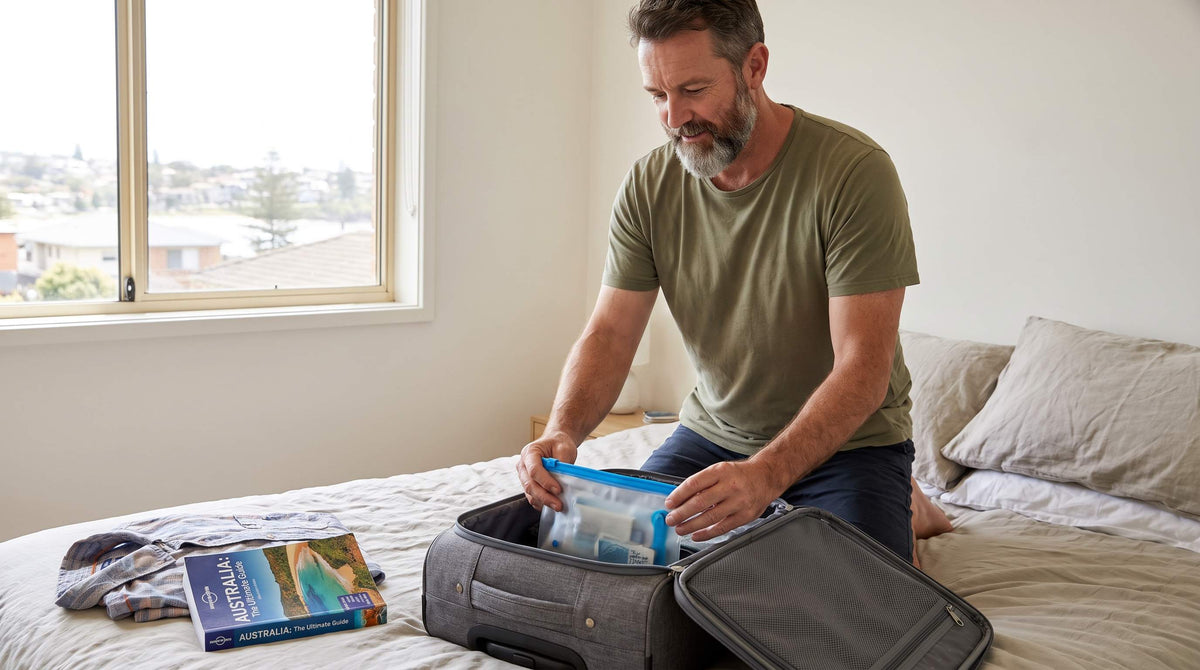

For the many Australian men quietly managing bladder leaks day to day, the prospect of hitting the road — or the skies — can feel genuinely daunting. The good news is that, with a bit of preparation, travel is absolutely achievable. These travel tips for incontinence in men across Australia are designed to help you plan smarter, pack lighter, and enjoy your next adventure with far more confidence, whether you're driving the Great Ocean Road, catching a flight out of Sydney, or heading somewhere remote in regional Australia.
1. Map out toilet stops before you leave home
One of the most practical things you can do before any trip is to plan your route around known toilet facilities. The Toilet Map Australia app — supported by the Continence Foundation of Australia — shows you the location of public toilets across the country, including accessible facilities in regional areas where amenities can be sparse. Downloading it and saving key stops before you set off can make a road trip significantly less stressful.
If you're travelling by train, coach, or ferry, check ahead whether the service has onboard facilities and where rest stops fall along the route. For long drives through outback Queensland or Western Australia, gaps between towns can be substantial, so building in planned stops every 90 to 120 minutes is a sensible strategy rather than waiting until urgency strikes.
The Continence Foundation of Australia offers a wealth of free resources about managing bladder conditions while on the go. Their National Continence Helpline — 1800 33 00 66 — is available Monday to Friday and staffed by trained continence nurses who can give personalised advice ahead of a big trip, including guidance on bladder training and urgency reduction techniques that make travel more manageable.
2. Pack a dedicated travel kit

Travelling with incontinence is far less stressful when you have everything you need within arm's reach. Rather than cramming supplies into an overflow bag or hoping for the best, assemble a compact, discreet travel kit you can carry in a day pack, backpack, or under-seat bag. Think of it the way you'd think about any other essential travel item — sunscreen, medication, charger — just one more thing to prepare.
A good kit should include spare incontinence underwear, personal wipes for quick freshening up, a change of lightweight clothing, and a waterproof bag for used items. Keeping everything in one dedicated pouch means you're not rummaging through your entire bag in a cramped aeroplane toilet. The Orykas waterproof carry pouch is slim, discreet, and easy to tuck into any bag without drawing attention — purpose-built for exactly this situation.
If you'd prefer an all-in-one solution, the Orykas travel set includes everything you need to stay confident on the move. Having a consistent system you can replicate across every trip — whether it's a long weekend in Melbourne or a month abroad — takes the guesswork out of packing and means one less thing to worry about before departure.
3. Choose the right underwear for the journey
The single biggest comfort upgrade most men make when travelling with bladder leaks is switching to purpose-built washable incontinence underwear. Unlike bulky pads or single-use products that can bunch, shift, or leak, well-designed absorbent underwear looks and feels like regular underwear — important when you're going through airport security, sharing hostel facilities, or simply want to feel like yourself on holiday.
For men who experience light to moderate leaks — the kind associated with post-prostatectomy recovery, an overactive bladder, or age-related changes — the Orykas absorbent boxer for light leaks offers a discreet, comfortable option that holds up through a full day of sightseeing. The washable design means you're not filling landfill with single-use products or paying for disposables every time you travel.
When packing, bring at least three to four pairs so you can wash and rotate during longer trips. Washable underwear dries quickly even in hotel bathrooms, making it genuinely practical for travel. Explore the full range of men's washable incontinence underwear to find the style and absorbency level that best suits your needs before your next trip.
4. Manage your fluid intake without missing out
One of the most counterproductive things men with bladder leaks do when travelling is drastically reduce how much they drink. It feels logical — less in, less out — but concentrated urine actually irritates the bladder lining and can worsen urgency and frequency. Staying adequately hydrated matters, and it's especially important in the Australian heat.
Instead of cutting fluids, focus on what and when you drink. Caffeine — found in coffee, tea, and cola — is a well-recognised bladder irritant and diuretic, so reducing your intake during a long drive or flight can make a real difference. Alcohol has a similar effect. Many men find that shifting their main fluid intake to the first half of the day, then tapering off in the afternoon, helps manage overnight leaks more effectively without affecting daytime travel.
- Aim for around 1.5 to 2 litres of water per day unless your GP advises otherwise
- Reduce caffeinated drinks — coffee, tea, energy drinks — on travel days
- Avoid alcohol on long flights, as it dehydrates and increases urgency
- Sip water steadily throughout the day rather than drinking large amounts at once
- Be mindful of carbonated drinks, which can increase bladder activity in some men
- Plan to have your main fluid intake in the morning and early afternoon
If you're on medications such as diuretics prescribed through the PBS, speak with your GP or pharmacist about the best time to take them relative to your travel schedule. A bulk-billing GP appointment before a major trip is a worthwhile investment and can help you review whether your current management plan is the best fit for travelling.
5. Navigate airports, flights, and long drives with confidence
For many men, the most anxiety-inducing part of travelling with incontinence is the unpredictability of long-haul situations — a delayed flight, a traffic jam, a scenic cruise with no quick access to facilities. The key is building in buffers and communicating your needs where appropriate, without making it a bigger deal than it needs to be.
Flying domestically or internationally
When flying out of Brisbane, Perth, Adelaide, or any other Australian airport, arrive with enough time to use facilities before boarding. Choose an aisle seat when booking — most airlines allow seat preferences at the time of booking or via the manage-booking portal. Aisle seats give you easy access to the aeroplane toilet without disturbing fellow passengers or feeling like you need to strategically time your trips.
On domestic flights, you're rarely more than 90 minutes from your destination. On international routes, plan your movements during less-busy periods — cabin crew can advise when queues at the toilets tend to be shortest. If you have a NDIS plan that includes continence support, your plan manager or support coordinator may be able to assist with sourcing supplies in bulk before travel, which can reduce luggage weight and simplify packing.
- Book aisle seats on all flights for easy, unobtrusive toilet access
- Use airport toilets immediately before boarding
- Carry all your supplies in your carry-on, never in checked luggage
- Wear your most reliable absorbent underwear on long travel days
- Let cabin crew know discreetly if you have specific needs — they are well accustomed to helping
6. Know your funding and support options before you go
One area many Australian men overlook when planning a trip is funding — and it's worth knowing what's available before you depart. Continence products can add up over time, and there are Australian government schemes designed to help. The Continence Aids Payment Scheme (CAPS), administered through Services Australia, provides eligible Australians with a payment to help cover the cost of continence products. Eligibility is based on having a permanent and severe functional incontinence — your GP or continence nurse can advise whether you qualify and assist with the application.
If you're covered by a NDIS plan, continence-related consumables may be included under your plan funding depending on how your goals are structured. It's worth discussing this with your plan manager before your trip to make sure you have adequate supply organised in advance. For those not on the NDIS, talking to a RACGP-affiliated GP about a Chronic Disease Management plan referral to a continence physiotherapist or nurse may open up Medicare-rebated support services that can make a meaningful difference.
Knowing what you're entitled to can improve both your budget and your confidence before departure. The National Continence Helpline at 1800 33 00 66 can connect you with a continence nurse who can point you toward the right scheme for your situation — free of charge, anywhere in Australia.
Frequently asked questions
Is it safe to travel with urinary incontinence?
Yes, absolutely. Many Australians travel domestically and internationally while managing bladder leaks. With the right preparation — choosing appropriate incontinence underwear, planning toilet access, and packing a dedicated travel kit — travel is entirely achievable and enjoyable. Speaking with a continence nurse via the National Continence Helpline (1800 33 00 66) before a major trip can help you put a solid plan in place.
What are the best travel tips for men managing incontinence on long-haul flights?
Book an aisle seat, carry all your supplies in your hand luggage, and wear your most reliable absorbent underwear on travel days. Reduce caffeine and alcohol intake during the flight, stay hydrated with water, and take advantage of quieter periods in the cabin to use the facilities. Washable incontinence underwear is particularly practical for long-haul travel as it keeps you comfortable for extended periods without the bulk or unreliability of single-use pads.
Can I access continence products through Medicare or government schemes while travelling?
The Continence Aids Payment Scheme (CAPS), administered by Services Australia, can help eligible Australians with the cost of continence products — including when you're travelling within Australia. If you're on a NDIS plan, continence consumables may be covered depending on your plan goals. For Medicare-rebated services, a GP referral under a Chronic Disease Management plan may provide access to allied health support such as a continence physiotherapist. Ask your bulk-billing GP for guidance on what applies to your specific situation.
How do I manage incontinence discreetly while travelling with others?
Discretion is often a top concern for men managing bladder leaks on group trips or family holidays. Using washable absorbent underwear that looks and feels like regular underwear makes a significant difference to your own comfort and confidence. A slim, dedicated pouch for your supplies — kept in your day pack — means you can duck to the toilet without fuss or explanation. Many men find that once they have a reliable system in place, managing their condition on the road becomes second nature.
This article is informational and does not replace advice from your GP, a qualified continence nurse or a specialist.
Share:
How to wash incontinence underwear properly: Australian laundry guide
Overflow incontinence in Australian men: when the bladder doesn't empty fully