



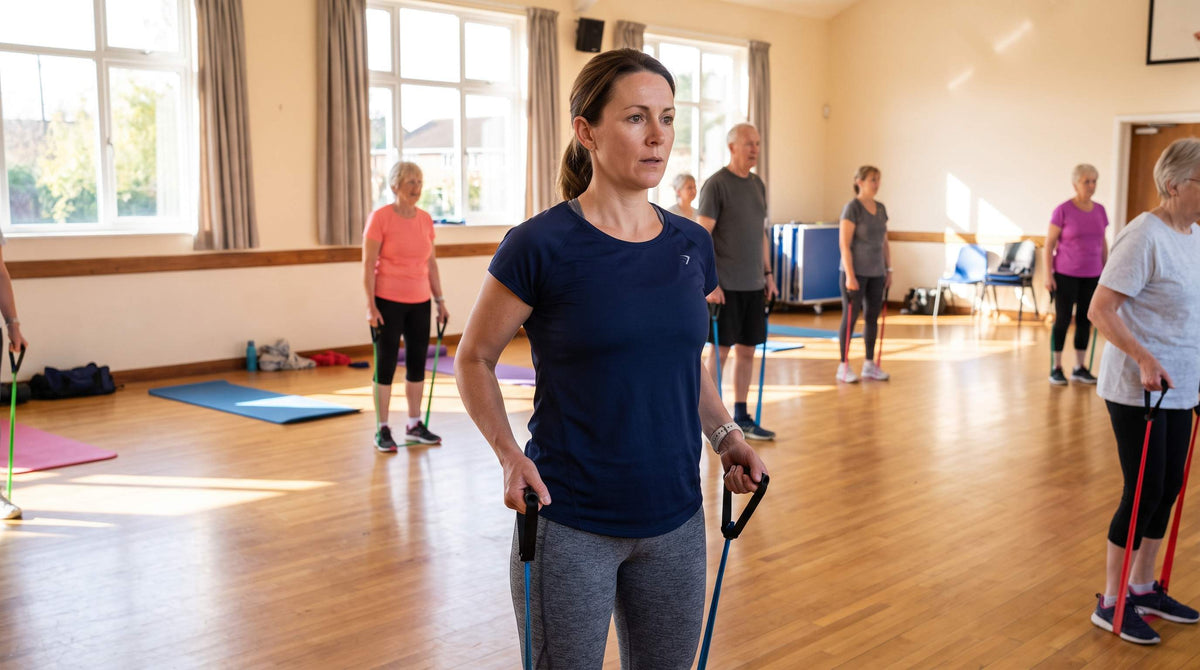

For many Australian women, the decision to lace up their runners or roll out a yoga mat is complicated by a concern that rarely gets discussed out loud — leaking when they laugh, jump, or sprint. The truth is, stress incontinence during exercise is far more common for Australian women than most people realise, yet embarrassment and a lack of good information stop countless women from seeking help or staying active.
What is stress incontinence, and what causes it?
Stress urinary incontinence (SUI) occurs when physical movement or activity — such as coughing, sneezing, running, or lifting — puts sudden pressure on the bladder. That pressure briefly overwhelms the sphincter muscles that keep urine in, resulting in a small leak. The word "stress" here refers to physical stress on the body, not emotional stress, which is a distinction many women find reassuring once they understand it.
The root cause is usually a weakened or poorly co-ordinated pelvic floor. The pelvic floor is a hammock of muscles, ligaments, and connective tissue that supports the bladder, uterus, and bowel. When those structures are compromised — whether through pregnancy and childbirth, hormonal changes around menopause, ageing, or repeated high-impact exercise — the support system becomes less able to resist sudden rises in abdominal pressure.
Common exercise triggers include:
- Running and jogging, particularly on hard surfaces
- Jump squats, star jumps, and HIIT-style workouts
- Heavy weightlifting or CrossFit-style training
- Skipping and rope-jumping
- High-impact group fitness classes such as aerobics or dance
- Trampolining, even gentle rebounding for fitness
Lower-impact activities like swimming, cycling, walking, or Pilates are generally easier to manage, which is why many physiotherapists recommend them as a starting point for women working to rebuild pelvic floor strength. Understanding your specific triggers is a powerful first step toward keeping your exercise routine intact.
Who it affects and why it matters in Australia

The Continence Foundation of Australia estimates that millions of Australians live with some form of bladder or bowel control problem, and women are significantly more likely to be affected than men. Among women, stress urinary incontinence is the most prevalent type — particularly in those who have given birth vaginally, those going through the perimenopause and menopause transition, and recreational or elite athletes who train intensively.
A significant share of women aged over 50 will experience stress incontinence at some point, and younger women — including competitive runners, gymnasts, and team sport players — are by no means immune. Research consistently shows that high-impact sport increases the risk, which creates a frustrating catch-22: exercise is essential for long-term health, yet the very activity that protects against chronic disease can provoke leaking. It can be deeply discouraging, especially when you've worked hard to build a fitness habit.
The social and psychological impact is substantial. Many women quietly reduce or stop their exercise routines, withdrawing from community sporting events like Parkrun Australia events, team sport, or gym classes they once loved. This withdrawal can have a knock-on effect on mental health, cardiovascular fitness, bone density, and healthy weight management. It can also deepen feelings of isolation, particularly for women in regional Australia who already have more limited access to allied health services.
The good news is that stress incontinence during exercise is treatable, manageable, and — for many women — significantly improvable with the right support. Understanding that it is a legitimate health condition, not an inevitable consequence of ageing or motherhood, is the critical first step toward doing something about it.

Evidence-based care pathways Australians can access
Australia has a well-developed network of continence services, though awareness of what's available remains patchy. The starting point for most women is a bulk-billing GP, who can assess symptoms, rule out other causes such as urinary tract infections, and refer on to appropriate specialists. GPs who follow RACGP clinical guidelines will typically discuss pelvic floor muscle training before considering other interventions, as supervised physiotherapy is considered first-line treatment internationally and is supported by strong evidence.
Working with a pelvic floor physiotherapist
A women's health physiotherapist — sometimes called a pelvic floor physiotherapist — can assess muscle function in detail, identify whether the pelvic floor is underactive, overactive, or poorly co-ordinated, and design a personalised exercise programme tailored to your goals. The Australian Physiotherapy Association maintains a directory of practitioners with pelvic floor expertise across all major cities, including Sydney, Melbourne, Brisbane, Perth, and Adelaide, and increasingly in regional and rural areas via telehealth consultations. Many services are partially covered by Medicare Australia with a GP referral under a Chronic Disease Management plan, which can make accessing quality care far more affordable.
There's strong evidence behind supervised pelvic floor muscle training. Most women see meaningful improvement within eight to twelve weeks of consistent practice, and many achieve significant resolution of symptoms. A physiotherapist can also advise on exercise modification — for example, how to adjust running technique, breathing patterns, and training load to reduce leaking during exercise sessions while you build strength. This kind of tailored guidance is far more effective than generic advice found online.
Beyond physiotherapy, other evidence-based options include:
- Continence nurse specialists, who can advise on products, techniques, and referral pathways
- Urogynaecologists, for women whose symptoms have not responded to conservative treatment
- Bladder training programmes and fluid management advice
- Pessaries — small silicone devices worn internally to support the bladder neck during exercise
The National Continence Helpline, available on 1800 33 00 66, is a free service staffed by continence nurses who can answer your questions confidentially, help you understand your options, and connect you with services in your local area. It's an excellent first call if you're not sure where to start or feel uncomfortable raising the issue with your regular GP.
How Orykas washable incontinence underwear supports confidence during exercise
Managing stress incontinence during exercise is rarely just about treatment — it's also about having reliable, comfortable protection that lets you get on with your workout without anxiety. Disposable pads can shift, bunch, or feel uncomfortable during high-impact movement, and many women find them poorly suited to activewear. Washable absorbent underwear designed specifically for incontinence offers a more discreet, sustainable, and day-to-day-practical alternative for active women.
Orykas has developed its range with active Australian women in mind. The high-waisted washable incontinence pants feature a multi-layer absorbent core that locks moisture away from the skin, a comfortable waistband that stays in place during movement, and a sleek profile that sits neatly under leggings or gym shorts without bulking or crinkling. They're machine washable, which makes them far more practical for women who exercise regularly and need reliable daily protection without constantly restocking disposables.
For women who prefer a different cut for everyday wear alongside their active days, the lace-waistband washable incontinence pants offer the same absorbent protection in a style that feels more like regular everyday underwear. Switching between styles depending on the activity — structured support for the gym, something softer for rest days — is a straightforward way to maintain both comfort and confidence throughout the week.
If you exercise away from home — at the gym, along a Parkrun Australia course, or at a local oval — the waterproof carry pouch is a thoughtful addition to your kit bag. It lets you discreetly carry a clean pair and store a used pair without any leakage or odour, keeping your bag fresh and your routine uninterrupted. Women exercising with stress incontinence often tell us that having a reliable system in place — good underwear, a clean change, and a discreet way to carry it — makes all the difference to their willingness to keep showing up. Browsing the full women's washable incontinence underwear collection is a good way to find the combination that suits your lifestyle and the activities you love.

NDIS, CAPS and funding options for Australians
Cost should never be a barrier to managing incontinence, and Australia has several funding mechanisms that may reduce or cover out-of-pocket expenses for eligible women. The Continence Aids Payment Scheme (CAPS), administered by Services Australia, provides an annual payment to help cover the cost of continence products for people with permanent and severe incontinence. It's worth checking your eligibility if you currently rely on incontinence products on a daily or near-daily basis, as the scheme can make a meaningful difference to the household budget.
For women who are NDIS participants, continence-related support may be fundable under your plan depending on your individual goals and how your plan is structured. This can include physiotherapy, continence nursing assessments, and in some cases, continence products. Raising continence needs at your next NDIS plan review is worthwhile — a formal continence assessment from a registered health professional can strengthen the case for funding and ensure you are getting the support you are entitled to.
Beyond these schemes, Medicare Australia can contribute to the cost of allied health consultations for women with a GP Management Plan or Team Care Arrangement. Under these pathways, up to five allied health visits per calendar year — which could include physiotherapy sessions focused on pelvic floor rehabilitation — attract a Medicare rebate, meaningfully reducing the cost of accessing expert care. Ask your bulk-billing GP about whether you qualify; for many women with chronic or recurring symptoms, these pathways are well worth pursuing.
Practical tips for staying active with stress incontinence
While you work on building pelvic floor strength and accessing professional care, practical strategies can make exercise more manageable right now. Small adjustments to your routine can reduce leaking episodes and help you stay active with greater confidence, without needing to wait weeks for a specialist appointment.
- Empty your bladder before you exercise, but avoid "just in case" trips throughout the day, as these can train the bladder to hold progressively less over time
- Begin workouts with lower-impact warm-ups before transitioning to higher-intensity movement
- Focus on breathing during weightlifting — exhale on exertion to avoid sudden spikes in intra-abdominal pressure
- Choose supportive footwear that cushions impact and reduces ground-reaction forces travelling up through the body
- Experiment with timing — some women find that symptoms vary across the menstrual cycle or at different times of day, and adjusting workout schedules can help
- Talk openly with your group fitness instructor or personal trainer so they can offer safe modifications when needed
Combining these strategies with professional pelvic floor treatment and well-fitted absorbent protection gives many women the confidence to stay committed to an active lifestyle. Stress incontinence during exercise doesn't have to mean choosing between your bladder and your fitness goals — with the right information and the right support, most women can do both.
Frequently asked questions
Is stress incontinence during exercise permanent?
For many women, it isn't. With appropriate pelvic floor muscle training, lifestyle adjustments, and — where needed — medical or surgical intervention, the majority of women see significant improvement. The Continence Foundation of Australia and the Australian Physiotherapy Association both emphasise that early treatment tends to produce the best outcomes, so seeking help sooner rather than later gives you the greatest chance of a good result.
What exercises are safe if I have stress incontinence?
Low-impact activities such as swimming, walking, cycling, yoga, and Pilates are generally well tolerated and can actively help strengthen the pelvic floor when performed with good technique and appropriate guidance. High-impact exercise doesn't have to be avoided permanently — many women successfully return to running, team sport, and gym training once they've built adequate pelvic floor strength. A women's health physiotherapist can advise on the safest progression for your particular situation and fitness goals.
Does oestrogen loss after menopause make stress incontinence worse?
It can. Falling oestrogen levels during perimenopause and menopause can contribute to changes in the urethral and vaginal tissues, making leaking more likely or more frequent. Localised oestrogen therapy — vaginal oestrogen cream or pessaries — is sometimes prescribed by a GP or gynaecologist to support tissue health and may improve symptoms. This is distinct from systemic hormone replacement therapy, and many women tolerate it well with minimal systemic absorption. A conversation with your GP or a specialist is the best way to explore whether it's appropriate for your situation.
How do I access help for stress incontinence if I live in regional Australia?
Access to services can be more limited outside major cities, but options are expanding rapidly. Telehealth consultations with women's health physiotherapists are now widely available Australia-wide, allowing you to receive a thorough pelvic floor assessment and personalised exercise programme without travelling long distances. You can also call the National Continence Helpline on 1800 33 00 66 — it's free, confidential, and staffed by continence nurses who are familiar with the services available in your region. Your local bulk-billing GP remains the best starting point for referrals, Medicare-supported care plans, and a no-judgement conversation about your symptoms.
This article is informational and does not replace advice from your GP, a qualified continence nurse or a specialist.
Share:
NDIS and CAPS funding for incontinence products: Australian women's guide
Orykas Reusable Velcro Pad: the adjustable incontinence solution for Australian women