




For the many Australian men managing urinary incontinence — whether following prostate surgery, as a result of an overactive bladder, or simply as part of ageing — how you wash incontinence underwear is every bit as important as choosing the right product in the first place. A correct laundering routine protects the specialised absorbent layers inside your underwear, eliminates bacteria and odour, and significantly extends the life of each garment, making washable options far more economical than most men initially expect.
Why proper washing technique matters
Modern washable incontinence underwear is a feat of textile engineering. Most quality garments feature a moisture-wicking inner layer designed to pull fluid away from the skin, a highly absorbent core made from technical fibres, and a discreet leak-resistant outer shell. These layers work together seamlessly — but only if the garment is laundered correctly. Incorrect washing techniques, the wrong products, or excessive heat can compress or damage these fibres, stripping away absorbency and reducing the useful life of the garment.
The Continence Foundation of Australia advises men and women managing incontinence to always follow manufacturer care instructions for any continence product. It's sound advice — and one that's surprisingly easy to overlook in the rush of a busy morning. Climate also plays a role across Australia: the high summer humidity experienced in cities like Brisbane and Darwin means that laundered items need to dry thoroughly before being stored, otherwise moisture trapped in the absorbent core can lead to mould growth and persistent odour.
Getting your wash routine right from the start also protects your investment. A quality pair of washable incontinence briefs that is cared for properly can last for many months, through hundreds of wash cycles, while maintaining reliable absorbency. Neglect the basics, and you may find your garments quietly losing effectiveness after just a handful of washes — a frustrating and costly outcome.
Before the wash: rinsing and preparation

The single most important step when you wash incontinence underwear — and one that many men skip — is an immediate cold-water rinse after each wear. Running freshly soiled underwear under cold water for thirty to sixty seconds removes the bulk of urine from the absorbent layers before it has a chance to set into the fibres. Cold water is essential at this stage; hot water causes proteins present in urine to bind to fabric, locking in odour that even a full machine wash may struggle to remove.
Once rinsed, you can either wash the garments immediately or store them in a mesh laundry bag in a cool, ventilated spot until you have enough pairs for a full load. Never seal soiled underwear in an airtight plastic bag for extended periods — this creates conditions where bacteria multiply rapidly. A breathable wet bag is a far better option if you need to hold soiled items, particularly when travelling for work or away from home.
Using a mesh wash bag for machine washing
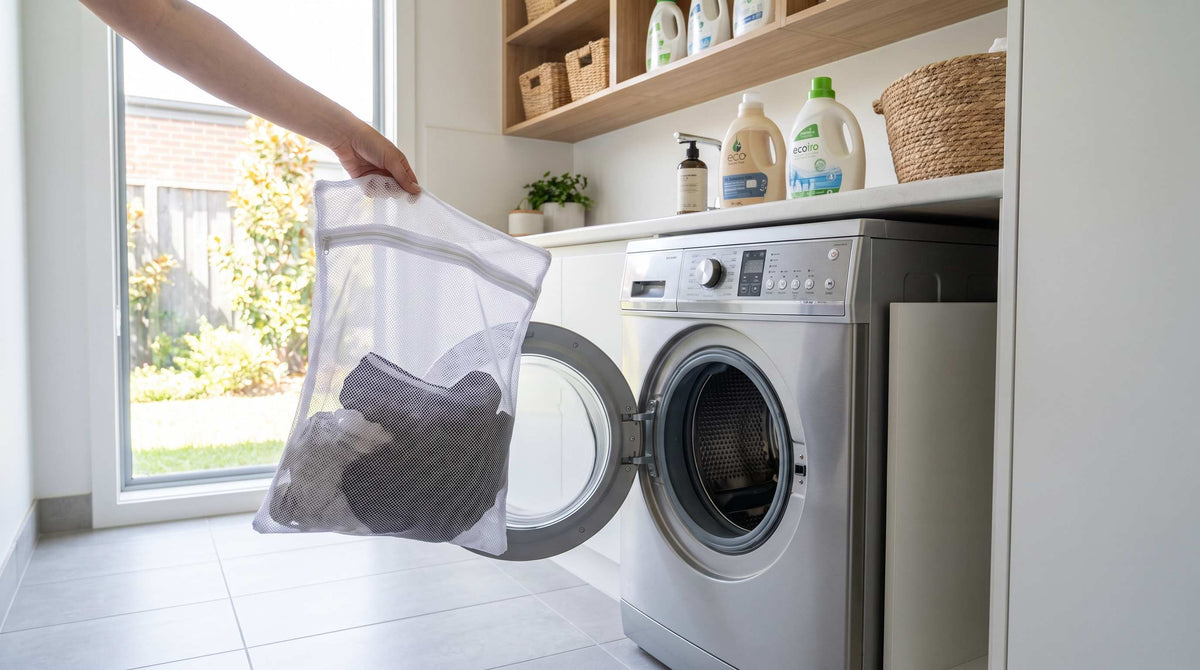
Before placing your incontinence underwear in the washing machine, always use a dedicated mesh laundry bag. This protects the delicate inner layers from snagging on zips, buttons, or other garments, and prevents the elastic waistbands from stretching or distorting during an agitated cycle. Orykas provides a purpose-built mesh bag for protecting incontinence underwear in the machine, which is a simple addition to your laundry routine that meaningfully extends garment life.
Place one to three pairs in a single bag to allow adequate water circulation. Overpacking a wash bag prevents the detergent and water from reaching all parts of the garment, which can leave residue in the absorbent core and reduce freshness after washing.
Temperature, cycle, and detergent settings
Washing at the correct temperature is a balancing act. Too hot and you risk delaminating the absorbent layers or shrinking the garment; too cool and you may not fully neutralise bacteria and odour. For most washable incontinence briefs, a warm cycle between 30°C and 40°C on a gentle or delicate setting strikes the right balance. Always check the care label on your specific garment — some products tolerate up to 60°C, which may be appropriate after illness or periods of heavier use.
Avoid fabric softener entirely. It sounds counterintuitive, but fabric softener deposits a waxy coating on fibres that gradually reduces their absorbency over time. Dryer sheets are just as bad. Instead, choose a detergent formulated for technical or performance fabrics, which will clean effectively without leaving residue that clogs the absorbent core.
When selecting a laundry product, consider the following criteria:
- Free from fabric softening agents or conditioning compounds
- Suitable for synthetic and blended technical fabrics
- Low-residue formulation that rinses out cleanly
- Antibacterial properties to reduce odour-causing bacteria
- Fragrance-free or lightly fragranced to minimise skin irritation
For a convenient and low-waste option, Orykas's antibacterial laundry sheets for incontinence garments are a practical alternative to liquid detergents — compact, travel-friendly, and formulated to clean technical fabrics without damaging absorbent layers. They're particularly useful for men who travel frequently or prefer to keep their laundry routine simple.
Drying and storage: protecting absorbency long-term
How you dry your incontinence underwear after washing is as important as the wash itself. Heat is the primary threat to the absorbent layers inside quality continence garments. Tumble drying on a high heat setting can shrink the garment, damage the outer leak-resistant layer, and degrade the elastics in the waistband. If you do use a dryer, select the lowest heat setting or the air-dry/cool cycle, and remove the garment while still slightly damp to finish drying naturally.
Line drying in a shaded, well-ventilated area is the preferred method for most washable incontinence products. Australia's climate makes outdoor line drying practical for much of the year, even in cooler cities like Melbourne and Adelaide, as long as there is adequate airflow. A short period in indirect sunlight offers a mild natural antibacterial benefit, but avoid leaving garments out in harsh direct sun for extended periods, as prolonged UV exposure can accelerate the breakdown of elastic fibres and outer layers.
For proper ongoing care, keep these storage and maintenance habits in mind:
- Ensure garments are completely dry before storing to prevent mould
- Rotate through at least four to five pairs to give each garment adequate recovery time
- Store in a clean, dry drawer rather than a sealed plastic container
- Inspect each pair regularly for signs of wear, thinning, or reduced elasticity
- Replace garments when absorbency noticeably decreases or odour persists after correct washing
You can also explore the full range of practical incontinence accessories from Orykas, including products designed to complement your daily laundry and care routine.
Cost, CAPS, and NDIS funding for Australian men
One of the most common reservations men express about switching to washable incontinence underwear is the upfront cost compared with disposable pads or pull-ups. It's a fair consideration — but the long-term economics are compelling. When cared for correctly, a quality pair of washable incontinence briefs can last many months, replacing what might otherwise be a recurring monthly expenditure on disposables. Spread across twelve months, the cost difference is significant.
Australian men may also be eligible for government support to help cover costs. The Continence Aids Payment Scheme (CAPS), administered by Services Australia, provides eligible Australians with a yearly payment to help offset the cost of continence products. Eligibility is based on a medical assessment confirming permanent and severe incontinence — your bulk-billing GP can help initiate a referral and support your application. If you're enrolled in the National Disability Insurance Scheme (NDIS), continence product costs may also be covered under daily living supports; speak with your NDIS planner or local area coordinator to confirm what's available under your plan.
If you're unsure where to begin, the National Continence Helpline — available on 1800 33 00 66 — connects you with a qualified continence nurse adviser who can discuss your product options, correct washing and care techniques, and relevant funding pathways. The service is free and available to men across Australia, including in regional and rural areas where specialist continence services may be harder to access in person.
For men looking for a high-quality starting point, Orykas's ultra-absorbent washable briefs for men with incontinence are designed to handle Australian conditions and maintain their absorbency and shape through sustained use — provided the care instructions are followed consistently.
Frequently asked questions
How often should I wash incontinence underwear?
Washable incontinence underwear should be laundered after every single use. Because these garments absorb bodily fluid and sit directly against the skin, washing after each wear is the hygiene standard for continence products. Maintaining a rotation of at least four to five pairs ensures you always have a clean, dry pair available while others are being washed or dried.
Can I use bleach when I wash incontinence underwear in Australia's hard-water areas?
Chlorine bleach is not recommended for most washable incontinence products. It can break down the specialised fibres in the absorbent core, degrade the leak-resistant outer layer, and shorten the garment's life considerably. If you live in a hard-water area — common across parts of regional Australia — and need additional sanitising power, washing at a higher temperature (where the care label permits) is a safer and more effective approach than bleach.
Will washing incontinence underwear in the same load as other clothes cause odour transfer?
When you rinse garments in cold water immediately after use and follow the correct washing steps, odour transfer to other laundry is minimal. Using a dedicated mesh wash bag adds an extra barrier between your incontinence underwear and other items. If you prefer to be cautious — particularly if washing in shared laundry facilities — running incontinence underwear as a separate load is entirely reasonable and adds very little extra effort to your routine.
How do I know when washable incontinence underwear needs to be replaced?
The most reliable indicator is a noticeable reduction in absorbency — leaks occurring earlier than they used to, or the garment feeling saturated more quickly than expected. Other signs include persistent odour even after correct washing, visible pilling or thinning of the inner layer, stretched or loose elastic at the waist or legs, and any damage to the outer layer that compromises its leak resistance. Most well-maintained garments will give reliable service for many months before reaching this point.
This article is informational and does not replace advice from your GP, a qualified continence nurse or a specialist.
Share:
Post-prostatectomy Medicare recovery: what Australian men can claim
6 travel tips for Australian men with bladder leaks