



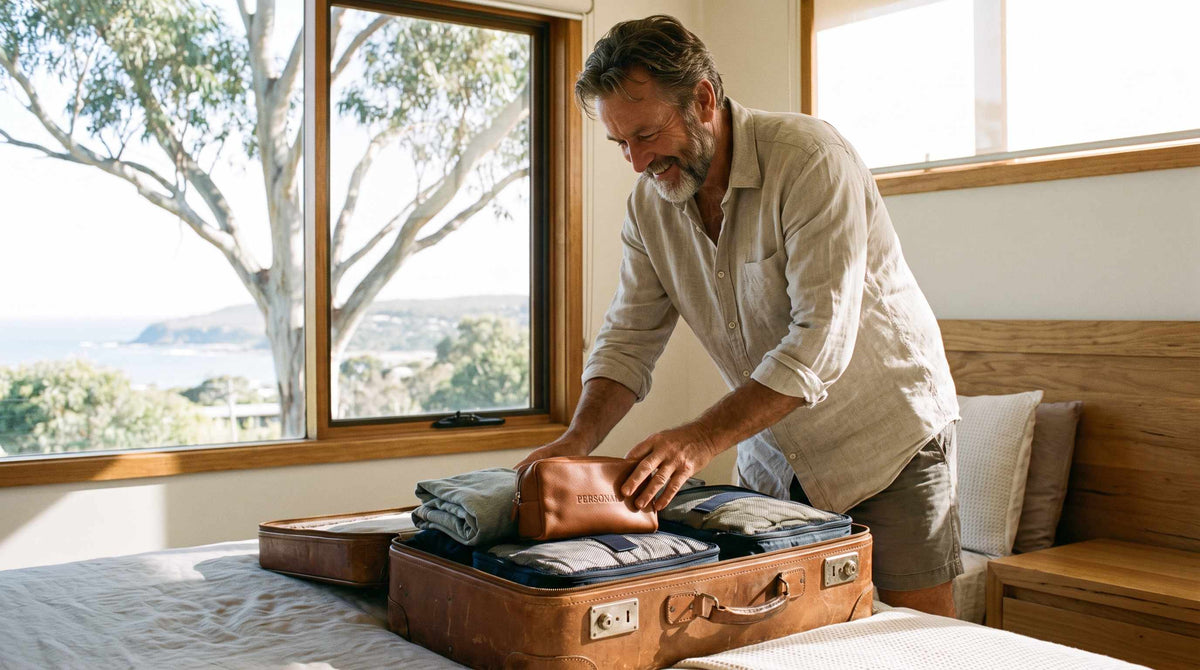
Whether you're driving the Great Ocean Road, flying from Perth to Brisbane, or heading into regional Australia for a fishing trip, travelling with incontinence doesn't have to mean stress, embarrassment or missed adventures. With a little planning and the right gear in your bag, you can hit the road — or the tarmac — with genuine confidence. This packing checklist is designed for Australian men who want practical, no-nonsense advice on managing bladder leaks while travelling.
Why travel can make bladder leaks worse
Routine is one of the most underrated tools for managing urinary incontinence. At home, you know where every toilet is, how much water you've had and when your next break will be. Travel disrupts all of that. Long drives through outback Queensland, delayed flights out of Melbourne or overnight coach trips between Adelaide and Sydney can leave you far from a bathroom when you need one most.
Dehydration is another hidden trigger. Many men deliberately cut back on fluids before a flight or a long drive, hoping to reduce bathroom visits. Here's the thing — according to the Continence Foundation of Australia, this can actually irritate the bladder and make leaks more frequent, not less. Concentrated urine is a known bladder irritant, so steady hydration with plain water is a smarter strategy than going dry.
Changes in diet play a role too. Airport coffee, roadhouse energy drinks and the extra beer at a mate's barbecue in Darwin all contain caffeine or alcohol — both of which are diuretics. Add sitting in a cramped car seat for hours, which puts pressure on the pelvic floor, and you've got a recipe for unexpected leaks.
Your essential packing checklist
Packing well is half the battle when you're managing incontinence on the road across Australia. The goal is to have everything you need within arm's reach without your bag looking like a medical kit. Here's what to put on your list.
- Two to three pairs of washable incontinence underwear — enough for daily wear plus a spare in your carry-on or day pack.
- A waterproof carry pouch for discreet storage of used underwear when you can't access laundry facilities.
- A small ziplock bag with pH-neutral laundry sheets or travel detergent for hand-washing in hotel sinks.
- A refillable water bottle to maintain steady hydration rather than relying on sugary drinks at service stations.
- Barrier cream or zinc-based skin protectant to prevent irritation on multi-day trips.
- A printed or saved list of public toilet locations along your route — the National Public Toilet Map (toiletmap.gov.au) is a free Australian Government resource.
If you're flying, keep at least one change of underwear and your pouch in your carry-on luggage. Checked bags go missing, and you don't want to be caught out on a four-hour flight from Sydney to Perth.
A note on laundry while travelling
Washable incontinence underwear is far more practical for travel than disposables, because you can rinse a pair in the sink and hang it to dry overnight. Most accommodation — from caravan parks to city hotels — offers some form of laundry access. If you're camping in regional Australia, a collapsible bucket and a length of travel clothesline weigh next to nothing and solve the problem entirely.
Choosing the right incontinence underwear for the trip
Not all incontinence underwear is created equal, and what works for a quick trip to the shops won't necessarily hold up on a twelve-hour drive or a humid day in Far North Queensland. For travel, you want underwear that's ultra-absorbent, quick-drying and — crucially — looks and feels like regular underwear so you can move through airports and hotels without a second thought.
Orykas offers purpose-built options for Australian men. The Men's Washable Incontinence Boxer Briefs are designed for moderate to heavy leaks, making them a solid choice for long-haul travel days when access to a bathroom is limited. For blokes who deal with lighter, occasional dribble — common after prostate treatment or with age — the Absorbent Boxer for Light Leaks provides discreet protection without unnecessary bulk.
For a trip-ready bundle, the The Travel Set pairs underwear with travel essentials, so you're not hunting for individual items before departure. And the Waterproof Carry Pouch is worth its weight in gold — it keeps used underwear sealed and odour-free until you can get to a wash, whether that's at a caravan park in Broken Hill or a hotel in the CBD.
Managing leaks on long drives and flights
Australian distances are enormous by global standards, and that creates unique challenges for men managing incontinence while travelling. A drive from Melbourne to Sydney is roughly nine hours; Brisbane to Cairns is closer to nineteen. Planning your stops is just as important as packing the right gear.
- Map your rest stops before you leave. The National Public Toilet Map covers every publicly accessible toilet in Australia, including highway rest areas and accessible facilities.
- Set a timer to stop every 90 to 120 minutes, even if you don't feel urgency. Regular voiding keeps your bladder from overfilling.
- Practise pelvic floor exercises while driving — subtle contractions that no passenger will notice can strengthen the muscles that control leaks over time.
- Avoid large coffees at roadhouse stops. Swap to water or a low-caffeine alternative.
- If you're flying, choose an aisle seat so you can reach the lavatory without climbing over other passengers.
On flights, the seatbelt sign can keep you seated for extended periods during turbulence or approach. Wearing absorbent underwear removes the anxiety of being stuck in your seat when your bladder has other ideas. Many Australian men find that simply knowing they've got reliable protection reduces the stress that can itself trigger urgency — a well-documented cycle the Continence Foundation of Australia refers to as "urgency driven by anxiety."
For road trips, keep a small travel kit in the centre console or the seat-back pocket: a spare pair of underwear, a sealable bag and a pack of unscented wipes. If an incident happens between towns, you can manage it quickly and discreetly at the next rest area.
Funding support: CAPS, NDIS and other options for Australians
Managing incontinence has a cost, and many Australian men don't realise there are government-funded pathways that can help. The Continence Aids Payment Scheme (CAPS), administered by Services Australia, provides an annual payment to eligible Australians to help cover the cost of continence products. To access CAPS, you'll need an assessment from a continence nurse or your GP, who can then complete the necessary paperwork.
If you're on an NDIS plan and incontinence is related to your disability, continence products may be funded under your consumables budget. It's worth speaking with your plan manager or support coordinator about including washable incontinence underwear as a reusable, cost-effective alternative to disposables — many NDIS participants find that reusable options stretch their funding further over the plan period.
Even without CAPS or NDIS eligibility, a visit to a bulk-billing GP is a sensible first step. Your doctor can refer you to a continence physiotherapist or specialist, and some of those services attract a Medicare rebate. If you're unsure where to start, the National Continence Helpline on 1800 33 00 66 offers free, confidential advice from continence nurse advisors — they can point you towards local services whether you're in metropolitan Sydney or a regional town in Western Australia.
Building a travel mindset around incontinence
One of the biggest barriers to travel for men with incontinence in Australia isn't logistics — it's mindset. Many blokes avoid trips altogether, turning down fishing weekends, grandkids' school holiday adventures or that long-promised lap of the country because they're worried about leaks in unfamiliar places.
The reality is that incontinence affects a significant number of Australian men, particularly after prostate surgery, with age-related changes, or alongside conditions like diabetes and neurological disorders. You're not alone, and you're not the only bloke at the rest stop or the airport managing this quietly.
The good news is that preparation is the antidote to anxiety. When you've packed the right underwear, mapped your stops and know your funding options, travel stops being something to dread and becomes something to plan for — no different from packing sunscreen for the Top End or thermals for a Tasmanian winter. Getting out and seeing this country with incontinence is entirely achievable with the right approach.
Frequently asked questions
Can I take washable incontinence underwear in my carry-on luggage?
Yes. Washable incontinence underwear looks like regular underwear and passes through airport security without any issues. Pack a clean pair in your carry-on along with a waterproof pouch for used items, and you'll be prepared for any flight within Australia or internationally.
How many pairs of incontinence underwear should I pack for a week-long trip?
Three to four pairs is usually sufficient if you've got access to laundry facilities, which most Australian accommodation provides. Washable underwear dries quickly, so you can rinse a pair each evening and rotate through your supply. For remote camping without laundry access, pack one pair per day plus a spare.
Does the Continence Aids Payment Scheme cover washable underwear?
CAPS provides an annual payment that you can use towards any continence products, including washable options. The scheme doesn't restrict you to disposables, and many participants find that reusable underwear offers better value over the year. Your GP or a continence nurse can help you apply through Services Australia.
Where can I find public toilets along Australian highways?
The Australian Government's National Public Toilet Map at toiletmap.gov.au lists over 19,000 public and private facilities across the country, including highway rest stops. You can filter by accessibility features and plan your route in advance. The Continence Foundation of Australia also recommends this tool for anyone managing bladder or bowel conditions while travelling.
This article is informational and does not replace advice from your GP, a qualified continence nurse or a specialist.
Share:
Caring for your Orykas absorbent underwear: an Australian laundry guide
CAPS (Continence Aids Payment Scheme): eligibility for Australian men