



If you've recently invested in reusable incontinence underwear, learning how to properly wash absorbent incontinence underwear is the key to getting the longest life and best performance from every pair. Whether you're in suburban Melbourne, regional Queensland or inner-city Sydney, the right laundry routine keeps your garments fresh, hygienic and ready to wear day after day — saving you money and reducing landfill waste from disposable pads.
Why proper laundering matters for absorbent incontinence underwear
Washable incontinence briefs are engineered with multiple fabric layers — a moisture-wicking inner, a super-absorbent core and a waterproof outer barrier. Each layer needs the right care to maintain its function. Harsh detergents, excessive heat or fabric softeners can degrade the absorbent fibres and compromise the leak-proof membrane over time.
When you wash absorbent incontinence underwear correctly, you protect the technical fabrics that make these garments work. That means consistent absorbency wash after wash, reliable odour control and underwear that looks and feels like regular briefs — not medical products.
For Australian men managing light to moderate urinary leakage, this translates directly into confidence. You can head to a barbecue in Perth, catch a footy match in Adelaide or attend a work meeting in Brisbane without worrying about leaks or smell, provided your underwear has been laundered properly.
Pre-wash preparation: the first and most important step
Before your incontinence underwear goes anywhere near the washing machine, a quick pre-rinse makes an enormous difference. This step removes the bulk of urine and prevents ammonia from setting into the fabric during the main wash cycle.
Here's a straightforward pre-wash routine that takes under two minutes:
- Rinse the garment under cold running water in a laundry tub or basin as soon as practical after wearing.
- Gently squeeze (don't wring) to flush out excess moisture — wringing can damage the waterproof layer.
- If you can't rinse immediately, store the underwear flat in a ventilated wet bag or bucket with a lid until laundry day.
- Avoid soaking in bleach or stain removers containing chlorine, as these break down elastane and absorbent fibres.
- For heavier soiling, a brief soak in cold water with a tablespoon of bicarbonate of soda can help neutralise odour before the main wash.
Getting the pre-wash right is especially important in warmer Australian climates. In tropical areas like Far North Queensland or the Northern Territory, bacteria multiply faster in the heat, so prompt rinsing prevents odour build-up between wash days.
Storing between washes
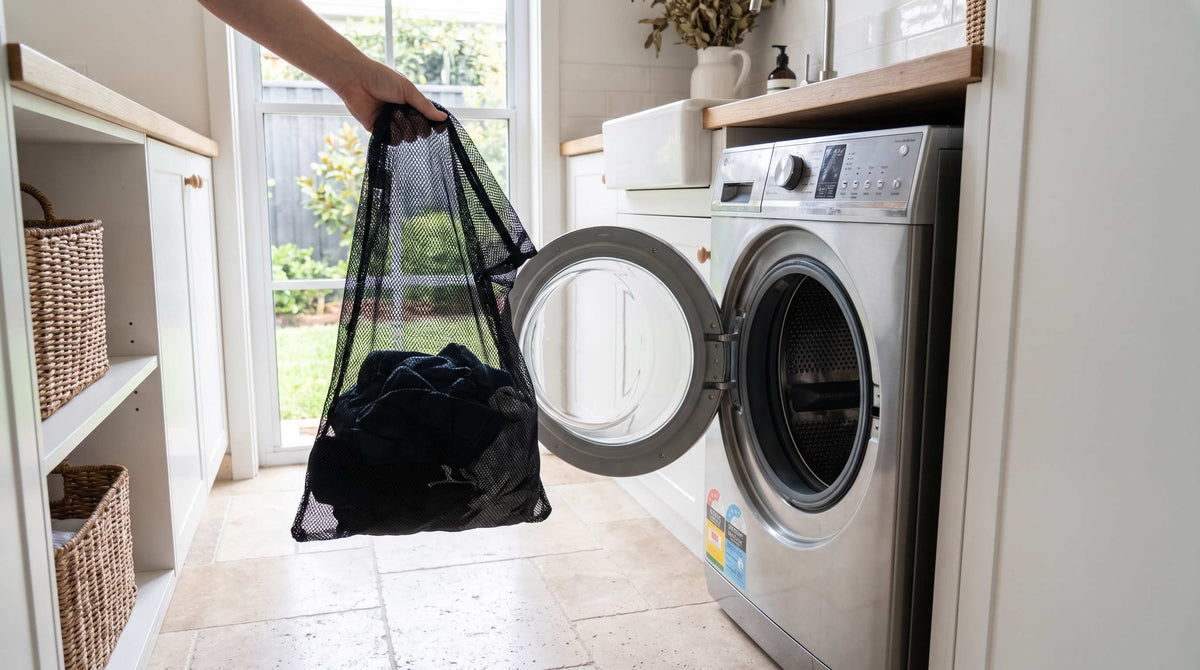
If you wear incontinence underwear daily, you'll likely accumulate several pairs before running a load. Store pre-rinsed garments in an open-weave laundry bag or a bucket with airflow. Avoid sealed plastic bags, which trap moisture and encourage bacterial growth. A dedicated Machine Wash Bag keeps your incontinence garments together and protects them from snagging on zippers or hooks from other clothing during the cycle.
Machine washing: settings, detergent and temperature
Your washing machine is your best friend here — as long as you choose the right settings. Most quality washable incontinence underwear, including the Men's Washable Incontinence Briefs from Orykas, are designed to withstand regular machine washing without losing performance.
Follow these guidelines for the best results:
- Use a gentle or delicates cycle at 30–40°C. Cold water is acceptable, but a slightly warm wash helps dissolve residues and sanitise more effectively.
- Choose a mild, liquid detergent free of fabric softeners, optical brighteners and fragrances. These additives coat fibres and reduce absorbency over time.
- Use the recommended amount of detergent — or slightly less. Over-dosing leaves residue in the absorbent layers, which can cause odour on subsequent wears.
- Add an antibacterial laundry product for extra hygiene. Orykas Antibacterial Laundry Sheets are specifically formulated to eliminate odour-causing bacteria without damaging technical incontinence fabrics.
- Run an extra rinse cycle if your machine has that option — it flushes out any remaining detergent and ensures the absorbent core is completely clean.
Resist the temptation to wash incontinence underwear on a hot cycle (60°C+). While high temperatures kill more bacteria, they also accelerate the breakdown of waterproof laminate and elastic components. A 40°C wash combined with an antibacterial laundry additive strikes the right balance between hygiene and garment longevity.
You can wash your absorbent incontinence underwear alongside regular clothing — there's no need for a separate load. Simply pop the briefs inside a mesh wash bag to prevent tangling and protect the fabric from abrasion.
Drying your incontinence underwear the Australian way
Australia's climate is one of the best natural advantages you've got when caring for washable incontinence garments. Line drying in fresh air and sunlight is the gold standard — UV rays provide natural antibacterial action, and airflow ensures the absorbent layers dry thoroughly.
Hang your underwear on the clothesline by the waistband, using pegs that won't stretch the elastic. In most parts of Australia, from Perth's dry summers to Sydney's breezy coastal air, garments will dry in a few hours. In humid conditions or during the wet season up north, consider drying under a covered verandah with good air circulation.
If line drying isn't possible — perhaps you're in an apartment in Melbourne or drying in winter — a tumble dryer on its lowest heat setting or an air-dry/no-heat setting is the next best option. Here's the thing: high tumble-dryer heat is the single most damaging thing for incontinence underwear, as it can melt or delaminate the waterproof barrier permanently.
Never iron your incontinence briefs. The direct heat will destroy the waterproof layer instantly. If garments come off the line a bit stiff, a brief tumble on a no-heat setting softens them up nicely.
Common laundering mistakes that reduce garment life
Even with the best intentions, a few common errors can shorten the effective life of your washable incontinence underwear. Knowing what to avoid is just as important as knowing what to do.
- Using fabric softener: Softeners leave a waxy coating on fibres that blocks absorption. If you've accidentally used softener, run an extra wash cycle with a small amount of white vinegar to strip the residue.
- Bleaching: Chlorine bleach degrades elastane and absorbent polymers. Use oxygen-based (colour-safe) alternatives if you need a whitening boost.
- Overloading the machine: Cramming too many items in prevents proper agitation and rinsing. Incontinence underwear needs room to move freely so detergent and water can penetrate all layers.
- Skipping the pre-rinse: Dried-on urine is far harder to remove and causes persistent odour that even a full wash cycle may not eliminate.
- High-heat drying: As noted above, excessive heat is the fastest way to ruin the waterproof membrane.
The good news is that by avoiding these pitfalls, many men find their washable incontinence briefs last well over a year of regular use — a significant saving compared with the ongoing cost of disposable products. For a full range of care accessories, the Orykas Incontinence Accessories collection includes everything you need to maintain your garments.
Australian support and funding for incontinence products
Managing incontinence in Australia doesn't have to be expensive or isolating. Several government-funded programmes can help offset the cost of continence aids, including washable underwear.
The Continence Aids Payment Scheme (CAPS), administered by Services Australia, provides an annual payment to eligible Australians to help cover the cost of continence products. To access CAPS, you'll need an assessment from a continence professional — your bulk-billing GP can provide a referral. Participants on an NDIS plan may also have continence supports included as part of their core funding, depending on their individual plan.
The Continence Foundation of Australia is an excellent starting point for information and support. They operate the free National Continence Helpline on 1800 33 00 66, staffed by continence nurse advisors who can guide you through assessment, treatment options and product selection. The helpline is available to anyone in Australia, whether you're in a capital city or a regional area.
Your GP, particularly one familiar with RACGP guidelines on lower urinary tract symptoms in men, can coordinate a care plan that may include pelvic floor physiotherapy, medication review and lifestyle advice — all available through Medicare Australia. Many men find that combining professional treatment with quality washable incontinence underwear provides the best day-to-day outcome.
Frequently asked questions
How often should I wash absorbent incontinence underwear?
Wash your incontinence underwear after every wear. Unlike regular underwear that might occasionally be worn twice, absorbent briefs collect moisture throughout the day and should be pre-rinsed promptly, then machine washed before re-wearing. Most men keep a rotation of three to five pairs so there's always a clean pair ready to go.
Can I use vinegar or bicarbonate of soda instead of detergent?
White vinegar (half a cup in the rinse cycle) is an excellent natural deodoriser and can help strip detergent build-up, but it shouldn't replace detergent entirely. Bicarbonate of soda can be used as a pre-soak for stubborn odours. Neither product damages the absorbent or waterproof layers when used in moderation. For best results, use them as supplements to a mild liquid detergent rather than substitutes.
Will washing reduce the absorbency of my incontinence briefs over time?
When laundered correctly, high-quality washable incontinence underwear maintains its absorbency through hundreds of wash cycles. In fact, some absorbent fabrics actually become slightly more effective after the first few washes as the fibres open up. The key is avoiding fabric softeners, bleach and high heat — those are what reduce absorbency, not the washing itself.
Are washable incontinence briefs better for the environment than disposables?
Significantly so. The average Australian using disposable incontinence pads generates hundreds of kilograms of landfill waste per year. Washable briefs, when cared for properly, replace thousands of single-use pads over their lifetime. The water and energy used in laundering is a fraction of the environmental cost of manufacturing, packaging and transporting disposable products — a consideration that resonates with many environmentally conscious Australians.
This article is informational and does not replace advice from your GP, a qualified continence nurse or a specialist.
Share:
How to choose the right absorbency level for men's incontinence underwear
Travelling across Australia with bladder leaks: a packing checklist