



If you've ever leaked a little when laughing, sneezing or rushing to the loo, you're far from alone. Millions of Australian women experience some form of urinary incontinence, yet many never seek help — often because they don't realise how effective simple pelvic-floor training can be. For women across Australia, kegel exercises remain one of the most evidence-based, cost-free strategies recommended by physiotherapists, GPs and continence nurses nationwide. This month-by-month plan will walk you through a progressive programme designed to build real pelvic-floor strength over 12 weeks and beyond, so you can regain confidence whether you're in suburban Melbourne, regional Queensland or anywhere in between.
Why kegel exercises matter for Australian women
The pelvic floor is a hammock of muscles stretching from the pubic bone to the tailbone. It supports the bladder, uterus and bowel, and plays a critical role in continence. When these muscles weaken — through pregnancy, childbirth, hormonal changes during menopause, chronic coughing or heavy lifting — leaks can follow.
The Continence Foundation of Australia estimates that a significant share of women aged over 50 experience some degree of urinary incontinence, though younger women are also affected. Kegel exercises (named after Dr Arnold Kegel) involve repeatedly contracting and relaxing these muscles to restore tone and responsiveness. Research consistently shows that a structured programme of pelvic-floor exercises can reduce or eliminate stress incontinence in many women within three to six months.
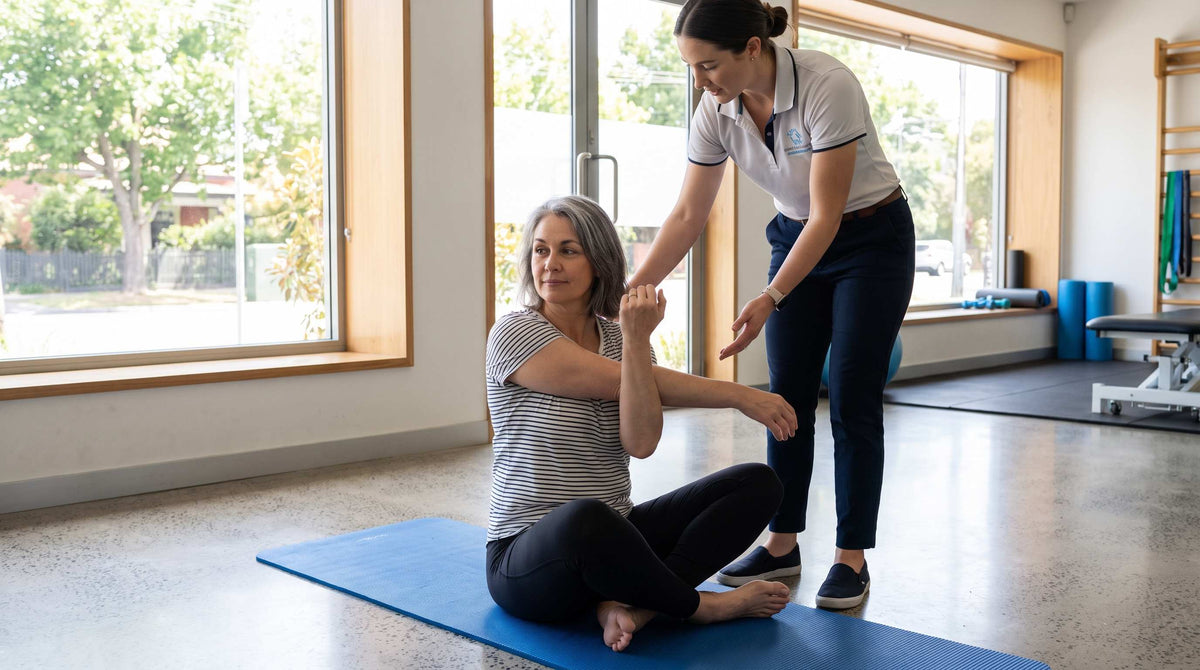
Despite their simplicity, kegels are frequently performed incorrectly — bearing down instead of lifting, holding the breath, or engaging the wrong muscle groups. That's why the Australian Physiotherapy Association encourages women to have at least one initial assessment with a pelvic-health physiotherapist before starting a home programme. Many of these appointments can be accessed through a Medicare-rebated referral from your bulk-billing GP.
Before you begin: getting your technique right
Correct technique is the foundation of any successful kegel programme. To identify the right muscles, imagine you're trying to stop the flow of urine midstream or preventing yourself from passing wind. You should feel a gentle lift and squeeze inside the pelvis — without tensing your buttocks, thighs or abdomen.
A pelvic-health physiotherapist can confirm you're activating the correct muscles using real-time ultrasound or internal examination. In cities like Sydney, Brisbane and Perth, specialist women's health physio clinics are widely available; in regional Australia, telehealth consultations have expanded access considerably since 2020.
Common mistakes to avoid
- Holding your breath — always breathe normally throughout each contraction.
- Bearing down instead of lifting up — this can worsen prolapse symptoms.
- Squeezing buttocks or inner thighs — isolate the pelvic floor only.
- Overdoing it in the first week — muscles fatigue quickly when deconditioned.
- Skipping rest days or doing marathon sessions — consistency beats intensity.
Once you're confident in your technique, you're ready to follow the month-by-month plan below. Pair your training with reliable protection like Women's High-Waisted Washable Incontinence Pants from Orykas for peace of mind while your muscles strengthen.

Month-by-month kegel exercise plan
This progressive programme is suitable for most Australian women beginning pelvic-floor training. Always consult your GP or a continence nurse if you have prolapse symptoms, pelvic pain or are fewer than six weeks postpartum.
Weeks 1–4: building awareness
During the first month, the goal is simply to wake up the pelvic-floor muscles and establish a daily habit. Perform three sets per day — morning, midday and evening.
- Contract and hold for 3 seconds, then relax for 6 seconds. Repeat 8 times.
- Follow with 5 quick "flick" contractions (1 second on, 1 second off) to train fast-twitch fibres.
- Rest for at least 4 hours between sets to allow recovery.
- Practise in a supported position — lying on your back with knees bent is easiest.
- Keep a simple tally chart on the fridge or set phone reminders to build consistency.
Many women notice improved awareness within the first fortnight, though visible improvements in leakage may take longer. Here's the thing — patience really is essential. The Continence Foundation of Australia advises allowing at least three months before judging results.
Weeks 5–8: increasing hold time
By month two your muscles should tolerate longer contractions. Progress as follows: hold for 5–6 seconds, relax for 10 seconds, repeat 10 times per set, still three sets per day. Add 8 quick flicks at the end of each set. You can now try performing exercises in seated and standing positions to challenge the muscles under gravity.
This is also a good time to practise "the knack" — a deliberate pelvic-floor contraction just before a cough, sneeze or lift. This pre-emptive squeeze helps prevent leaks during moments of increased abdominal pressure, and it's a technique strongly endorsed by the Australian Physiotherapy Association.
Weeks 9–12: functional integration
In the third month, aim for holds of 8–10 seconds with equal rest, 10–12 repetitions, three times daily. Incorporate kegels into everyday activities: while waiting for the kettle, standing in a queue, or during your morning walk. The objective is to integrate pelvic-floor activation into functional movement so it becomes automatic.
By week 12, many women performing kegel exercises consistently report noticeably fewer leaks. If you're still experiencing significant incontinence, speak with your GP about a referral to a specialist continence physiotherapist or a urogynaecologist — these referrals are eligible for Medicare rebates under relevant item numbers.
Beyond 12 weeks: maintaining your gains
Pelvic-floor strength, like any fitness quality, requires ongoing maintenance. After completing the initial three-month programme, reduce to one or two sets per day as a lifelong habit. Many Australian physiotherapists recommend continuing a daily "maintenance dose" of 10 slow holds and 10 quick flicks indefinitely.
Life events — a new pregnancy, menopause, weight gain or surgery — may require you to return to the full programme temporarily. Regular check-ins with a pelvic-health physio every 12 months can help you stay on track, and these appointments may be partially covered under a GP Management Plan (Chronic Disease Management items on Medicare).
While your muscles continue to strengthen, Orykas washable incontinence underwear offers discreet, day-long protection. The Women's Lace-Waistband Washable Incontinence Pants look and feel like everyday knickers, making them easy to wear under work clothes or activewear throughout your training journey.
Funding and support options for Australians
Australians dealing with incontinence have access to several government-funded support pathways that can reduce out-of-pocket costs for assessment, treatment and continence products.
- Medicare and bulk-billing GPs: Your first step is a conversation with your GP, who can provide a referral to a pelvic-health physiotherapist. Under a Chronic Disease Management plan, Medicare covers up to five allied-health visits per calendar year.
- Continence Aids Payment Scheme (CAPS): Administered by Services Australia, CAPS provides an annual payment to eligible individuals to help cover the cost of continence products. Eligibility generally requires a permanent and severe condition certified by a health professional.
- NDIS plans: Participants with incontinence related to their disability may have continence supports included in their plan under Consumables or Assistive Technology categories.
- National Continence Helpline: Call 1800 33 00 66 for free, confidential advice from continence nurse advisors. The helpline can point you towards local services, subsidised products and specialist practitioners in your area.
It's worth noting that washable incontinence underwear like the 3-Pack Lace Side Incontinence Briefs from Orykas can be a cost-effective alternative to disposable pads over time, particularly for women with light-to-moderate leakage who are actively strengthening their pelvic floor through kegel exercises.
Tips to stay motivated with your kegel routine
Consistency is the single biggest predictor of success with pelvic-floor training. Yet because the exercises are invisible and results are gradual, many women struggle to maintain the habit beyond the first few weeks. Here are some practical strategies that Australian women have found genuinely helpful.
Try linking your kegels to an existing daily habit — brushing your teeth, boiling the kettle, or waiting at traffic lights. Habit-stacking makes it far easier to remember. You might also use one of the many free pelvic-floor exercise apps available on Australian app stores, several of which include reminders and progress tracking.
Keep a simple diary noting how many leaks you experience each week. Watching that number drop is powerfully motivating. The Continence Foundation of Australia offers free bladder and bowel diaries on their website that you can download and print.
Finally, remember that your kegel routine will be most effective when you combine it with broader lifestyle measures: maintaining a healthy weight, managing chronic cough, reducing caffeine intake and avoiding constipation through adequate fibre and hydration. Your GP or continence nurse can help you address these factors as part of a holistic plan.
Frequently asked questions
How long does it take for kegel exercises to work?
Most women notice improved pelvic-floor awareness within two to four weeks of consistent daily practice. However, meaningful improvements in urinary leakage typically take eight to twelve weeks. The Australian Physiotherapy Association recommends committing to at least three months of regular training before assessing whether further intervention is needed.
Can I do kegel exercises during pregnancy?
Yes — in fact, pelvic-floor exercises during pregnancy are encouraged by midwives and obstetricians across Australia. Strengthening the pelvic floor before birth may reduce the risk of postnatal incontinence. Always mention any pelvic pain or heaviness to your midwife or GP, as technique adjustments may be necessary.
Are kegel exercises enough to fix incontinence on their own?
For many women with mild-to-moderate stress incontinence, a well-performed kegel programme is sufficient to restore continence or significantly reduce leaks. However, some women may need additional treatment — such as pessary fitting, medication or surgery — particularly if there's prolapse or urge incontinence involved. Your GP can assess which pathway is appropriate and refer you accordingly under Medicare.
Where can I find a pelvic-health physiotherapist near me?
The Australian Physiotherapy Association maintains a "Find a Physio" directory on their website where you can search by location and specialty. Look for practitioners listing women's health, pelvic health or continence as a focus area. In Adelaide, Melbourne, Sydney and most regional centres, pelvic-health physios are accessible either in-person or via telehealth. You can also call the National Continence Helpline on 1800 33 00 66 for guidance on local services.
This article is informational and does not replace advice from your GP, a qualified continence nurse or a specialist.
Share:
Functional incontinence in older women: what Australian carers should know
Pilates, yoga and pelvic floor health: an Australian studio guide