


If you've ever leaked a little during a downward dog or felt uncertain about jumping into a reformer class, you're far from alone. The connection between Pilates, yoga and pelvic floor health in Australia is getting well-deserved attention as more women discover that mindful movement can be a genuine ally in managing urinary incontinence. Whether you're in a boutique Sydney studio, a community hall in regional Queensland or your own lounge room, understanding how these disciplines support your pelvic floor can be genuinely life-changing.
Why pelvic floor strength matters for Australian women
The pelvic floor is a hammock-like group of muscles stretching from the pubic bone to the tailbone. It supports the bladder, uterus and bowel, and plays a central role in bladder control. When these muscles weaken — through pregnancy, childbirth, hormonal changes during menopause, chronic coughing or simply ageing — urinary incontinence can follow.
A significant share of Australian women over 50 experience some form of bladder leakage, yet many wait years before seeking help. The stigma around incontinence often keeps women silent, but here's the thing: pelvic floor dysfunction is a common, treatable health concern — not something to endure quietly.
Understanding the causes is the first step. Stress incontinence (leaking when you cough, sneeze or exercise) and urge incontinence (a sudden, intense need to go) are the two most common types. Both can respond well to targeted pelvic floor rehabilitation, which is exactly where Pilates and yoga come in.
How Pilates strengthens the pelvic floor
Clinical Pilates — the kind typically taught by physiotherapists or accredited instructors — places the pelvic floor front and centre. Joseph Pilates originally called his method "Contrology," and that focus on deep muscular control translates directly to the muscles that govern bladder function. Pilates Alliance Australasia recognises pelvic floor integration as a core component of quality instruction.
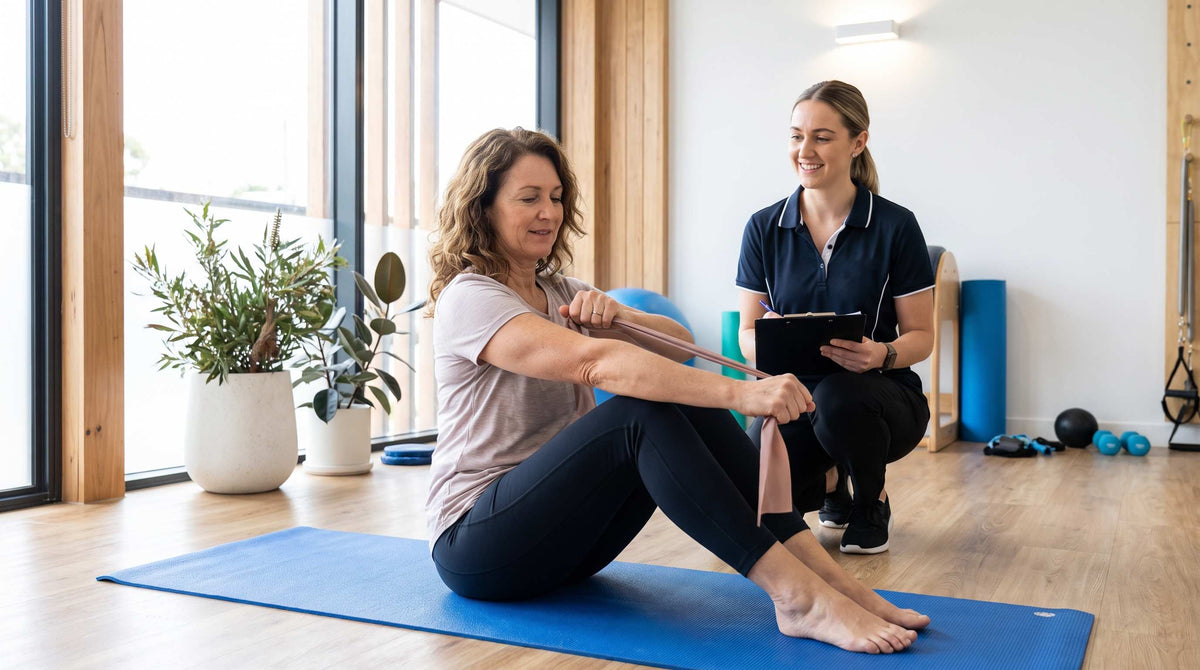
A well-designed Pilates session teaches you to engage and release the pelvic floor in coordination with your breath and your deep abdominals. Exercises such as the pelvic curl, toe taps and leg slides build strength without the jarring impact that can worsen leakage. Many women find they develop a far better mind-muscle connection after just a few weeks of consistent practise.
Finding a qualified Pilates instructor in Australia
Not every Pilates class is pelvic-floor-friendly. When choosing a studio or instructor, look for:
- Registration with Pilates Alliance Australasia or a recognised health fund provider
- Specific training in pelvic floor rehabilitation or women's health
- Experience working alongside pelvic floor physiotherapists
- Small class sizes that allow individual cueing and correction
- Willingness to modify exercises for incontinence concerns
Studios in Melbourne, Brisbane and Perth increasingly offer dedicated "pelvic floor Pilates" or postnatal recovery classes. If you're in regional Australia, online clinical Pilates programmes led by Australian physiotherapists can be an excellent alternative.
Yoga and pelvic floor awareness: what the evidence says
Yoga offers a complementary approach to pelvic floor health. While Pilates tends to emphasise activation and strength, yoga brings awareness, release and flexibility into the picture — all of which matter for muscles that need to both contract and relax properly.
Restorative yoga poses such as supported bridge, reclined bound angle and gentle squats encourage pelvic floor lengthening, which can be especially beneficial for women who carry tension in these muscles (a condition sometimes called a hypertonic pelvic floor). Yoga Australia lists pelvic health as a growing area of specialisation among its registered teachers, and several Australian yoga therapists now focus exclusively on continence and women's health.
Breath work — or pranayama — is another big advantage. Diaphragmatic breathing directly influences the pelvic floor: as you inhale, the pelvic floor gently descends; as you exhale, it lifts. Practising this coordination on the mat translates to better automatic function during daily life — including during exercise, lifting and even laughing.
That said, not every yoga style suits every pelvic floor. High-impact vinyasa flows with repeated jump-throughs, deep unsupported backbends or prolonged inversions can increase intra-abdominal pressure and aggravate leakage. A teacher trained in pelvic floor yoga will know how to adapt sequences to keep you safe and supported.

Evidence-based care pathways Australians can access
Pilates and yoga work best when they sit within a broader, evidence-based care plan. In Australia, the typical pathway starts with your GP. Bulk-billing GPs can provide an initial assessment and, under a Medicare Chronic Disease Management plan (formerly an Enhanced Primary Care plan), refer you to a pelvic floor physiotherapist with Medicare rebates for up to five allied health visits per calendar year.
The RACGP (Royal Australian College of General Practitioners) guidelines recommend conservative management — including pelvic floor muscle training — as a first-line treatment for stress and mixed urinary incontinence. Put simply, your GP should offer you a referral to a specialist physiotherapist before discussing surgical options.
Key steps in the Australian care pathway include:
- Booking a GP appointment to discuss your symptoms openly and without embarrassment
- Requesting a referral to a pelvic floor physiotherapist under a Medicare care plan
- Completing a real-time ultrasound assessment so your physio can see your pelvic floor muscles working
- Following a personalised home exercise programme, often incorporating Pilates or yoga-based movements
- Reviewing progress at six to twelve weeks with your physiotherapist and GP
If you're unsure where to start, the National Continence Helpline on 1800 33 00 66 offers free, confidential advice from continence nurse advisors. It's a Commonwealth-funded service and a genuinely helpful first call for many Australian women navigating their pelvic floor and exercise options.
How Orykas washable incontinence underwear supports confidence in the studio
One of the biggest barriers to attending a Pilates or yoga class when you experience leakage is simply the fear of it happening in public. Disposable pads can rustle, shift during movement or feel bulky under fitted activewear. That anxiety alone can keep women away from the very exercise that would help them most.
This is where purpose-designed washable incontinence underwear makes a real difference. The Women's High-Waisted Washable Incontinence Pants from Orykas are designed to look and feel like regular underwear while offering built-in absorbent protection. The high-waisted cut sits comfortably under yoga pants or Pilates leggings without visible lines, giving you one less thing to worry about as you move through your practise.
For women who prefer a more feminine style, the Women's Lace-Waistband Washable Incontinence Pants offer the same reliable protection with a softer aesthetic. Both styles are washable and reusable, which aligns well with the sustainability values many Australian yoga and Pilates communities hold dear.
Wearing trusted protection during class lets you focus on your breath, your alignment and your instructor's cues — rather than on whether you might leak during a bridge pose or a sneeze between sets. The good news is that this confidence loop tends to be self-reinforcing: the more comfortably you attend class, the stronger your pelvic floor becomes, and the less protection you ultimately need.
NDIS, CAPS and funding options for Australians
Managing incontinence can come with ongoing costs, from physiotherapy appointments to continence products. Fortunately, several Australian Government programmes can help offset these expenses.
The Continence Aids Payment Scheme (CAPS), administered by Services Australia, provides an annual payment to eligible Australians to help cover the cost of continence products. To access CAPS, you'll need a formal assessment from a continence professional — your GP can refer you. The scheme is available to Australian residents who hold a valid concession card and meet the clinical criteria.
For women with a qualifying disability, the NDIS (National Disability Insurance Scheme) may fund continence supports as part of a broader plan, including both products and allied health services such as physiotherapy. If your incontinence is related to a neurological condition, spinal injury or another NDIS-eligible disability, it's worth discussing continence funding with your planner or support coordinator.
Medicare rebates for pelvic floor physiotherapy under a GP Management Plan remain the most widely accessed funding pathway for Pilates and yoga-related pelvic floor rehabilitation. Some private health insurers also offer rebates for clinical Pilates when it's delivered by a registered physiotherapist — check your extras cover for details.
Frequently asked questions
Is Pilates or yoga better for pelvic floor strengthening?
Neither is universally "better" — they complement each other. Pilates tends to focus on targeted activation and strength, while yoga emphasises awareness, breath coordination and release. Many pelvic floor physiotherapists in Australia recommend a combination of both. The best choice depends on your individual symptoms; a hypertonic (overactive) pelvic floor may benefit more from yoga's release work, while a weakened pelvic floor may respond faster to Pilates-based strengthening.
Can I do Pilates or yoga if I currently experience bladder leakage?
Yes — in fact, avoiding exercise often makes incontinence worse over time. The key is to work with a qualified instructor who understands pelvic floor modifications. Start with low-impact, mat-based classes rather than advanced reformer or power yoga sessions. Wearing absorbent, washable incontinence underwear can also remove the anxiety of leakage during class, helping you stay consistent with your practise.
How long does it take for pelvic floor exercises to improve incontinence?
Most Australian clinical guidelines suggest you may notice improvements within six to twelve weeks of consistent, correctly performed pelvic floor exercises. However, results vary depending on the severity of your symptoms, your age, hormonal status and how regularly you practise. Working with a pelvic floor physiotherapist ensures you're engaging the right muscles — research suggests that up to a third of women perform Kegel exercises incorrectly without professional guidance.
Does Medicare cover pelvic floor physiotherapy in Australia?
Medicare provides rebates for up to five allied health visits per calendar year when your GP sets up a Chronic Disease Management plan (sometimes called a Team Care Arrangement). Pelvic floor physiotherapy qualifies under this scheme. You'll typically still pay a gap fee, but the rebate significantly reduces the out-of-pocket cost. Ask your bulk-billing GP about eligibility at your next appointment.
This article is informational and doesn't replace advice from your GP, a qualified continence nurse or a specialist.
Share:
Kegel exercises for Aussie women: a month-by-month plan
Running with bladder leaks: Australian women's parkrun-friendly tips