



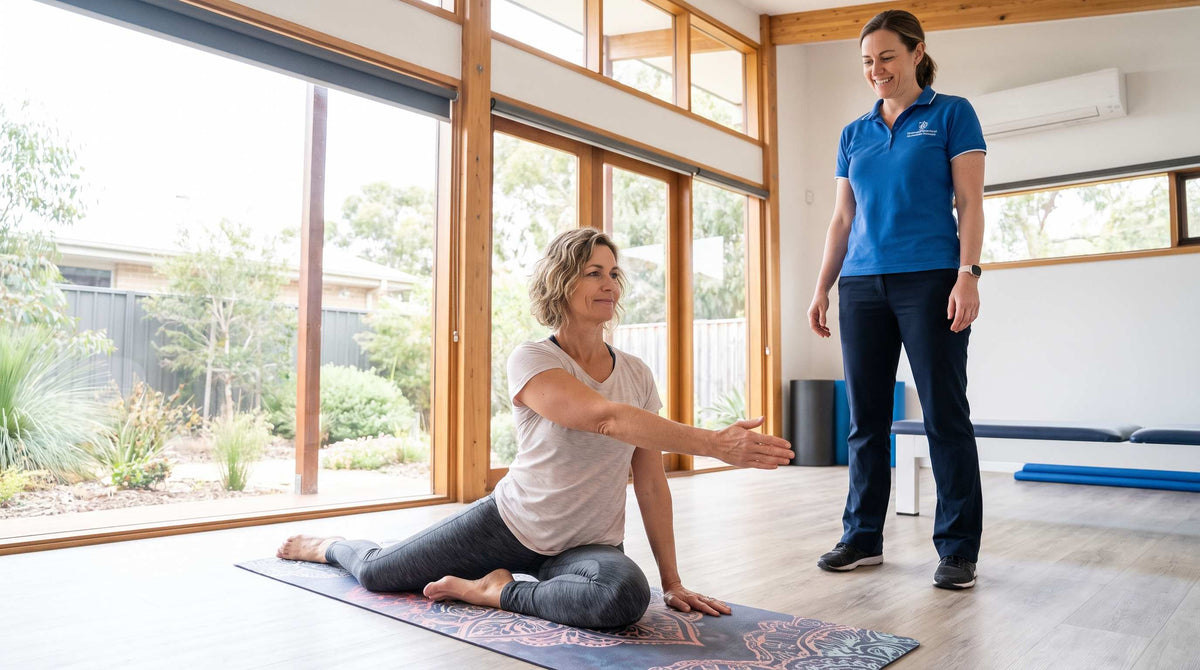
For many Australian mums, the arrival of a baby is accompanied by an unexpected plot twist: a sneeze, a laugh or a jog on the Bondi promenade suddenly triggers a small leak. If that sounds familiar, you're in very good company. Leaking after childbirth is one of the most common — and most under-discussed — parts of the fourth trimester, affecting women from inner-city Sydney apartments to regional Queensland farmhouses. The good news is that with the right information, evidence-based pelvic floor care and practical products, most women dealing with postpartum incontinence in Australia see meaningful improvement. This guide walks you through realistic timelines, exercises, care pathways and funding options so you can recover with confidence.
What postpartum incontinence looks like: causes and early signs
Postpartum incontinence is the involuntary leakage of urine (or, less commonly, stool or wind) in the weeks and months after giving birth. It usually shows up as stress incontinence — leaks when you cough, sneeze, laugh, lift the baby capsule or run for the train at Flinders Street. Some mums also experience urge incontinence, a sudden and overwhelming need to go, or a mixed pattern of both. The Continence Foundation of Australia notes that bladder and bowel issues are extremely common after childbirth, yet many women wait years before seeking help.
The underlying causes are mechanical and hormonal. Pregnancy places sustained pressure on the pelvic floor, while vaginal birth can stretch or, occasionally, tear the muscles and nerves that support the bladder. Caesarean birth isn't fully protective either, because nine months of carrying a baby has already loaded those tissues. Drops in oestrogen during breastfeeding can also leave vaginal and urethral tissues drier and less supportive, contributing to leaks.
Early warning signs worth paying attention to include a heavy or dragging sensation in the pelvis, difficulty stopping the flow mid-stream, leaks when you change position, and a sense that your core simply "isn't firing". These aren't things to push through or ignore — they're signals that your pelvic floor is asking for a little structured rehab.
Realistic timelines: what recovery actually looks like
Australian mums often ask how long postpartum incontinence will last, and the honest answer is: it depends. The first six weeks after birth are a healing window in which tissues repair, swelling settles and pelvic floor tone slowly returns. Many women notice leaks improving significantly by the three-month mark, particularly if they've been doing targeted pelvic floor exercises. By six to twelve months, most women with uncomplicated births have regained continence, though some will need ongoing support.
That said, "average" isn't universal. Women who had long second stages, instrumental deliveries (forceps or vacuum), larger babies, third- or fourth-degree tears, or more than one previous birth may recover more slowly. Carrying extra abdominal weight, chronic coughing, heavy lifting at work and constipation can all stall progress. The Australian Physiotherapy Association recommends that any woman still leaking at three months postpartum should see a pelvic health physiotherapist rather than "waiting it out".
Red flags that warrant earlier review
Sometimes leaks are part of a bigger picture that needs faster attention. Book a review with your GP or a continence clinician promptly if you notice any of the following:
- A visible or palpable bulge at the vaginal opening, which may indicate pelvic organ prolapse
- Leaking stool, wind or an inability to control bowel movements
- Pain with intercourse, persistent perineal pain or wound concerns
- Blood in the urine, burning on urination or recurring urinary tract infections
- A sudden inability to fully empty the bladder
None of these mean something is catastrophically wrong, but they do mean a "watch and wait" approach isn't appropriate. Early assessment almost always leads to better outcomes.
Pelvic floor exercises that actually work
Pelvic floor muscle training is the first-line, evidence-based treatment for postpartum urinary incontinence in Australia and internationally. Done correctly, it can dramatically reduce — and often resolve — leaks. Done incorrectly, it can waste months of effort or even worsen symptoms. Quality beats quantity every time.
A good starting point is learning to isolate the correct muscles. Imagine you're gently stopping the flow of urine and holding back wind at the same time. You should feel a subtle lift inside the pelvis, not a bracing of the buttocks, inner thighs or belly. If you can't feel anything, or if you feel a downward bulge instead of a lift, that's important information — it's a clear sign to see a pelvic health physio rather than persisting alone.
A balanced home programme typically includes three elements:
- Long holds: contract and lift for up to ten seconds, then fully relax for ten seconds. Aim for 8–10 repetitions.
- Quick flicks: fast, strong contractions held for one second, repeated 10 times, to train the reflex response needed for sneezes and coughs.
- "The Knack": a pre-emptive squeeze before you cough, sneeze, laugh or lift the baby, which reduces leaks almost immediately.
- Functional integration: gentle contractions during everyday movements such as standing from the couch or carrying a laundry basket.
- Relaxation: conscious down-training of the pelvic floor, especially if you hold tension in that area. A tight pelvic floor isn't always a strong one.
Consistency is more important than intensity. Ten minutes, three times a day, for three months will generally produce better results than an occasional marathon session. Pair your practice with daily cues — feeding, stopping at traffic lights, boiling the kettle — so the habit survives the sleep-deprived newborn fog.

Evidence-based care pathways Australians can access
Australia has a genuinely strong continence care system, but it rewards women who know how to navigate it. Your first port of call is usually a GP. If you've got a bulk-billing GP, the visit won't cost you anything out of pocket, and many practices now have female GPs with a special interest in women's health. The RACGP recognises postpartum incontinence as a legitimate clinical issue, not a "lifestyle complaint", so you're entitled to a thorough assessment.
From there, your GP can refer you to a women's or pelvic health physiotherapist under a Chronic Disease Management (CDM) plan, which provides a limited number of Medicare-rebated sessions per year. Private health insurance extras cover can top this up. In metropolitan centres like Melbourne, Brisbane, Perth and Adelaide, there are well-established pelvic health clinics; in regional Australia, telehealth physiotherapy has expanded access significantly, and many rural Australians now do their rehab via secure video consultations.
Other pathways worth knowing about include:
- The National Continence Helpline on 1800 33 00 66, a free, confidential service staffed by continence nurse advisors
- Community health centres, which often run low-cost or no-cost women's health clinics
- Specialist urogynaecologists for complex cases, accessed via GP referral
- The Continence Foundation of Australia's directory of continence professionals
- Maternal and child health nurses, who can screen and refer during your baby's check-ups
Certain medications, pessaries, and in persistent cases surgical options, may also be discussed. Some medications used to manage overactive bladder are subsidised through the PBS, which keeps costs manageable for most households.
How Orykas washable incontinence underwear supports confidence
While you're doing the rehab work, you still need to live your life — school drop-offs, coffee dates, that first postnatal Pilates class, the flight home to see your parents. Disposable pads are one option, but many Australian women are moving towards washable, reusable alternatives that feel more like normal underwear and generate far less waste. This is exactly the space Orykas designs for.
Our Women's Washable Incontinence Underwear range is built around a discreet absorbent gusset, a moisture-wicking top layer and a leak-resistant barrier, all wrapped in fabrics that look and feel like the underwear you already own. For everyday light to moderate leaks, many mums start with our Women's High-Waisted Washable Incontinence Pants, which sit comfortably above a caesarean scar and gently support the lower belly during those early postpartum months.
When you start feeling more yourself and want something a little less utilitarian, the Women's Lace-Waistband Washable Incontinence Pants offer the same protection with a softer, more feminine finish — useful for date nights, work and occasions where you simply don't want to think about your underwear. For heavier leaks, overnight protection or the early weeks when bleeding and leaks overlap, the Women's Washable Incontinence Pants for Heavy Leakage provide higher absorbency without bulk, and the 3-Pack Ultra Absorbent Black Incontinence Briefs are a practical multi-pack for rotation through the wash.
A quick note on pairing products with rehab: absorbent underwear is there to give you freedom while your pelvic floor recovers, not to replace the recovery itself. Think of it as the scaffolding, not the building.
NDIS, CAPS and funding options for Australians
Continence products can add up, and Australia has a few important subsidy schemes worth understanding. The Continence Aids Payment Scheme (CAPS), administered by Services Australia, provides an annual payment to eligible Australians with permanent and severe incontinence to help cover the cost of continence products. Most postpartum incontinence isn't permanent and therefore doesn't meet CAPS criteria, but women with ongoing issues — for example, related to significant nerve injury or a chronic condition — may be eligible. Your GP or continence nurse can help you assess this.
For women whose incontinence is part of a broader disability or chronic condition, NDIS plans can sometimes include funding for continence assessments and products. This is plan-dependent and requires documentation from your treating team. State-based equipment schemes may also contribute in certain circumstances. Medicare Australia covers GP visits and, through the CDM pathway, a limited number of allied health sessions, including pelvic health physiotherapy.
Practical tips for managing costs during recovery:
- Ask whether your GP bulk-bills for women's health consultations
- Use telehealth physiotherapy to reduce travel costs, especially from regional Australia
- Check your private health extras for physiotherapy and women's health benefits
- Invest in a small rotation of washable incontinence underwear rather than ongoing disposables
- Call the National Continence Helpline on 1800 33 00 66 for free advice on funding pathways
Spending a little time on the admin side early can save hundreds of dollars and a lot of stress over the first year postpartum.
Daily habits that accelerate recovery
Beyond structured exercises, a handful of everyday habits make a measurable difference to postpartum incontinence. Staying well hydrated sounds counter-intuitive when you're leaking, but concentrated urine actually irritates the bladder and worsens urgency. Aim for pale straw-coloured urine across the day, and ease off fluids in the couple of hours before bed.
Prevent constipation aggressively. Straining on the toilet is one of the fastest ways to undo pelvic floor progress. A mix of fibre, fluids, gentle movement and a footstool under your feet (knees above hips, leaning slightly forward) keeps things easy. If you're on iron supplements after birth, talk to your GP if they're binding you up.
Finally, respect the "return to running" timeline. Most Australian pelvic health physios recommend waiting until at least three months postpartum — and only after a pelvic floor assessment — before returning to impact exercise. Walking, swimming at your local pool, and reformer Pilates with a trained instructor are excellent bridges.
Frequently asked questions
Is postpartum incontinence normal in Australia?
Leaks after childbirth are extremely common and affect a significant share of Australian mums in the first year postpartum. "Common" doesn't mean you have to live with it, though. The Continence Foundation of Australia is clear that postpartum incontinence is highly treatable, and most women see substantial improvement with pelvic floor rehabilitation and, where needed, medical support.
When should I see a pelvic health physio after birth?
Many Australian physios now recommend a routine postpartum check at around six weeks, regardless of symptoms, to screen for prolapse, diastasis recti and pelvic floor dysfunction. If you're still leaking at three months, have any red flag symptoms, or you're preparing to return to running or the gym, a pelvic health review is strongly advised. Your GP can provide a referral and, in some cases, a CDM plan for Medicare rebates.
Can I use washable incontinence underwear straight after birth?
Once your lochia (postpartum bleeding) has slowed and you're out of the immediate maternity-pad phase, washable incontinence underwear is a comfortable, discreet option for ongoing light to moderate leaks. Many mums use heavier-absorbency styles in the early weeks and transition to lighter styles as leaks reduce. Always follow the wash-care instructions to protect the absorbent layers.
Where can I get confidential advice if I am embarrassed to talk about this?
The National Continence Helpline on 1800 33 00 66 is free, confidential and staffed by continence nurse advisors who speak with Australians every day about exactly these issues. You don't need a referral, you don't have to give your full name, and they can point you to local services whether you're in a capital city or regional Australia.
This article is informational and does not replace advice from your GP, a qualified continence nurse or a specialist.
Share:
Urinary protection for women: complete 2026 guide
Caesarean, episiotomy and bladder leaks: an Aussie new-mum guide