



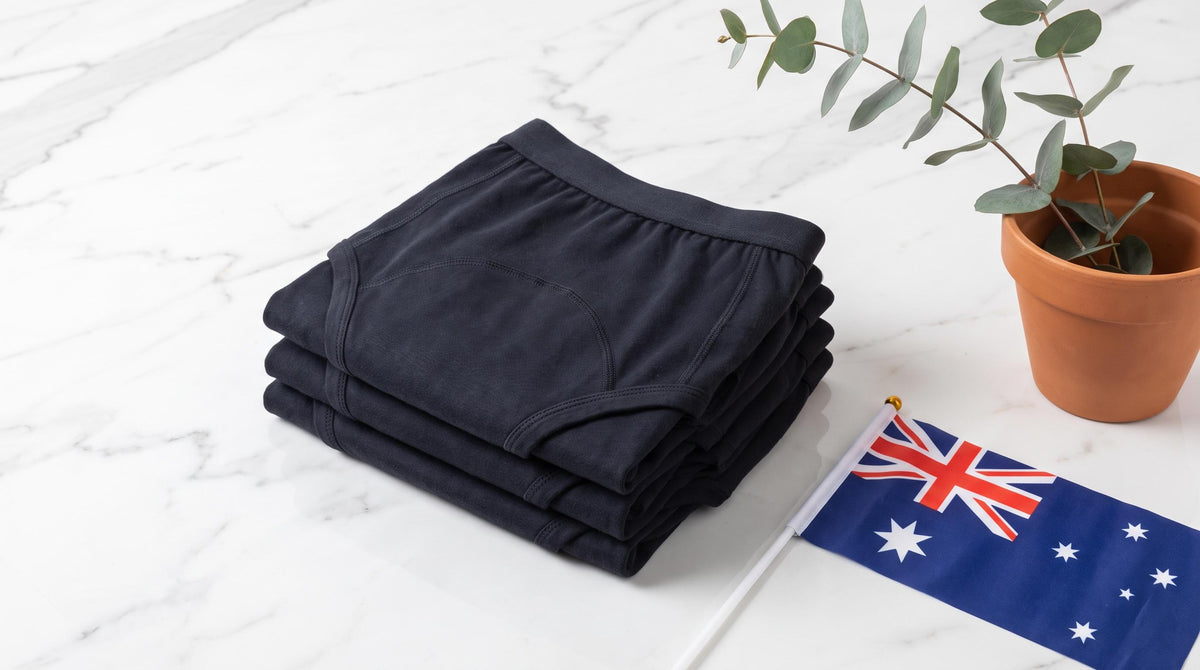
If you've been quietly searching for the best absorbent underwear men Australia 2026 has to offer, you're far from alone. Urinary incontinence affects a significant number of Australian men — whether following prostate surgery, as a result of an overactive bladder, or simply as part of the ageing process — and the demand for discreet, reliable, washable solutions has never been stronger. This guide cuts through the marketing noise to give you an honest, practical comparison of what's on the market right now, what features genuinely matter, and how to make the most of Australian funding schemes that can meaningfully offset the cost.
What to look for in absorbent underwear for Australian men in 2026
Not all absorbent underwear is created equal, and the Australian market has matured considerably over the past few years. Before you spend a cent, it's worth understanding the criteria that separate a genuinely useful product from one that looks the part in photographs but fails in daily life.
Absorbency is the obvious starting point, but it's worth thinking about it in layers. Light leaks — a few drops after sneezing, laughing, or lifting — call for a different product than the post-void dribble many men experience in the months following prostate surgery, or the urgent, unpredictable leakage associated with an overactive bladder. Before shopping, it helps to speak with your GP or a continence nurse about the type and volume of leakage you experience day to day. The Continence Foundation of Australia offers excellent free resources to help men understand their condition, and you can call the National Continence Helpline on 1800 33 00 66 for confidential, expert guidance at no cost, Monday to Friday.
Beyond raw absorbency, consider the following when evaluating any product in this category:
- Fit and cut: Men's absorbent underwear should sit closely against the body without bunching or shifting. A brief or boxer brief cut with an anatomical front panel provides both comfort and reliable protection throughout the day.
- Fabric technology: Look for multi-layer constructions that wick moisture away from the skin into an absorbent core, then hold it there. This keeps skin dry, reduces the risk of irritation, and keeps you feeling comfortable for hours.
- Washability and durability: Reusable, machine-washable underwear is far more economical and environmentally friendly than disposable pads over the long term. Check independently that the product retains its absorbency after many wash cycles — not just the first few.
- Odour control: Quality garments incorporate odour-neutralising technology, often through antimicrobial fibres woven into the absorbent layer, so you can go about your day without worry.
- Discretion under clothing: The best options look and feel like regular underwear. A slim, flat profile means no visible bulk under trousers or shorts, and absolutely no crinkling noise when you move.
- Sizing range: Australian men come in all shapes and sizes. A generous, well-calibrated size range ensures a snug, leak-resistant fit regardless of your build.
The Continence Foundation of Australia recommends trialling a product for several days before committing to buying in bulk — sound advice especially if you're recovering from surgery or if your leakage levels are still changing. Keep a simple bladder diary during that trial period to track how the garment performs in different situations: walking, sitting at a desk, exercising, and sleeping.
Top options compared: styles and approaches
There are several broad categories of absorbent underwear on the Australian market in 2026. Knowing the differences helps you match the right product to your specific needs rather than settling for something that's only partly suitable.
Brief vs boxer brief: which cut works better for most men?
The classic brief cut offers a close, secure fit that keeps the absorbent panel pressed firmly where it needs to be — particularly useful for men who are active, who move around a lot at work, or who experience sudden urge incontinence where timing is unpredictable. If you want to explore this style, the Orykas washable ultra-absorbent incontinence brief for men is built with a multi-layer absorbent zone and a slim, discreet profile that sits naturally under trousers, shorts, or activewear. Many Australian men find the brief cut becomes their default choice precisely because it minimises movement of the absorbent area during the day.
Boxer briefs, on the other hand, appeal to men who prefer a longer leg length — whether for personal comfort or for use under shorts, gym gear, or work uniforms. In warmer Australian cities like Brisbane, Darwin, or Perth, where men often spend a great deal of time in shorts or athletic wear, a longer cut can feel far more natural and less clinical. The Orykas men's ultra-absorbent incontinence boxer briefs deliver the same multi-layer core protection in an athletic-inspired silhouette that genuinely passes for regular underwear in a gym or pool changing room.
For men dealing with very light, occasional leaks — post-void dribble after urination, or minor stress incontinence when lifting something heavy — a lighter-weight option may be the most sensible starting point. A heavier-duty garment worn for minor leaks can feel unnecessarily warm and thick during an Australian summer. The absorbent boxer designed specifically for light leaks offers everyday comfort and confidence without the bulk of layers engineered for heavier incontinence, making it an ideal daily option for men at the milder end of the spectrum.
Disposable pull-up style products and adhesive pads are also widely available in Australian pharmacies and supermarkets across Sydney, Melbourne, and regional centres alike. Some men prefer disposables for travel, interstate work trips, or as a backup. The main trade-offs are ongoing cost, environmental impact, and the fact that disposables rarely feel or look like normal underwear under clothing. Most men who make the switch to washable absorbent underwear and give it a genuine fortnight's trial report that they don't want to return to disposables.
Cost breakdown for Australian buyers
Cost is a genuine consideration for anyone managing incontinence as a long-term condition. The good news is that Australian residents have access to several government-funded schemes that can substantially reduce — or in some cases eliminate — out-of-pocket expenses for continence aids.
The most widely used is the Continence Aids Payment Scheme (CAPS), administered by Services Australia. CAPS provides an annual payment to eligible Australians with permanent and severe urinary or faecal incontinence to help offset the cost of continence products. Eligibility is assessed by a medical practitioner, and the scheme operates separately from — and is complementary to — the NDIS. If you're unsure whether you qualify, a bulk-billing GP can complete the required assessment and assist with the application. Telehealth appointments through Medicare Australia are a convenient option for men in rural or remote parts of the country, including regional Western Australia and outback Queensland, who can't easily travel to a specialist.
For Australians living with a disability who have an NDIS plan, continence aids and related supports may be fundable under daily activities or capacity-building budgets, depending on how your plan goals are structured. It's worth raising this at your next planning meeting or discussing it with your support coordinator before your plan is reviewed. If you are not yet an NDIS participant but may qualify, your GP can initiate the referral process.
Outside of funded schemes, washable absorbent underwear should be viewed as a long-term investment rather than an impulse purchase. A man relying entirely on disposable pads or pull-up products may spend several hundred dollars per year. A set of washable garments, properly cared for, can last for many months. Orykas's essential starter set lets you try a curated selection of styles and absorbency levels before committing to a larger wardrobe — a practical approach that the Continence Foundation of Australia would likely endorse as sensible product trialling.
How Orykas compares to other options on the Australian market
Getting the best absorbent underwear for Australian men involves more than comparing absorbency specs — the whole ownership experience matters. That includes fit consistency, wash durability, sizing accuracy for Australian builds, shipping reliability, and whether a brand has been designed with the local market in mind or simply repurposed from an overseas catalogue.
Orykas was built with Australian conditions and customers at its centre. The full men's washable incontinence underwear range covers light through to moderate-to-heavy absorbency levels, meaning you can match the product closely to your needs rather than making do with whatever's available. The fabrics are soft-touch and breathable — an important consideration in Australia's warmer climate — and the garments are machine-washable, retaining their shape and absorbency after repeated laundering when care instructions are followed.
Several details distinguish Orykas from imported brands that may not account for local sizing conventions or Australian conditions. The absorbent core is positioned anatomically for men, which makes a real practical difference in how reliably the garment catches leaks during movement. The leg openings are snug without being constrictive, the waistband is wide enough to stay flat under clothing without rolling down, and the overall aesthetic is modern enough that the garments won't read as medical products to anyone who sees them.
Customer feedback from Australian men — including those in regional areas of New South Wales and South Australia who rely on online shopping because specialist continence supplies aren't stocked locally — frequently highlights the combination of discreet appearance and consistent protection as the reasons they recommend Orykas to others. That said, Orykas is not the only credible option, and we encourage every man to compare products, read independent reviews, and if possible trial before buying in volume. What works best for one person's anatomy, lifestyle, and absorbency need won't necessarily be the ideal solution for another.
If you're researching absorbent underwear options online as part of managing your continence, it's also worth seeking professional input alongside your product search. A referral from a bulk-billing GP to a RACGP-registered continence physiotherapist can address the underlying pelvic floor weakness driving leakage, reducing dependence on absorbent products over time. Absorbent underwear is an important management tool, but it works best alongside — not instead of — appropriate clinical care.
Frequently asked questions
How do I know how much absorbency I actually need?
The best starting point is to keep a simple bladder diary for three to five days, noting when leaks occur, roughly how much fluid is lost, and what activity or sensation preceded it. Your GP or a continence nurse can review this diary and help categorise your incontinence — whether it's stress, urge, overflow, or a mixed pattern — which maps directly to the type and absorbency level of product most likely to suit you. The Continence Foundation of Australia provides a free downloadable bladder diary template, and you can call the National Continence Helpline on 1800 33 00 66 any weekday for personalised, confidential guidance from trained advisers.
Can I claim the cost of washable incontinence underwear through CAPS or NDIS?
Medicare Australia does not directly fund continence products, but the Continence Aids Payment Scheme (CAPS) through Services Australia provides an annual subsidy to eligible Australians with permanent, severe incontinence. To apply, you'll need a medical assessment confirming your condition — a bulk-billing GP can generally complete this. NDIS participants may also be able to access funding for continence supports through their plan, depending on how goals are set. Your support coordinator or Local Area Coordinator can clarify this at your next plan review. It's worth exploring both pathways before paying entirely out of pocket, as the combined savings over a year can be meaningful.
Will absorbent underwear look obvious under my regular clothing?
Modern washable absorbent underwear has come a very long way from the bulky, crinkly garments that gave this category a poor reputation a decade ago. High-quality options use slim-profile absorbent panels that are virtually invisible under fitted trousers, chinos, shorts, or jeans. The critical factor is choosing the correct size — a garment that's too large will have excess fabric that can bunch or show a line under clothing. Many Australian men report that colleagues, mates at the gym, and even family members have no idea they're wearing absorbent underwear, which matters enormously for confidence and day-to-day quality of life.
How should I care for washable absorbent underwear to get the best life from it?
Most washable absorbent underwear, including the Orykas men's range, can be laundered in a standard home washing machine at 30–40°C. Avoid fabric softeners: they coat absorbent fibres over time and measurably reduce the garment's ability to wick and hold moisture. Tumble drying on a low heat setting is generally acceptable, but air-drying extends the life of the waterproof leak-proof layer. Do not bleach or iron absorbent underwear. Rinse in cold water before placing in the machine if heavily soiled — this preserves both the fabric and the appliance. With correct care, a quality pair of washable briefs or boxer briefs should retain full function for many months of regular daily use, representing strong value compared with the ongoing cost of disposables.
This article is informational and does not replace advice from your GP, a qualified continence nurse or a specialist.
Share:
8 signs your incontinence underwear isn't absorbent enough
Washable vs disposable incontinence products: an Australian cost comparison