



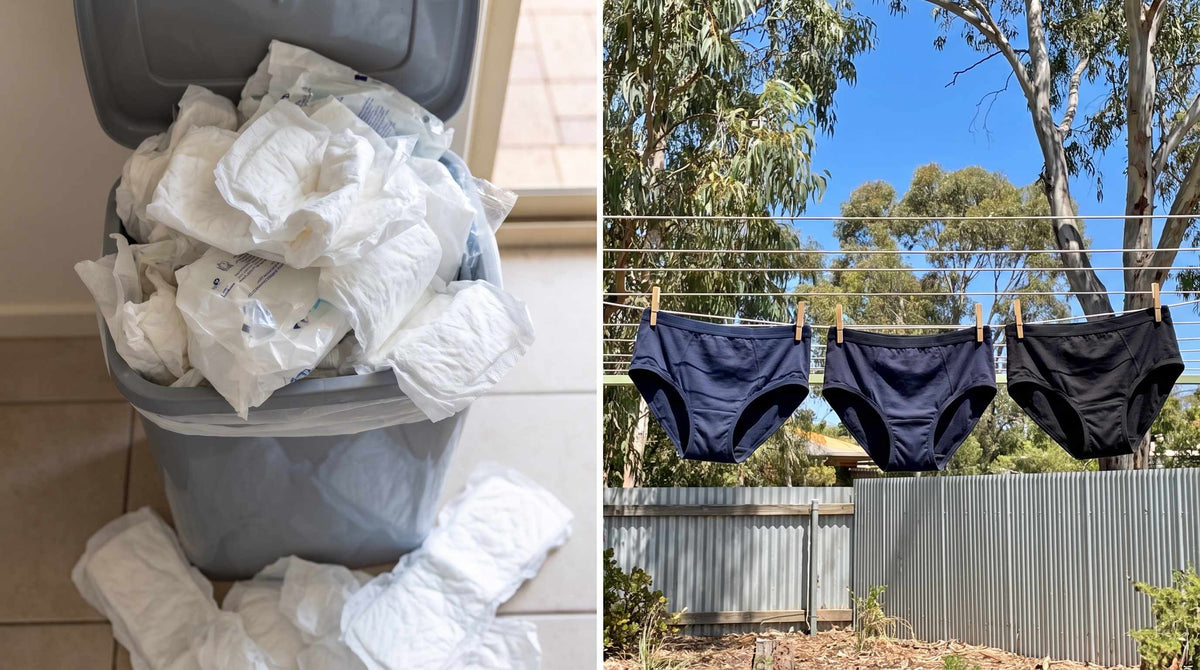

For many Australian men quietly managing urinary incontinence, the question of washable vs disposable incontinence Australia cost is more than a matter of convenience — it's a genuine financial decision that plays out week after week, year after year, often without any guidance from a GP or specialist.
Understanding what you are actually comparing
When men first look into incontinence products, disposables feel like the obvious starting point. They're familiar, widely stocked at supermarkets and pharmacies from Sydney to regional South Australia, and require no upfront investment. Washable options, by contrast, look expensive at first glance. That initial sticker shock, however, tends to dissolve once you work through the numbers over a realistic time horizon.
The comparison is not simply about price per unit. It involves laundry habits, absorbency levels, comfort, discretion, and environmental footprint. For men who experience light to moderate leakage — whether from an overactive bladder, post-prostatectomy dribble, or age-related changes — the full picture of washable vs disposable incontinence costs in Australia looks quite different depending on which lens you use.
The full range of men's washable incontinence underwear available today is far more sophisticated than the bulky pads of a decade ago. Modern designs look and feel like ordinary underwear, which matters enormously to the many Australian men who describe embarrassment as their primary barrier to managing incontinence openly.
The ongoing cost of disposable incontinence products

Disposable pads and pull-up pants come in a wide range of absorbencies and price points. Entry-level pads for men can cost as little as $0.50 to $1.00 each at major supermarket chains, while higher-absorbency pull-ups for heavier leakage may run to $2.00 or more per unit. For a man using two or three products per day — a conservative estimate for moderate incontinence — that translates to anywhere from $30 to $180 per month, or $360 to over $2,000 per year.
Beyond the unit cost, disposables carry hidden expenses. Frequent trips to the shops, or the cost of online delivery subscriptions, add up. Many men also report using extra products "just in case," padding (no pun intended) their monthly spend further. There's also the environmental toll: disposable incontinence products are not recyclable and contribute substantially to landfill, a concern raised by the Continence Foundation of Australia when discussing sustainable continence management.
Consider the typical monthly outlay for a man using disposables at moderate leakage levels:
- Light pads worn during low-activity periods: approximately $20–$40 per month
- Moderate-absorbency pull-ups for daytime confidence: approximately $50–$90 per month
- Heavy-duty overnight options used several nights a week: approximately $30–$60 per month
- Skin care products to manage any irritation from adhesives or plastic backing: approximately $10–$20 per month
- Waste bags and disposal supplies: approximately $5–$10 per month
Over a single year, that modest scenario can easily reach $1,000 to $2,500 or more. Over five years — a realistic timeframe for managing a chronic condition — the disposable pathway could cost an unassisted Australian man between $5,000 and $12,000 out of pocket.
The case for washable incontinence underwear
Washable or reusable incontinence underwear works by integrating multiple layers of absorbent fabric — often microfibre, cotton, and moisture-wicking materials — directly into the garment. There are no inserts to position, no adhesive tabs to peel, and no rustling plastic to betray you in a quiet room. For Australian men who are still working, exercising, or socially active, this discretion is a major practical advantage.
How absorbency and durability factor into value
A well-made pair of washable briefs or boxers can withstand 200 or more wash cycles while maintaining its absorbent capacity, though performance varies by brand and care routine. At that rate, a pair purchased today could serve you reliably for two to four years of daily use. The key is pairing the right absorbency level with your specific leakage pattern — light, moderate, or heavy — rather than treating all washable products as interchangeable.
Orykas men's washable briefs, for instance, are designed for exactly this kind of extended daily use. If you're starting out and unsure where to begin, you might look at the ultra-absorbent men's incontinence briefs to understand what modern washable technology actually delivers in terms of capacity and comfort. For men who prefer a boxers-style cut, the 3-pack ultra-absorbent black boxer shorts offer the same protection in a more familiar everyday silhouette.
Laundry care is a legitimate consideration, not just a throwaway footnote. Washing incontinence underwear correctly — at the right temperature, with appropriate detergent, in a protective bag — preserves both the absorbent layers and the outer fabric. Orykas offers antibacterial laundry sheets formulated to work with washable incontinence garments, and a dedicated machine wash protection bag to reduce wear during the spin cycle. These accessories are a small one-off cost that meaningfully extends the life of each garment.
Cost breakdown for Australian men
To make the comparison concrete, consider a man who uses two disposable products per day at an average cost of $1.50 each. That's $3.00 per day, or roughly $1,095 per year. After two years, he's spent more than $2,000 on a product he throws away each time he uses it.
Now consider a washable approach. A starter set of seven pairs of quality washable underwear — enough to rotate through the week with daily washing — might cost $200 to $350 upfront, depending on brand and absorbency level. Add $20 to $30 per year for specialist laundry supplies and the additional water and electricity cost of a couple of extra washes per week (estimated at $30 to $60 annually in most Australian states), and the annual running cost of the washable option sits well under $100 per year after the initial outlay.
Run those numbers side by side and the break-even point typically arrives within three to six months. Everything beyond that is genuine savings. Key cost factors to weigh up include:
- Upfront purchase price of a washable starter set versus zero upfront for disposables
- Monthly recurring spend (near zero for washables, ongoing for disposables)
- Laundry costs including water, electricity, and specialist detergent
- Product lifespan — typically 200-plus washes for quality washable garments
- Any government subsidies available under CAPS or NDIS (discussed below)
- Replacement costs if one pair is damaged or reaches end of life
For men in regional Australia where pharmacy runs are less convenient, the logistics argument also shifts further in favour of washables. Not needing to maintain a stockpile of bulky disposables, or pay for frequent delivery, has genuine practical value beyond the dollar figures.
Government support: CAPS, NDIS and Medicare
Australia offers several avenues of financial support for people managing incontinence, though eligibility criteria differ significantly between programmes. Understanding which pathway applies can meaningfully reduce what you pay out of pocket.
The Continence Aids Payment Scheme, administered by Services Australia, provides eligible Australians with a tax-free annual payment to help cover the cost of continence aids. CAPS is available to people who have a permanent incontinence condition, meet Australian residency requirements, and are not already receiving continence funding through the NDIS or a residential aged care facility. The payment amount is indexed periodically, so it's worth checking the Services Australia website or calling the National Continence Helpline on 1800 33 00 66 for current figures. Importantly, CAPS funds can be applied to washable as well as disposable products, making it relevant to this comparison.
For Australian men under 65 with a disability that includes incontinence as a functional impairment, the NDIS may fund continence-related supports as part of an approved plan. This can include both consumables (disposable products) and reusable aids (washable underwear), provided the items are deemed reasonable and necessary. A continence nurse or occupational therapist can provide the clinical assessment documentation that supports an NDIS request. The Continence Foundation of Australia has detailed resources on navigating this process, and their helpline can direct you to a local continence adviser whether you're in Melbourne, Brisbane, Perth or a remote community.
Medicare Australia does not directly subsidise the cost of incontinence products themselves, but it does cover GP visits and referrals to specialists such as urologists and continence physiotherapists. Under bulk-billing arrangements, many Australians can access these consultations at no out-of-pocket cost, which matters because a proper clinical assessment often unlocks access to CAPS or NDIS funding. The RACGP encourages GPs to ask about continence at routine health checks, particularly for men over 50 who may not raise the subject themselves.
How Orykas fits into the picture
Orykas is an Australian brand specifically focused on washable, ultra-absorbent incontinence underwear designed to look and function like ordinary clothing. The brand doesn't position itself as a medical device or a replacement for clinical care — rather, it occupies the space between basic disposable pads and bulky institutional products, offering everyday wearability alongside genuine absorbency.
For men weighing up the economics of washable vs disposable incontinence options in Australia, Orykas products are worth evaluating as part of a considered approach rather than an impulse purchase. Starting with a small number of pairs to trial the fit, absorbency, and washing routine before committing to a full set is a sensible strategy that many customers adopt. The men's ultra-absorbent briefs are a practical starting point for moderate leakage, while heavier needs may be better served by rotating multiple pairs with a reliable care routine.
Orykas ships Australia-wide, including to regional and remote areas where access to a well-stocked pharmacy is limited. For men managing incontinence quietly without wanting to make frequent in-store purchases, having a dependable supply of washable garments at home removes a recurring logistical headache — and over time, a significant recurring expense.
Frequently asked questions
Can I use CAPS funding to buy washable incontinence underwear?
Yes, in most cases. The Continence Aids Payment Scheme through Services Australia provides an annual payment that eligible recipients can spend on a range of continence products, including washable underwear. It's always worth confirming current eligibility criteria and what products qualify by contacting Services Australia directly or by calling the National Continence Helpline on 1800 33 00 66.
How many washable pairs do I need to get started?
A practical starter set for daily use is usually five to seven pairs, which allows you to wear one pair, have one or two in the wash, and keep several clean in rotation. If you wash every day or every second day, five pairs is typically sufficient. Starting with fewer pairs to trial the fit and absorbency before buying more is a sensible approach, particularly as different activities — sport, work, sleep — may call for different absorbency levels.
Are washable incontinence products hygienic to launder at home?
Yes, provided you follow the care instructions. Most quality washable incontinence garments should be machine washed at the temperature specified by the manufacturer, using a suitable detergent. Specialist antibacterial laundry products designed for washable incontinence garments can help neutralise odour and bacteria more effectively than standard detergent. A dedicated mesh wash bag is also recommended to protect the garment's absorbent layers during the spin cycle and extend product life.
Is washable vs disposable incontinence an either-or choice?
Not necessarily. Many Australian men find a hybrid approach works well — using washable underwear as their primary daytime option and supplementing with disposable pads or pull-ups in situations where laundry access is limited, such as travel or extended time away from home. Over time, as confidence in the washable products grows, most men find they rely on disposables less and less, which progressively reduces the ongoing cost in favour of washables.
This article is informational and does not replace advice from your GP, a qualified continence nurse or a specialist.
Share:
Best absorbent underwear for men in Australia 2026: honest comparison
150ml boxer vs 600ml boxer: which absorbency do Australian men need?