



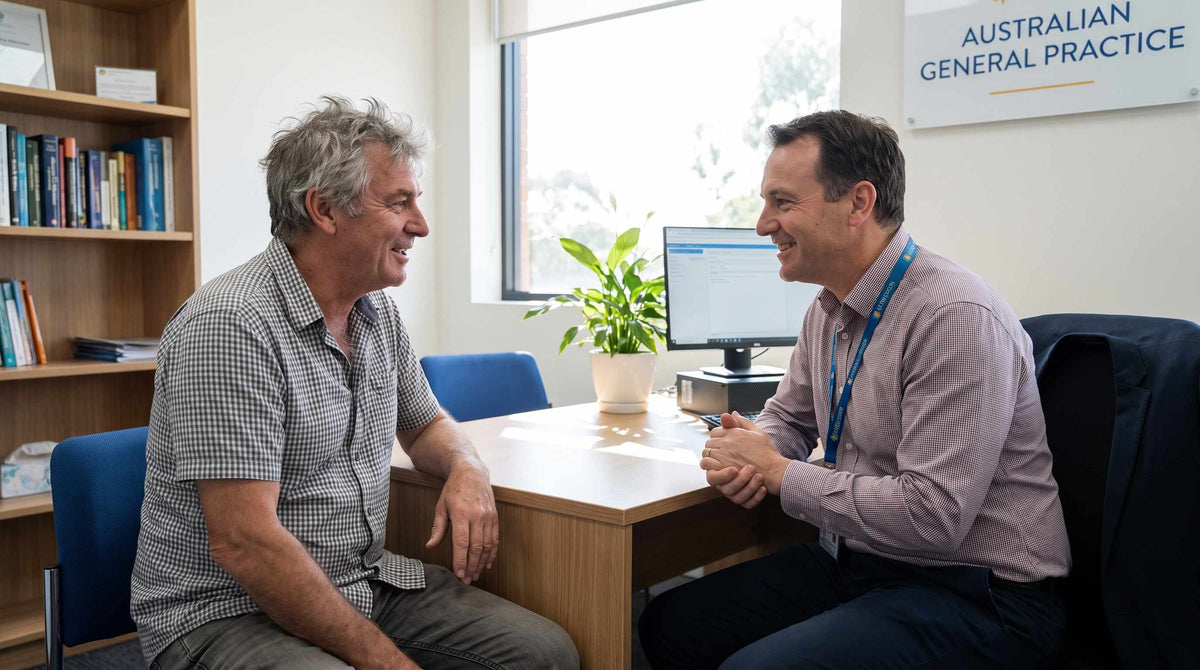

There's a conversation happening quietly in GP waiting rooms, physio clinics, and online forums across Sydney, Melbourne, Brisbane, and regional Australia — and it's long overdue. Men across Australia are finally starting to ask these questions about male incontinence more openly, yet many still choose silence over help, often because they feel embarrassed, confused, or simply don't know where to start. If you've been wondering whether your situation is normal, whether treatment is available, or whether you'll ever feel comfortable leaving the house again, you're far from alone — and the answers may surprise you.
1. Is it actually common for men to experience incontinence?
Short answer: yes, very. The Continence Foundation of Australia estimates that around one in four Australians is affected by a bladder or bowel condition, and men represent a significant share of that figure. While incontinence is often portrayed in advertising as a women's issue, the reality is that many men across every age group deal with urinary leakage — from younger blokes recovering after a sports injury to older men managing the aftereffects of prostate surgery.
Urinary incontinence in men typically falls into a few main categories: stress incontinence (leaking with coughing, sneezing, or exercise), urgency incontinence (a sudden, intense urge to urinate that's hard to defer), mixed incontinence (a combination of the two), and post-micturition dribble (that frustrating drip after you've finished at the toilet). Each type has distinct causes and responds to different treatments, which is why getting a proper assessment matters rather than assuming the worst.
A question that comes up again and again is whether experiencing leakage is somehow abnormal. Put simply: if you're dealing with leaks, you're in good company. Feeling embarrassed is understandable, but shame isn't a treatment plan. Speaking to a continence nurse or a bulk-billing GP is a far more productive first step.
2. Will my GP judge me for bringing it up?

Almost certainly not. The Royal Australian College of General Practitioners (RACGP) includes continence assessment as a routine part of men's health, particularly for men over 50, and GPs are trained to discuss bladder and bowel function without judgement. In fact, your GP may be waiting for you to mention it — many patients assume their doctor will raise it, and many doctors assume the patient will raise it, so nothing gets said at all.
If you're not sure how to start the conversation, something as simple as "I've been having some trouble with bladder leakage" is enough. From there, your GP can arrange a urine test to rule out infection, review your medication list (several common medicines can worsen leakage), and refer you to a continence physiotherapist or specialist urologist if needed.
For men who don't have a regular GP, Medicare Australia covers standard GP consultations, and many clinics across Perth, Adelaide, and regional Australia offer bulk-billing. You can also call the National Continence Helpline on 1800 33 00 66 for free, confidential information and referrals from continence nurses, Monday to Friday. It's one of the most underused services out there — and it's there precisely for men in your situation.
3. Is incontinence just part of getting older?
Ageing does increase the risk of incontinence, but it doesn't make leakage inevitable or untreatable. Many men in their 70s and 80s have excellent bladder control, and many men in their 40s are managing significant leakage. The key driver is rarely age alone — it's the conditions and lifestyle factors that accumulate over time.
Common contributing factors in Australian men
- Prostate enlargement (benign prostatic hyperplasia) or prostate cancer treatment
- Pelvic floor weakness from inactivity, obesity, or chronic straining
- Neurological conditions such as Parkinson's disease, multiple sclerosis, or stroke
- Type 2 diabetes, which can affect bladder nerve function over time
- High intake of caffeine or alcohol, both of which irritate the bladder lining
- Chronic constipation, which places extra pressure on the bladder and pelvic floor
The good news is that most of these factors are modifiable. Pelvic floor exercises guided by a continence physiotherapist, dietary adjustments, weight management, and structured bladder training can all lead to meaningful improvement — at any age. "Just putting up with it" is not the only option available to Australian men today.
4. Could my prostate be causing this?
For many Australian men, the prostate is the central piece of the puzzle. As the prostate gland enlarges with age, it can squeeze the urethra and disrupt normal urinary flow, leading to urgency, frequency, weak stream, and post-void dribble. This cluster of symptoms is known as lower urinary tract symptoms (LUTS), and it affects a large proportion of men over 50.
Prostate cancer treatment — whether surgical (radical prostatectomy) or radiotherapy — can also directly affect urinary control. Stress incontinence following prostatectomy is particularly common in the months after surgery, though for many men it improves significantly with pelvic floor rehabilitation. If you're preparing for or recovering from prostate surgery, ask your surgical team for a referral to a pelvic floor physiotherapist before you leave hospital.
Supporting prostate health holistically is something many men are exploring alongside their medical treatment. Orykas offers a prostate health supplement formulated to complement the lifestyle measures your healthcare team recommends — worth a conversation with your GP as part of a broader management plan.
5. What treatments are actually available to me?
The range of evidence-based treatments for male incontinence is broader than most men realise. Options depend on the type and cause of your incontinence, your overall health, and your personal goals — which is why a thorough assessment is the starting point rather than a shortcut to managing symptoms on your own.
- Pelvic floor muscle training: Often the first-line treatment recommended by both the RACGP and the Continence Foundation of Australia. A continence physiotherapist can assess your baseline function and design a personalised exercise programme that targets the correct muscles.
- Bladder training: Gradually extending the intervals between toilet visits to improve bladder capacity and reduce the severity of urgency episodes.
- Medication: Several classes of medication can assist with urgency incontinence and overactive bladder. Your GP can discuss options currently listed on the Pharmaceutical Benefits Scheme (PBS).
- Lifestyle modifications: Managing fluid intake, reducing caffeine and alcohol, treating constipation, and achieving a healthy body weight all have solid evidence behind them.
- Surgical options: For suitable men, procedures such as the male sling or artificial urinary sphincter can deliver long-term improvement, particularly for those recovering from a prostatectomy.
Financial support is also available for Australians who require continence products longer term. The Continence Aids Payment Scheme (CAPS), administered through Services Australia, provides an annual payment to help eligible people cover the cost of continence aids. Men with a disability support plan may also be able to access relevant funding through the NDIS. Ask your GP or continence nurse whether you qualify for either scheme.
6. How do I manage day-to-day without giving up the things I love?
Living well with incontinence while you work through treatment is absolutely achievable — it just takes a bit of planning and the right products. Absorbent underwear designed specifically for men has come a long way from the bulky, noisy pads of the past. Modern options are slim, discreet, and washable, which is better for your wallet and significantly better for the environment.
Orykas makes washable underwear built for Australian men who want to stay active and confident. If you experience lighter leakage — post-void dribble or the occasional stress leak — the absorbent boxer designed for light leaks looks and feels like ordinary underwear. For heavier or more frequent leakage, the men's ultra-absorbent incontinence briefs offer greater protection throughout the day without compromising comfort or style.
Beyond products, practical strategies matter too. Mapping out toilet locations before outings, applying bladder training techniques to extend continence windows, and wearing darker-coloured clothing can all reduce anxiety about being caught out. Many men find that once they have a consistent routine and the right support garment, they regain confidence in social situations, at work, and during recreational activities like golf, bushwalking, or swimming.
7. Is this something I will have to manage forever?
Not necessarily. Outcomes vary widely depending on the underlying cause, how promptly treatment begins, and how consistently rehabilitation is followed. Men who address stress incontinence after prostate surgery with an early, structured pelvic floor programme often see substantial improvement within six to twelve months. Urgency incontinence linked to lifestyle factors can improve dramatically with the right behavioural strategies and, where needed, medication prescribed through your GP.
For men with ongoing or permanent incontinence — for instance, following complex cancer treatment or with a progressive neurological condition — the goal shifts from cure to confident management. In that context, choosing quality absorbent garments, maintaining skin integrity, and keeping up with regular continence nurse reviews is what long-term wellbeing looks like. You can browse the full men's washable incontinence underwear range to find the fit and absorbency level that suits your daily needs.
The most important thing is not to wait. The longer incontinence goes unaddressed, the more it can chip away at confidence, social participation, and mental health. Taking these questions to your GP, a continence nurse, or the helpline can open doors to better outcomes and a faster return to the life you want.
Frequently asked questions
Can pelvic floor exercises really help men with incontinence?
Yes — and the evidence is solid. Pelvic floor muscle training is recommended as a first-line treatment for stress incontinence in men by both the RACGP and the Continence Foundation of Australia. The key is learning to activate the correct muscles with guidance from a qualified continence physiotherapist, rather than guessing from a generic leaflet. Results typically improve over eight to twelve weeks of consistent, correctly performed practice.
Is treatment for male incontinence covered by Medicare Australia?
GP consultations, specialist referrals, and continence physiotherapy sessions under a GP management plan are all covered under Medicare Australia. Eligible Australians may also access the Continence Aids Payment Scheme (CAPS) through Services Australia, which provides financial assistance toward the cost of continence products. Some surgical procedures for incontinence also attract a Medicare rebate. Speak to your GP about exactly what applies to your individual situation.
How do I know whether I need to see a GP or a continence nurse?
Either is a good starting point. If you also have other health concerns — blood in your urine, pain, a recent unexplained change in bowel habits, or you suspect your prostate is involved — a GP visit is the priority. If your main concern is managing leakage and learning rehabilitation techniques, a continence nurse or pelvic floor physiotherapist can often be seen without a referral. The National Continence Helpline (1800 33 00 66) can recommend appropriate local services in your area, including those across regional Australia.
Are washable incontinence underwear as effective as disposable pads?
For many men, washable absorbent underwear performs just as well as disposables for light to moderate leakage — and offers real advantages in cost, comfort, and environmental impact over time. Premium washable options use multi-layer absorbent technology to lock in moisture and manage odour effectively. That said, the right choice depends on your level of leakage and your daily routine, so it may take a little trial to find your preferred fit and absorbency level.
This article is informational and does not replace advice from your GP, a qualified continence nurse or a specialist.
Share:
150ml boxer vs 600ml boxer: which absorbency do Australian men need?
Nighttime incontinence in Australian men: causes, solutions and bedding protection