


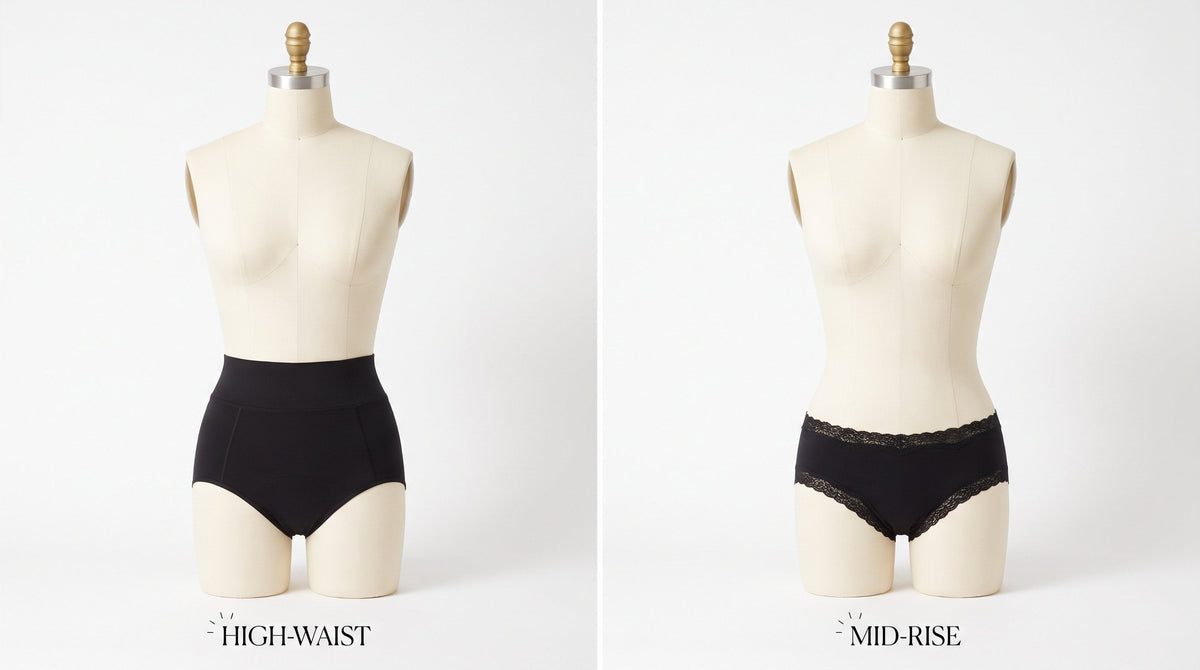

Choosing the right underwear when you're managing bladder leakage can feel surprisingly overwhelming — but for many Australian women shopping for incontinence knickers, the decision often comes down to one key question: high waist or mid-rise? Both styles offer genuine advantages depending on your body shape, lifestyle, and the level of absorbency you need, and understanding those differences can make an enormous difference to your daily comfort and confidence.
Understanding the difference between high waist and mid-rise styles
At their most basic, high waist and mid-rise incontinence knickers differ in where the waistband sits on your torso. High waist styles typically rise to or just below the belly button — sometimes even higher — providing coverage across the lower abdomen. Mid-rise briefs sit across the hip bones, closer to what many women would recognise as a standard everyday brief.
Neither style is inherently superior. They serve different bodies and different needs. A woman who has had a caesarean section, abdominal surgery, or who carries weight around her middle may find high waist knickers more comfortable and supportive. Women who prefer a lower-profile look under fitted clothing, or who find higher waistbands uncomfortable, often gravitate to mid-rise options instead.
It's also worth noting that the rise of a brief affects how the absorbent gusset sits against the body. A higher waist can help anchor the pad zone more securely, which matters particularly during movement — something active women in Sydney, Brisbane, or anywhere across regional Australia will appreciate when going about a full day.
What to look for in high waist incontinence knickers in Australia

Beyond the waistband height, there are several features worth evaluating before you buy. The Continence Foundation of Australia recommends that women managing urinary incontinence consider both the degree of leakage and their typical daily activities when selecting a product. Not all high waist styles are created equal, and absorbency levels vary considerably across brands.
Fabric is another critical factor. Look for breathable, moisture-wicking materials that keep skin dry rather than trapping dampness against the body. Many women in Australia's warmer climates — particularly in Queensland and Western Australia — find that synthetic outer shells can become uncomfortable through a long day, so blended fabrics with a cotton-like feel are popular.
Washability is a practical consideration that's often underrated. Disposable incontinence products can be convenient, but they generate significant waste and ongoing cost. Washable, reusable knickers — like Orykas Women's High-Waisted Washable Incontinence Pants — can be laundered hundreds of times, making them a cost-effective and more sustainable choice over the long term.
Discreetness matters too. Many Australian women want incontinence underwear that looks and feels like regular lingerie, without the bulky pad appearance that older generations of products were known for. Lace detailing, seamless edges, and low-profile gussets have made modern options far more wearable than what was available even a decade ago.

Comparing high waist and mid-rise: a practical breakdown
To help you make a clearer choice, here's how the two styles typically compare across the most important criteria for Australian women managing leakage.
When high waist tends to work best
For women who want additional tummy support, those who've experienced post-partum changes, or those whose leakage tends to occur with sudden movement or coughing, high waist incontinence knickers are often the stronger choice. Stress incontinence is one of the most common presentations in women aged over 40, according to the Continence Foundation of Australia, and the higher rise means the absorbent zone is held closer to the body, reducing shifting during activity.
They're also a strong choice for overnight use. A secure fit around the midriff minimises the risk of leakage at the sides when lying down, which is a concern many women raise when they first start looking for nighttime options. If you'd like to explore a stylish take on this style, the Orykas 3-Pack Black High-Waist Lace Incontinence Briefs offer a flattering fit without sacrificing protection.
- Best for: post-partum bodies, tummy support, overnight protection
- Great for: stress incontinence with sudden movement or sneezing
- Ideal if: you prefer fuller coverage and a secure fit throughout the day
- Works well: under high-waisted pants, skirts, and activewear
- Consider if: you want the absorbent gusset anchored firmly in place
When mid-rise is the better fit
Mid-rise styles suit women who find higher waistbands uncomfortable or restrictive — particularly those with sensitive abdomens, hip issues, or who simply prefer a lower-cut brief. They tend to be more versatile under different clothing styles, including low-rise jeans or gym wear, and are often described as feeling more like everyday underwear.
For lighter leakage — a few drops with exercise or the occasional urgency episode — a mid-rise brief with a quality absorbent layer can be entirely sufficient. The Orykas 3-Pack Black Mid-Rise Incontinence Briefs are a popular everyday option for women who want reliable protection without the fuller coverage of a high waist style.
- Best for: lighter leakage and everyday wear
- Comfortable: for women who dislike pressure around the midriff
- Versatile: pairs well with low-rise clothing and activewear
- Ideal if: you want underwear that feels closest to a regular brief
- Works well: for women returning to exercise post-partum or post-surgery
Financial support for Australian women managing incontinence
The cost of managing incontinence is a real concern for many Australian women, particularly those on fixed incomes or living with a disability. The good news is that there are several government programmes that can help offset the expense of continence products.
The Continence Aids Payment Scheme (CAPS), administered through Services Australia, provides eligible individuals with a payment to help fund continence products. To qualify, you generally need to have a permanent and severe functional impairment related to bladder or bowel control, and you'll need a supporting assessment from a recognised health professional. It's worth speaking with your GP — particularly if you have access to a bulk-billing practice — about whether a referral for assessment makes sense in your situation.
Women who are NDIS participants may also be able to fund continence aids through their plan, depending on how their supports are structured. A continence nurse or occupational therapist can assist with this process. For general guidance on funding options and continence management, you can contact the National Continence Helpline on 1800 33 00 66 — it's a free service staffed by continence nurses who are familiar with the Australian healthcare system, including what's available in Melbourne, Perth, Adelaide, and rural and remote areas.
Washable incontinence underwear, while not typically reimbursable as a single item under CAPS (which is designed for disposable products), can represent significant savings over time. A quality pair of reusable knickers that lasts two or more years will often work out far cheaper per use than disposables — something worth factoring into your budget planning. If you'd like to see the full range of options available, you can browse Orykas Women's Washable Incontinence Underwear to compare absorbency levels and styles.
How Orykas fits into the picture
Orykas is a premium washable incontinence brand for Australian women who want protection they can feel confident in — not products that feel clinical or cumbersome. The focus is on everyday wearability: underwear that fits well, looks good under clothes, and holds up through regular Australian laundry cycles.
The range covers both high waist and mid-rise cuts, in styles that range from straightforward everyday briefs to lace-trimmed options for women who don't want to feel like they've traded their lingerie drawer for a medical supply catalogue. Products are shipped Australia-wide, including to regional communities where specialist incontinence supplies can be harder to access locally.
Orykas is not a medical device and doesn't replace professional advice. For women with moderate to heavy incontinence, or those who haven't yet received a clinical assessment, it's strongly recommended to seek guidance from a GP, continence nurse, or specialist before relying solely on any absorbent underwear product — regardless of brand.
Frequently asked questions
How do I know if I need high waist or mid-rise incontinence knickers?
The best starting point is to think about where you feel most comfortable wearing your everyday underwear, and what type of activity triggers your leakage. If you experience leakage with coughing, sneezing, or sudden movement, a high waist style may provide better security. If your leakage is light and your main concern is discretion throughout the day, a mid-rise brief may be entirely sufficient. A continence nurse — reachable via the National Continence Helpline on 1800 33 00 66 — can offer personalised guidance.
Are washable incontinence knickers as absorbent as disposables?
Quality washable incontinence underwear can be highly absorbent, and many women find them entirely adequate for light to moderate leakage. However, absorbency varies significantly by product and brand. Always check the manufacturer's stated capacity, and consider starting with a style designed for your typical leakage level. For heavier leakage, layering a washable brief with a reusable booster pad may be an option worth discussing with a continence professional.
Can I claim incontinence underwear through NDIS or CAPS?
CAPS, managed by Services Australia, is generally designed to support the cost of disposable continence products for people with severe and permanent functional impairment. NDIS participants may be able to fund incontinence products through their plan depending on their individual supports and goals. Washable underwear isn't always specifically listed, so it's best to speak with your NDIS planner or support coordinator, and to contact Services Australia directly to understand what applies to your circumstances.
How should I care for washable incontinence underwear to make it last?
Most washable incontinence briefs can be machine washed in cold or warm water on a gentle cycle, and should be tumble dried on a low heat setting or air dried where possible. Avoid fabric softeners, as these can coat the absorbent fibres and reduce their effectiveness over time. Always follow the specific care instructions included with your product. With proper care, a good pair of washable knickers can last for several years of regular use.
This article is informational and does not replace advice from your GP, a qualified continence nurse or a specialist.
Share:
Best washable incontinence underwear for women in Australia 2026
How to choose incontinence underwear for your body shape: an Australian guide